
Low ceilings do not have to mean flat-looking lighting. The right fixture keeps headroom comfortable while adding enough shape and downward light to make the room feel intentional.
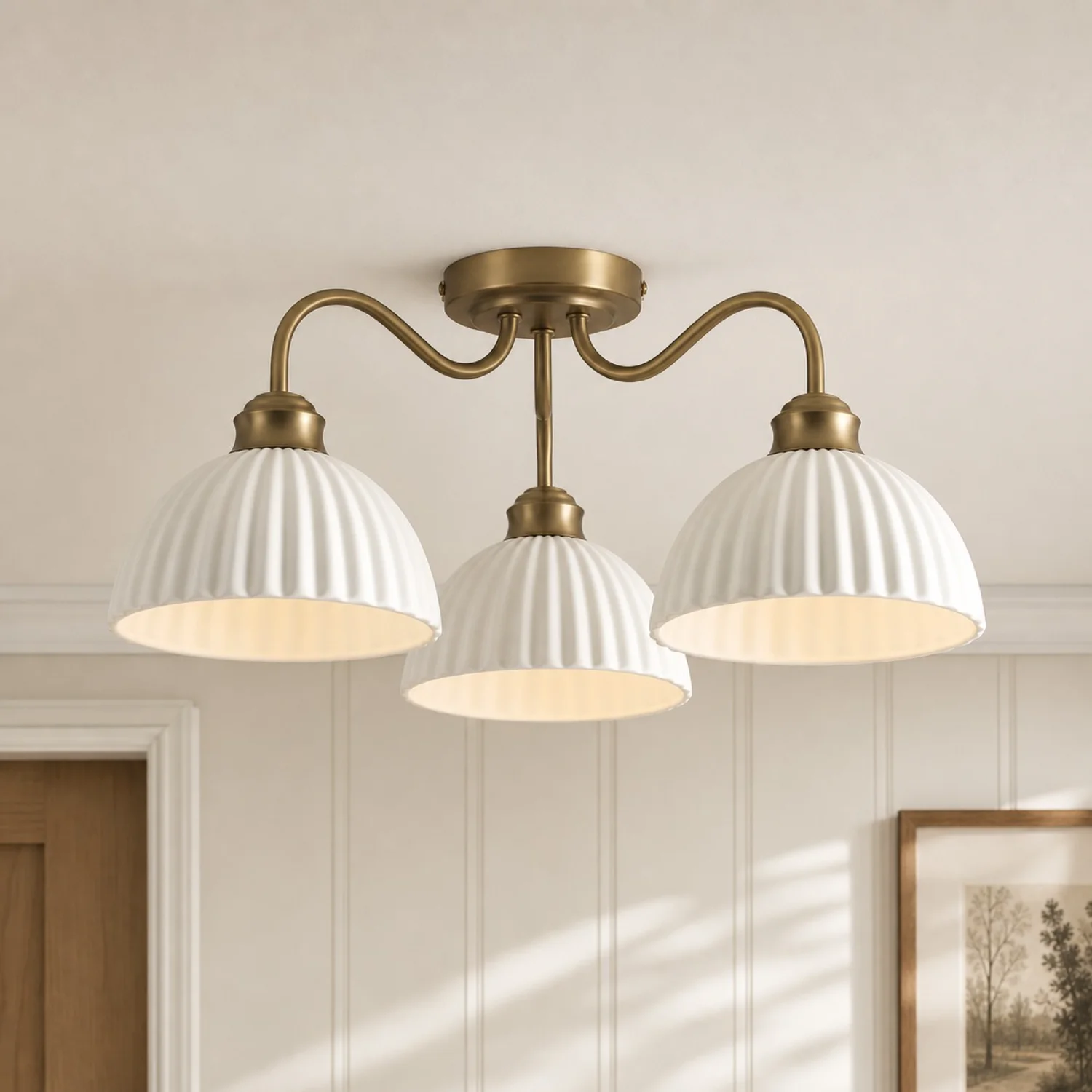
Flush mount or semi-flush: what is the difference?
A flush mount sits directly against the ceiling, so it usually gives you the most headroom. A semi-flush fixture also mounts close to the ceiling, but its body and shade extend slightly below the mounting plate. That extra space creates more visual depth and can make the light feel more decorative without the long drop of a pendant.
For a hallway, closet, or very tight passage, a simple flush mount may be the calmest choice. In a living room or dining room, a semi-flush design can add a focal point while keeping the walking zone clear. The best option depends on the room's scale, sightlines, and how much character you want above eye level.
Measure headroom before you choose
Start with the fixture's total height, not just the canopy. Measure from the ceiling to the lowest visible part of the shade, then compare that number with the areas where people stand, walk, or reach. In a dining room, also check the view across the table so the fitting does not interrupt conversation.
Scale matters as much as height. A fixture that is too small can look lost in a broad room, while one that is too wide can crowd a narrow space. Use the room and table as your visual reference, and leave enough open ceiling around the fitting for it to read as a deliberate centre point.
Think about light spread, not just the silhouette
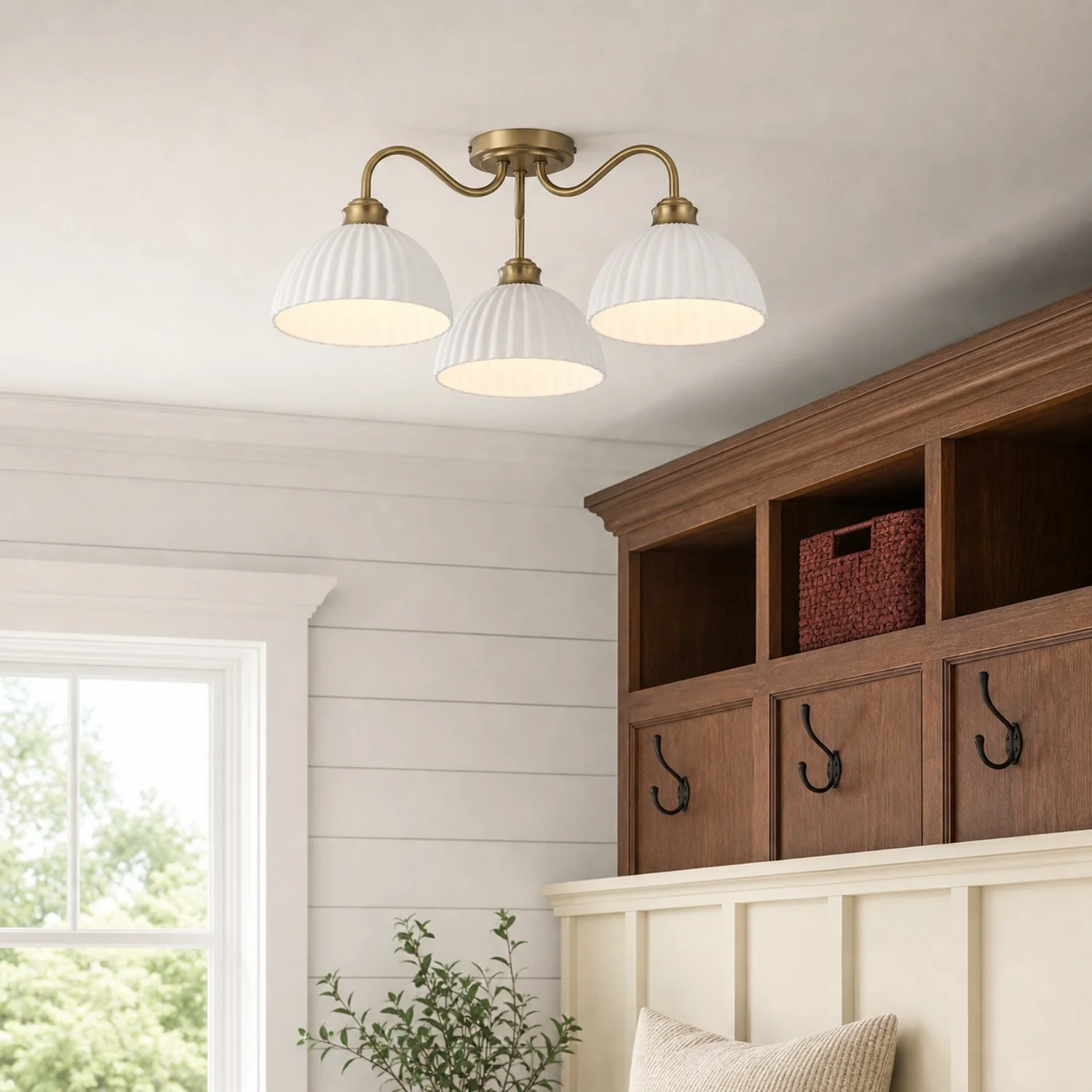
Low ceiling lighting should feel comfortable from every seat. Shades that direct light downward can support a dining table or reading area, while a softer opening can add a wider ambient glow. If the fixture has several lamp holders, the layout can distribute light more evenly than a single central bulb.
Finish and texture also affect how large the light feels. White ceramic shades keep the silhouette visually light, while a warm metal finish adds definition against a pale ceiling. For a traditional or relaxed interior, fluted surfaces can bring detail without adding visual clutter.
A practical low-ceiling lighting checklist
- Confirm the total fixture height and diameter.
- Check the mounting method and ask a qualified electrician to handle hardwiring.
- Match the lamp holders and maximum wattage to compatible bulbs.
- Choose a dimmable setup when the room needs different moods.
- View the fixture from standing and seated positions before committing to the scale.
The Laura Ashley Durford is a useful example of the semi-flush approach: its three white fluted ceramic shades and matte antique-brass arms create a clear focal point, while the close-to-ceiling structure keeps the profile compact. The product is about 20 cm high and 48 cm in diameter, with three E14/SES lamp holders; bulbs are not included.
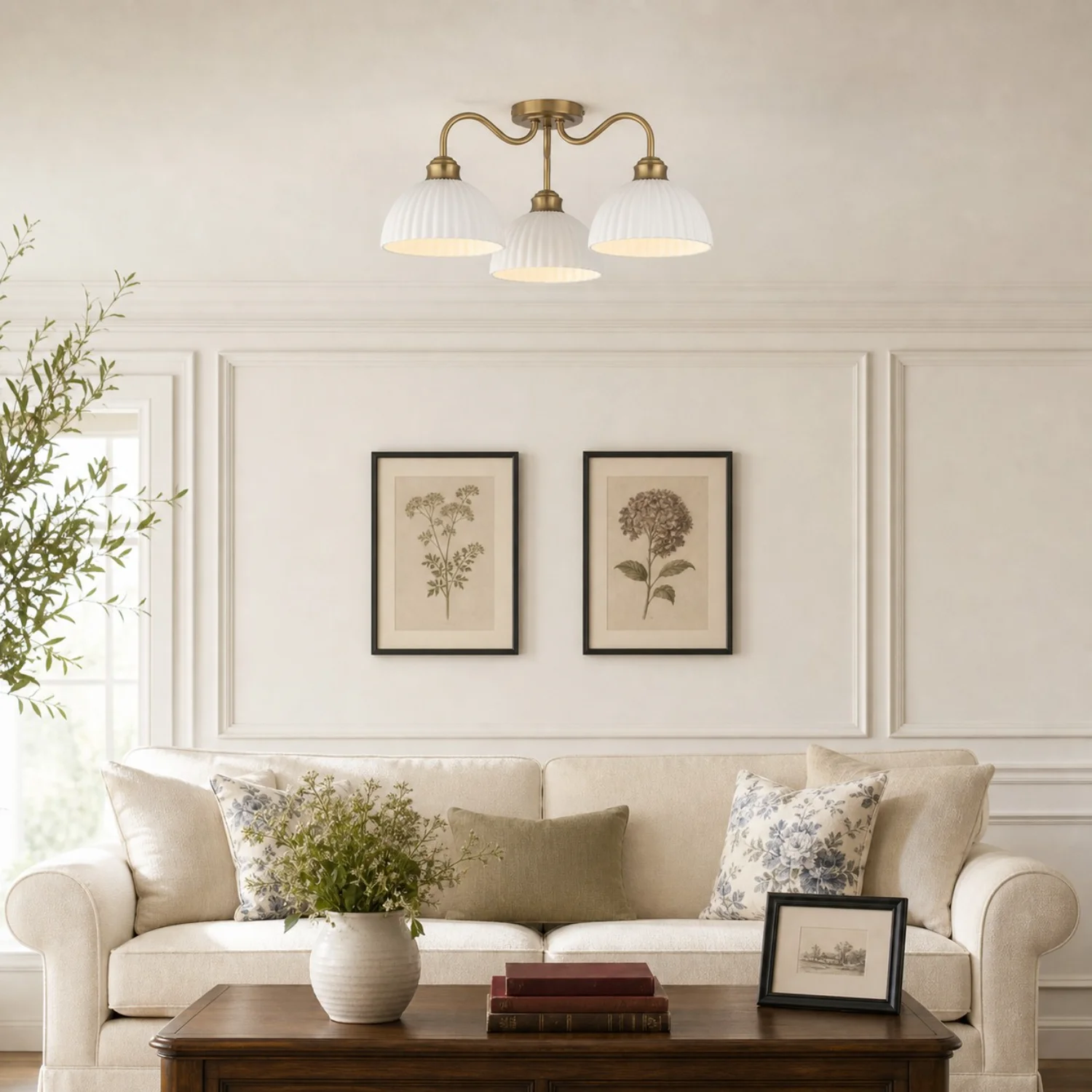
If you are comparing close-to-ceiling options for a room that needs both breathing space and decorative detail, the Durford semi-flush ceiling light shows how a three-light arrangement can stay visually composed.
Before ordering, confirm the dimensions, bulb compatibility, ceiling support, and whether the chosen controls work with your bulbs. When the measurements are right, see the Durford fixture as one considered way to bring low ceiling lighting closer to the ceiling without losing warmth.