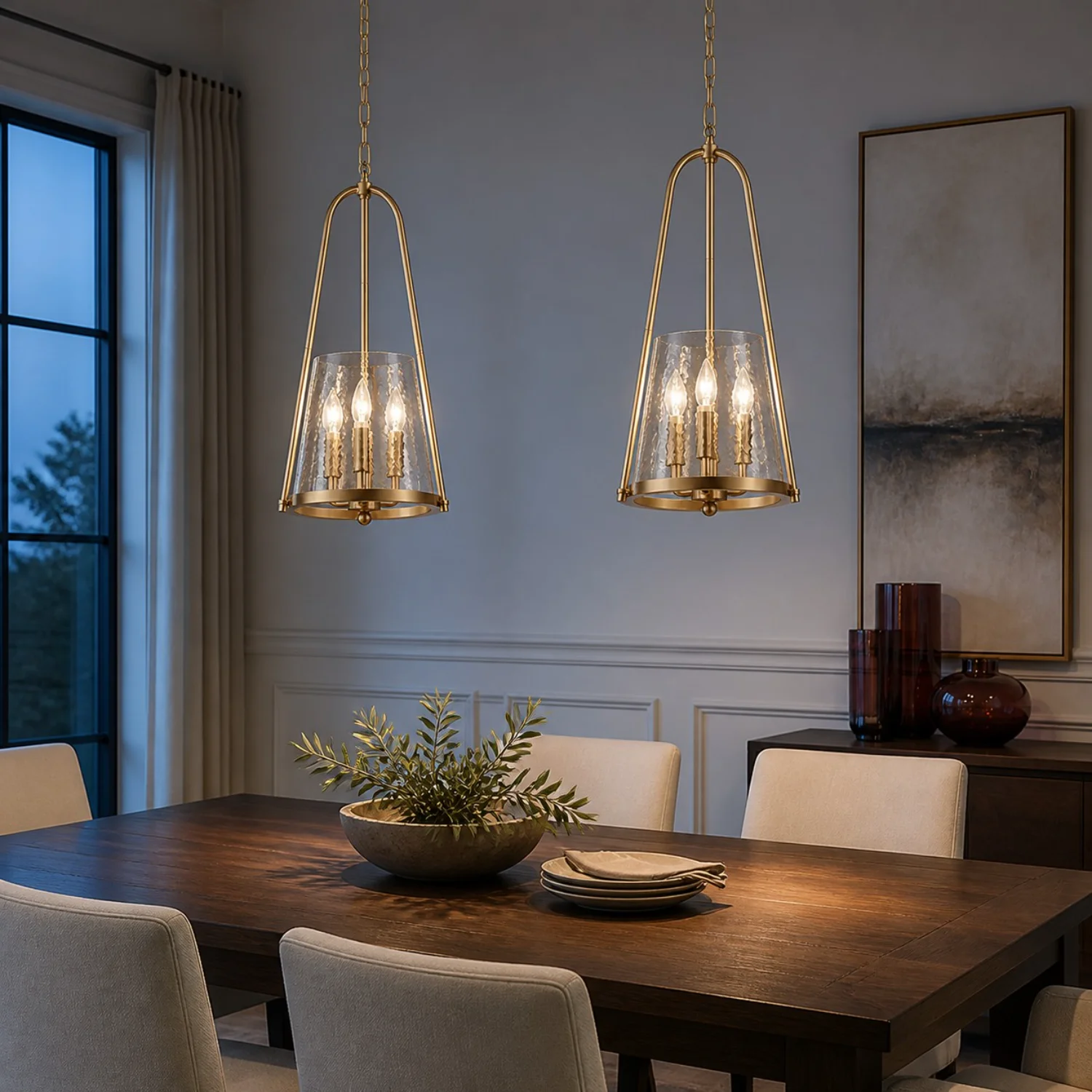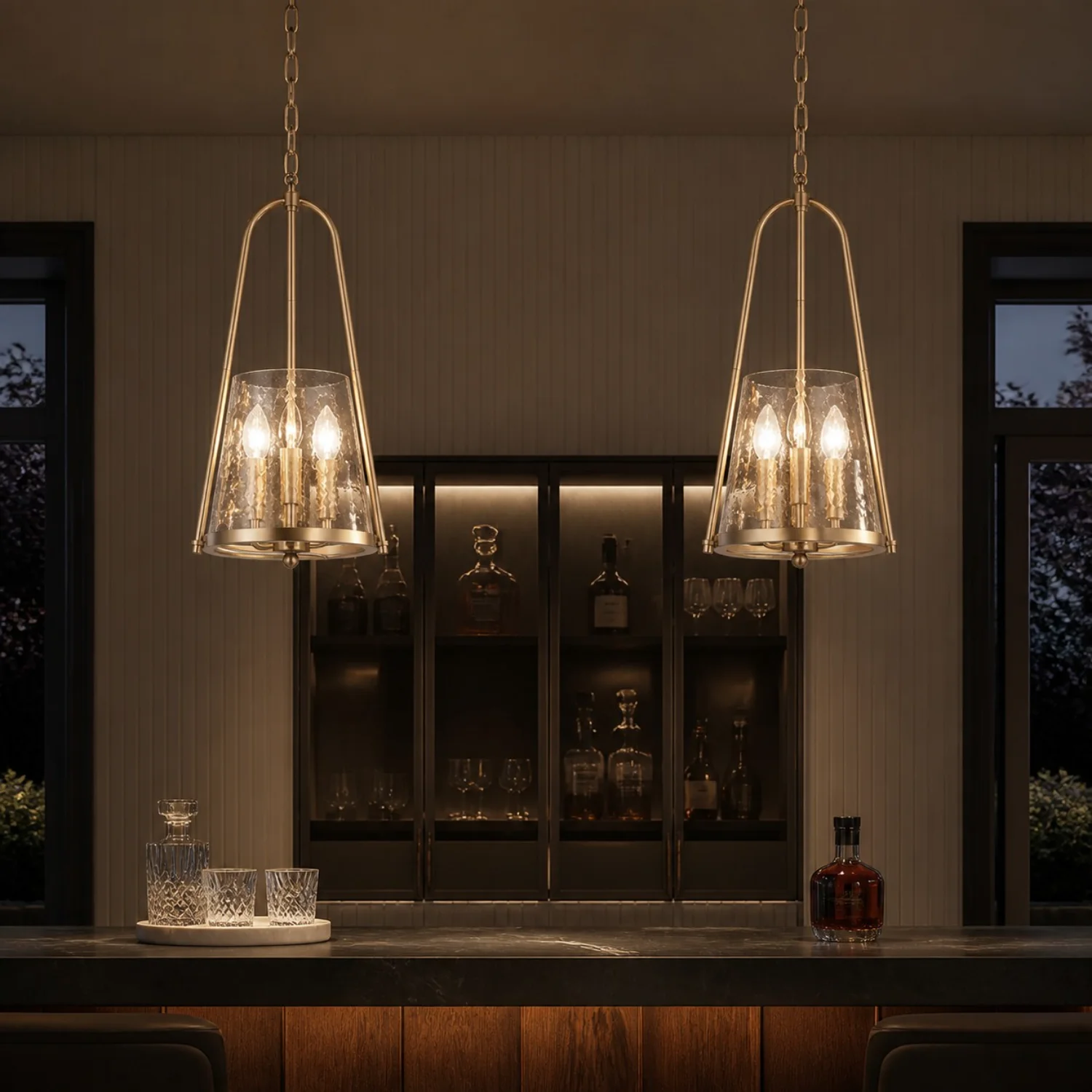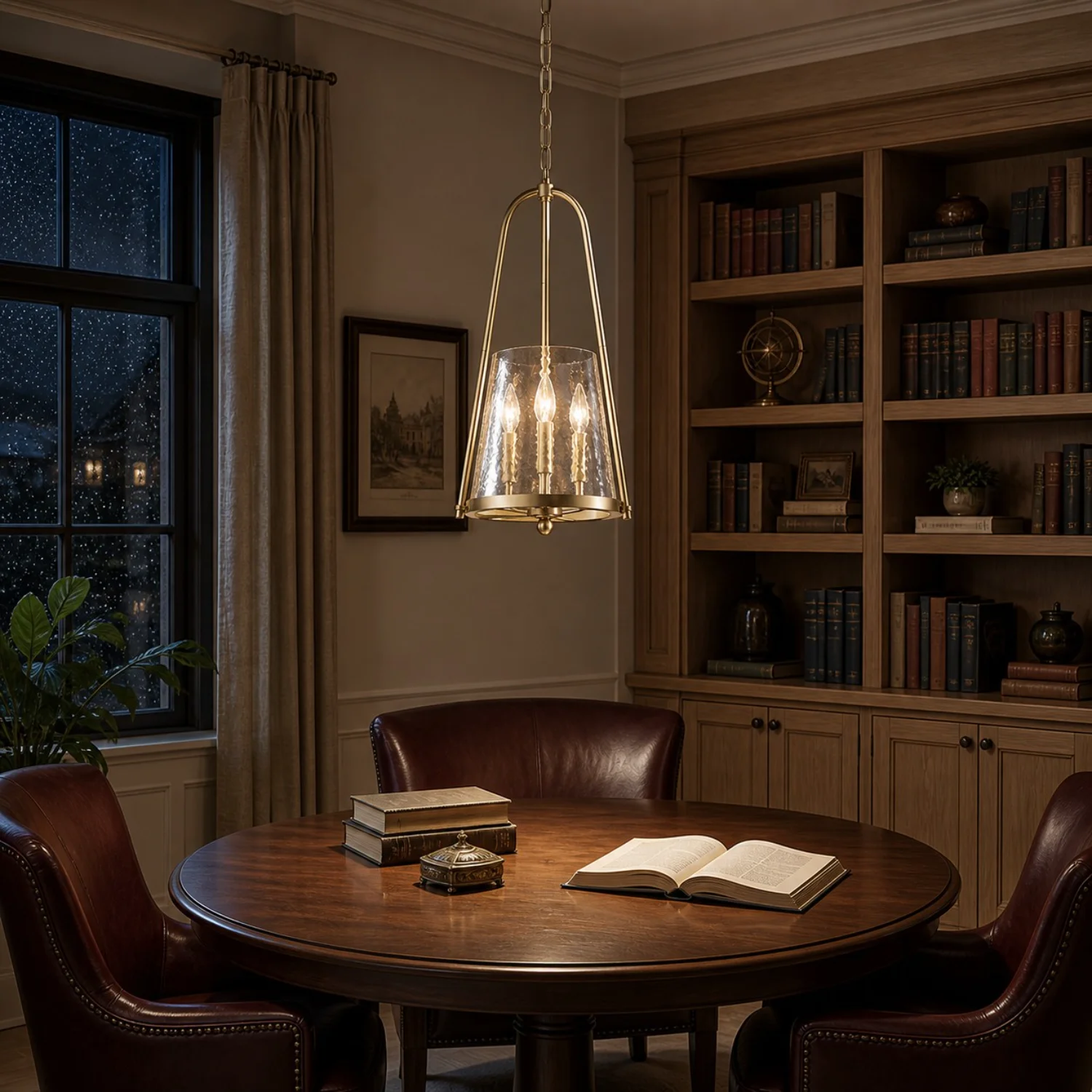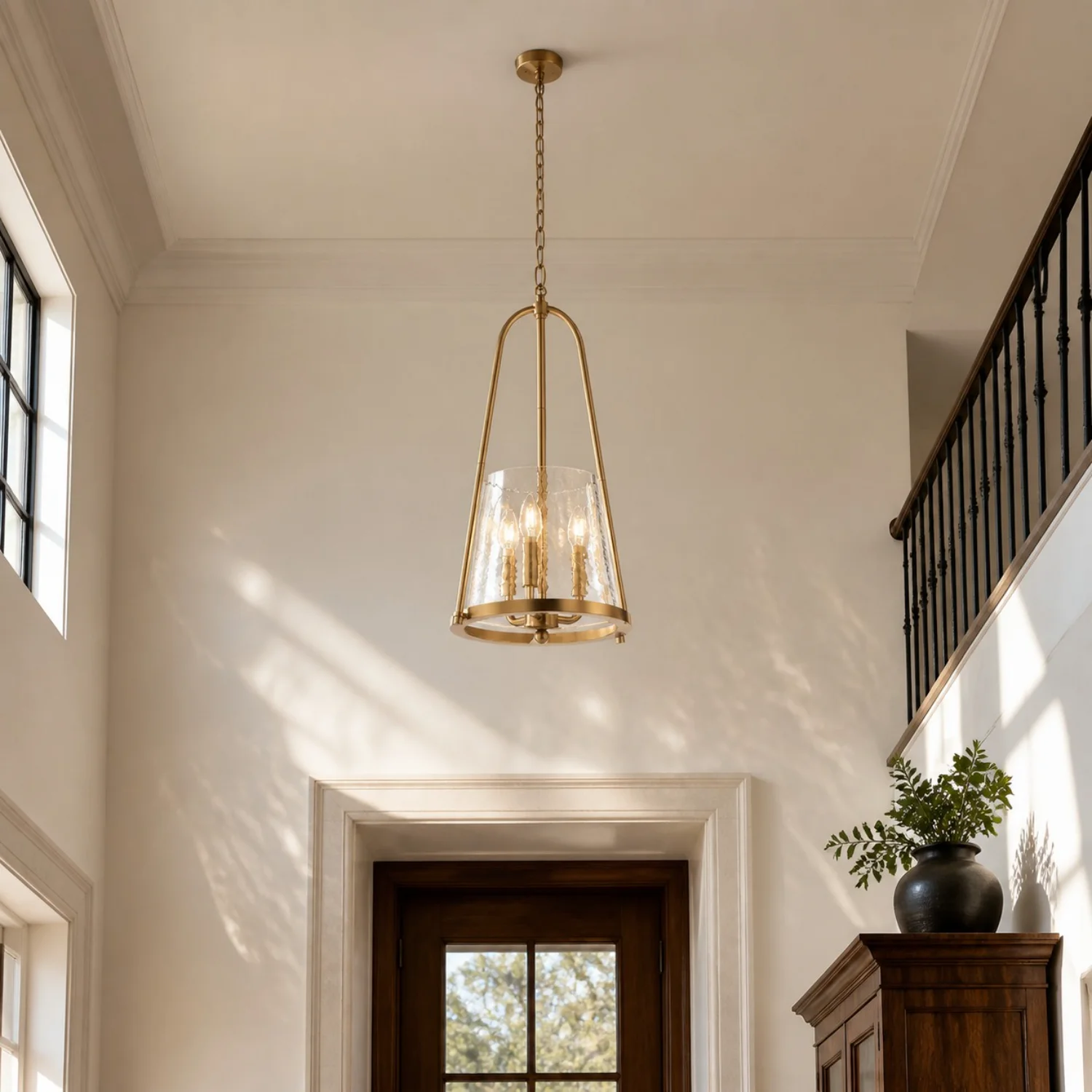
The right number of pendant lights for a kitchen island depends on the island length, the pendant diameter and how much visual weight you want above the work surface. Start with the island, then choose the light count.
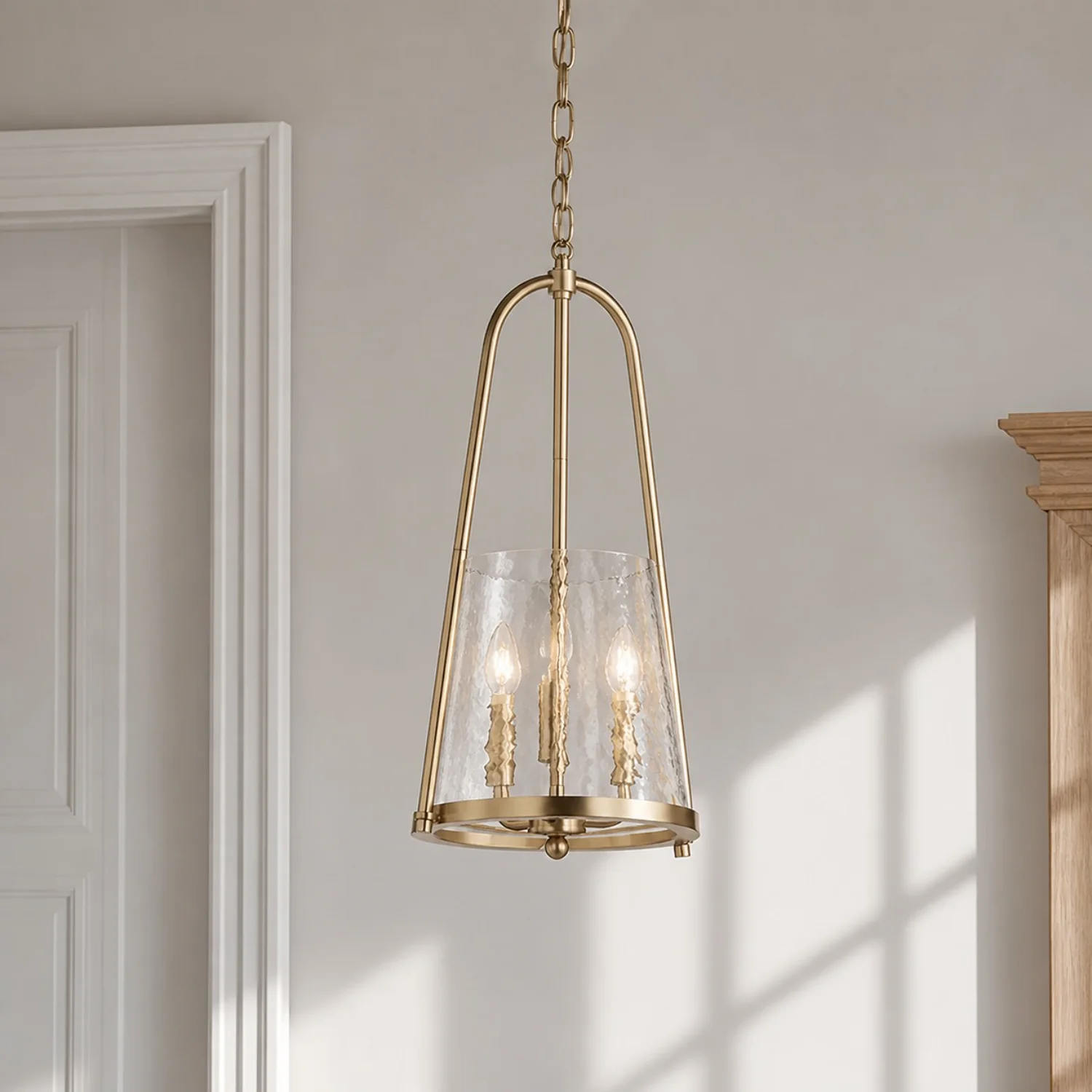
Start with the island, not the fixture
Measure the usable length of the island and mark its center. The pendant group should usually sit over the working and seating zone rather than over an empty overhang. This simple step prevents a common mistake: choosing a beautiful fixture first, then discovering that the composition feels crowded or too small.
For a short island, one larger pendant can create a clear focal point. A medium island often has room for two smaller pendants. A long island can support three, provided the lights have enough breathing space and do not interrupt the view across the room.
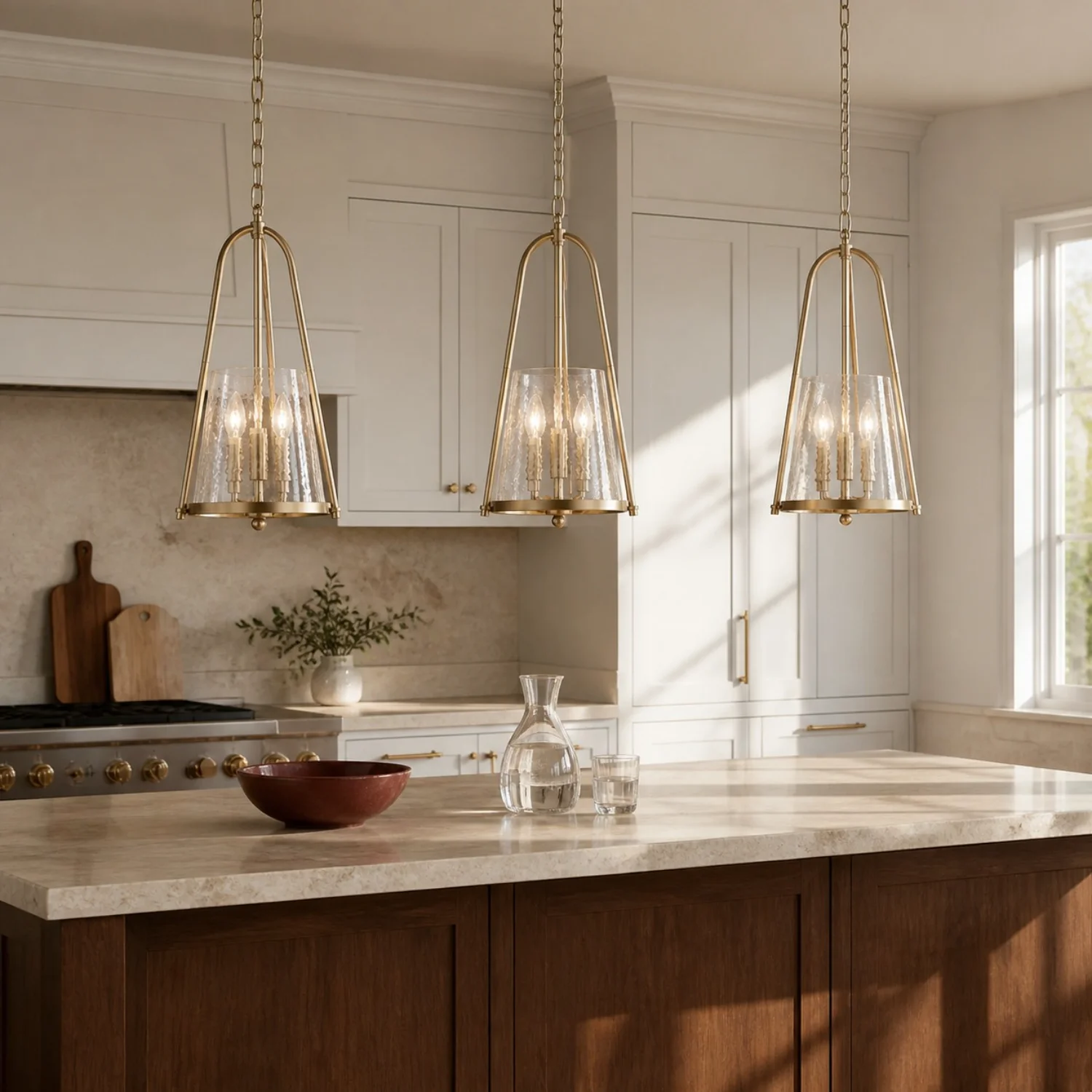
Choose one, two or three
One larger pendant
One light works well when the island is compact or when the kitchen already has strong ceiling or under-cabinet lighting. A larger shade gives the eye one calm anchor, while a centered position keeps the island visually organized.
Two smaller pendants
Two pendants suit many medium-length islands because they spread light across the surface without creating a solid visual bar. Center the pair as a group, then leave similar space between each light and the island ends. The exact gap depends on the shade diameter and the length of the seating area.
Three pendants
Three lights can make a long island feel intentional, especially when the fixtures are compact and visually light. Keep the centers aligned along the island's long axis and use the same finish, shade shape and hanging height for a composed look.
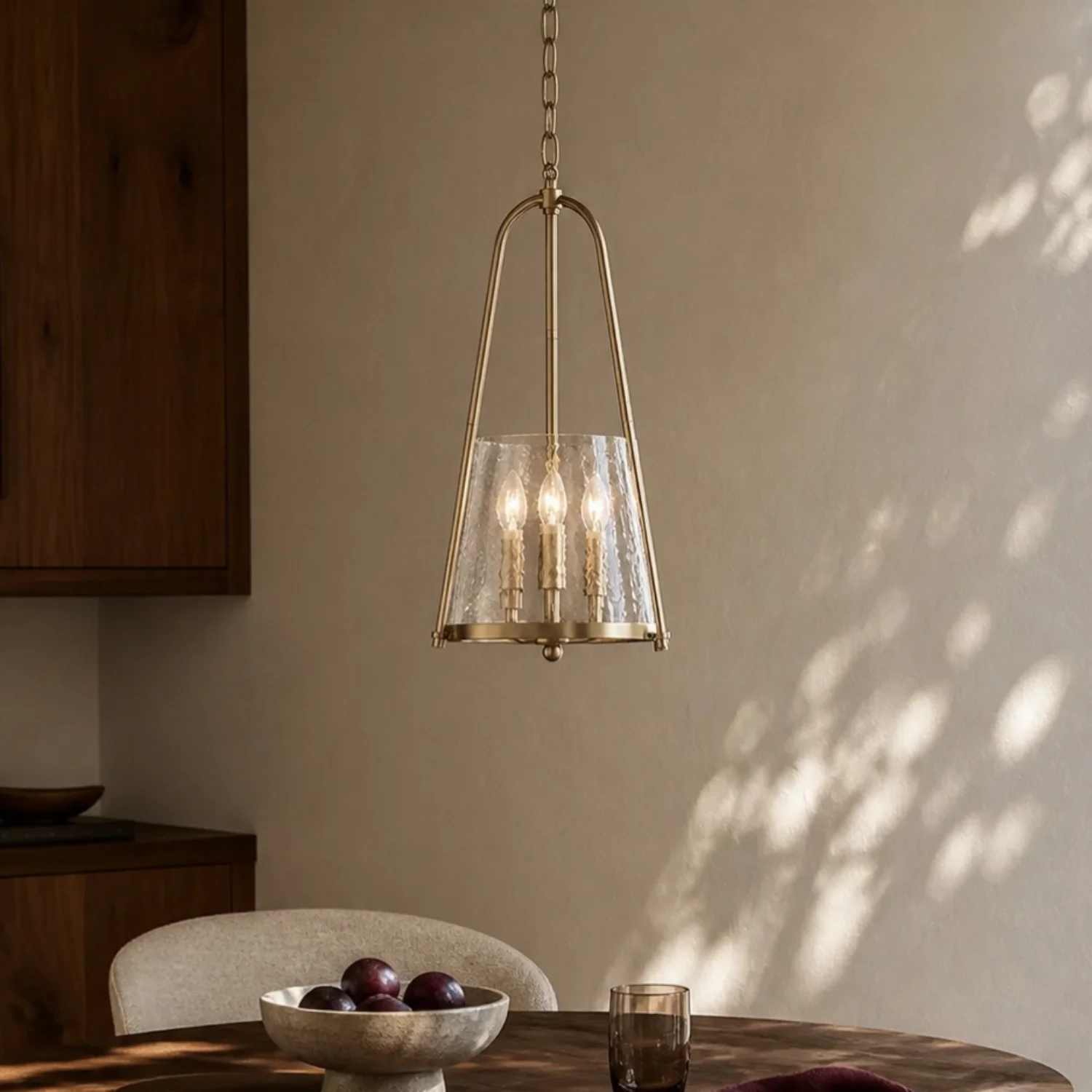
Check scale, spacing and sightlines
Use paper circles or painter's tape on the countertop to test the shade diameter before ordering. Many layouts feel balanced when pendant centers are roughly 24 to 30 inches apart, but the fixture diameter and island length should lead the decision. Leave enough room near the ends so the outer shades do not feel pushed to the edge.
Height matters as much as count. A common starting point is to place the bottom of the shade about 30 to 36 inches above the countertop, then adjust for the room's sightlines, ceiling height and the people using the kitchen. You should be able to see across the island without the fixtures sitting directly in the line of conversation.
Use a two-size porcelain pendant as a planning example
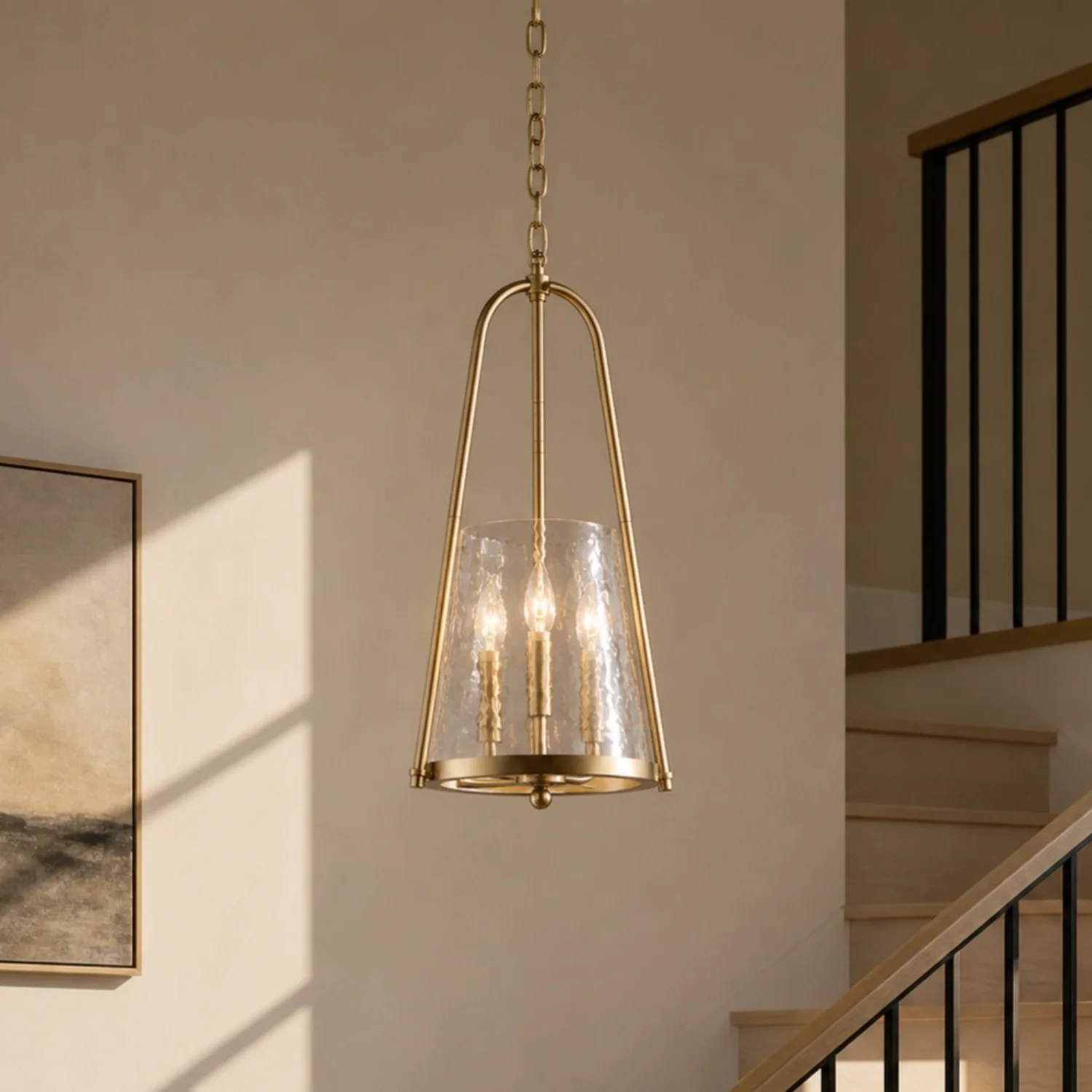
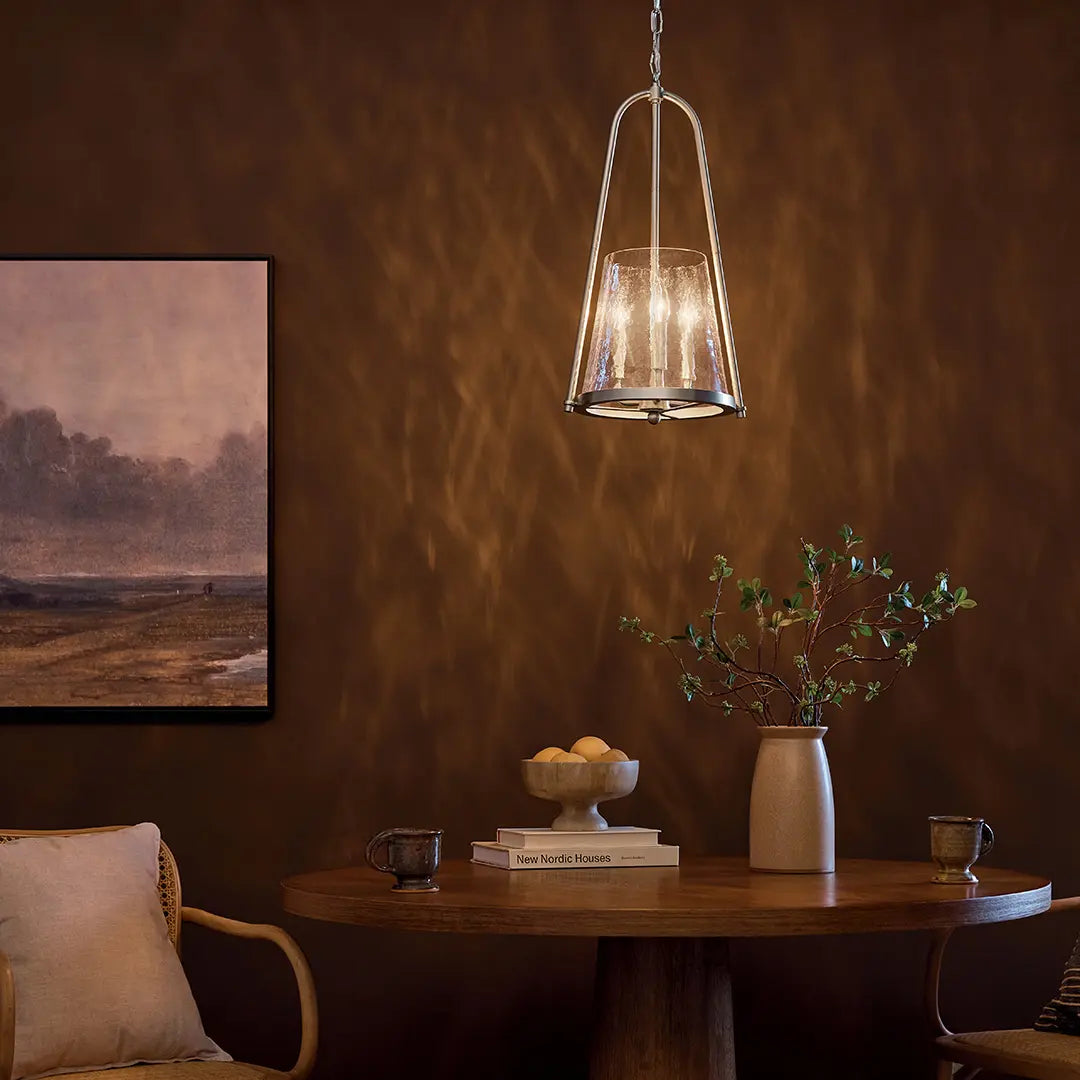
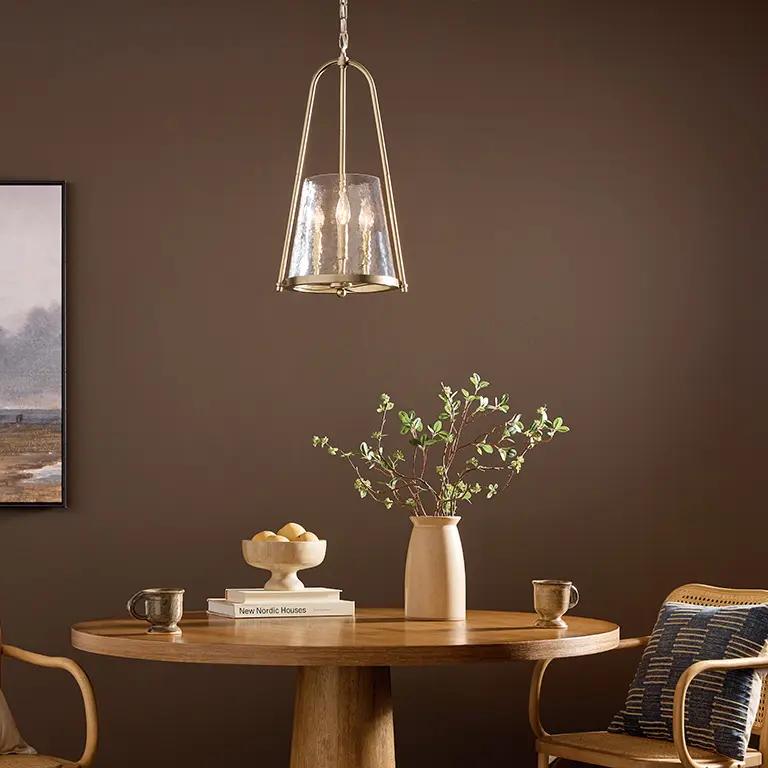
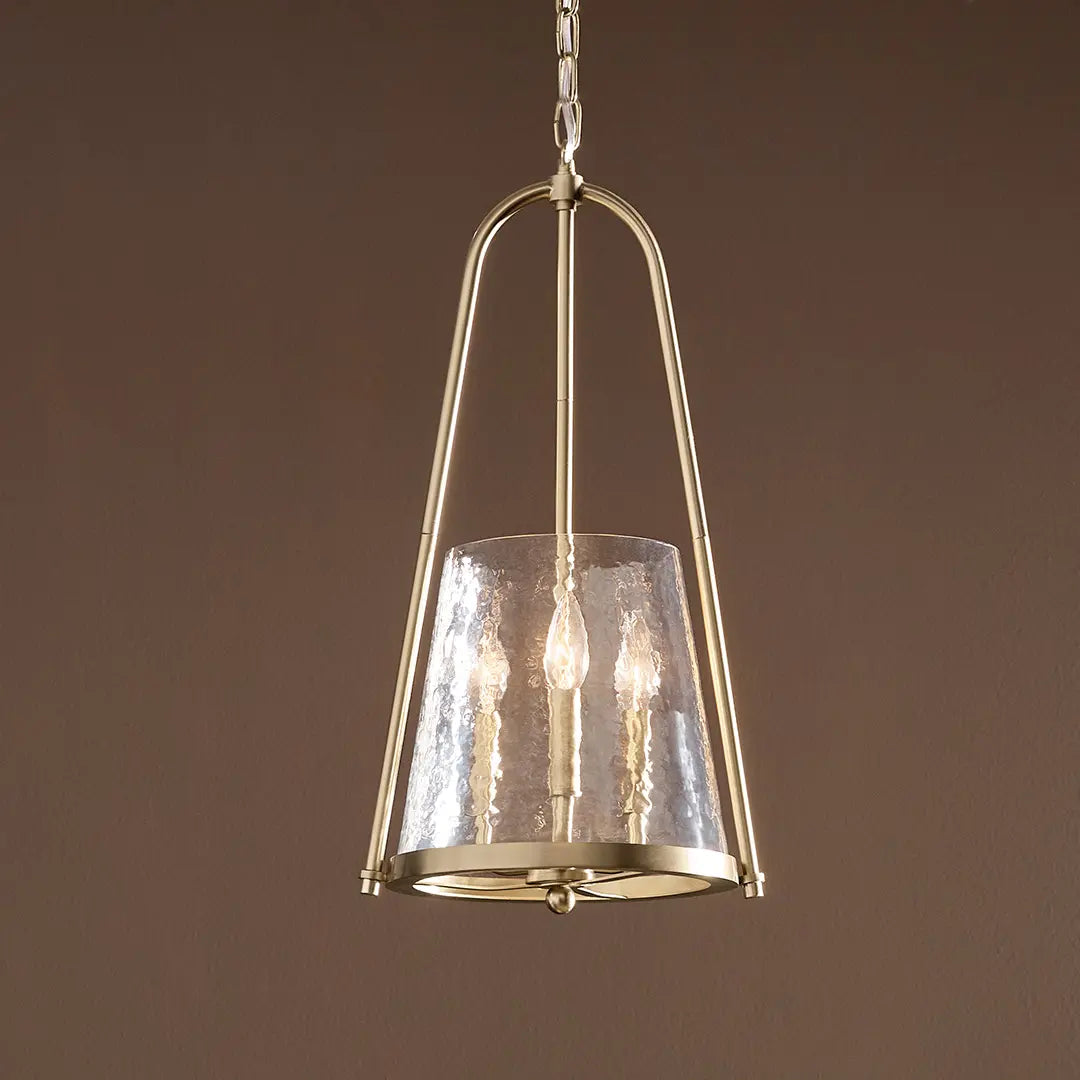
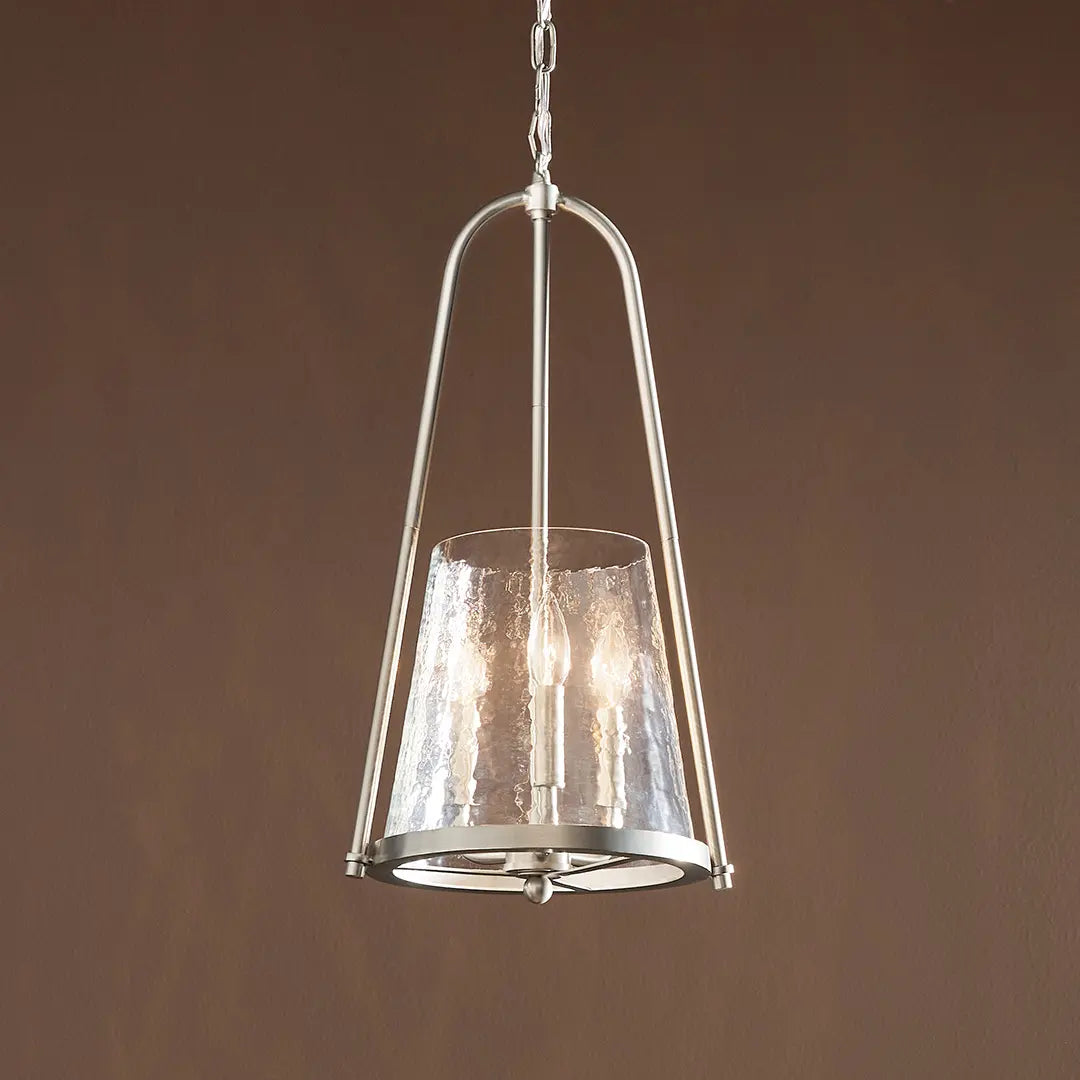
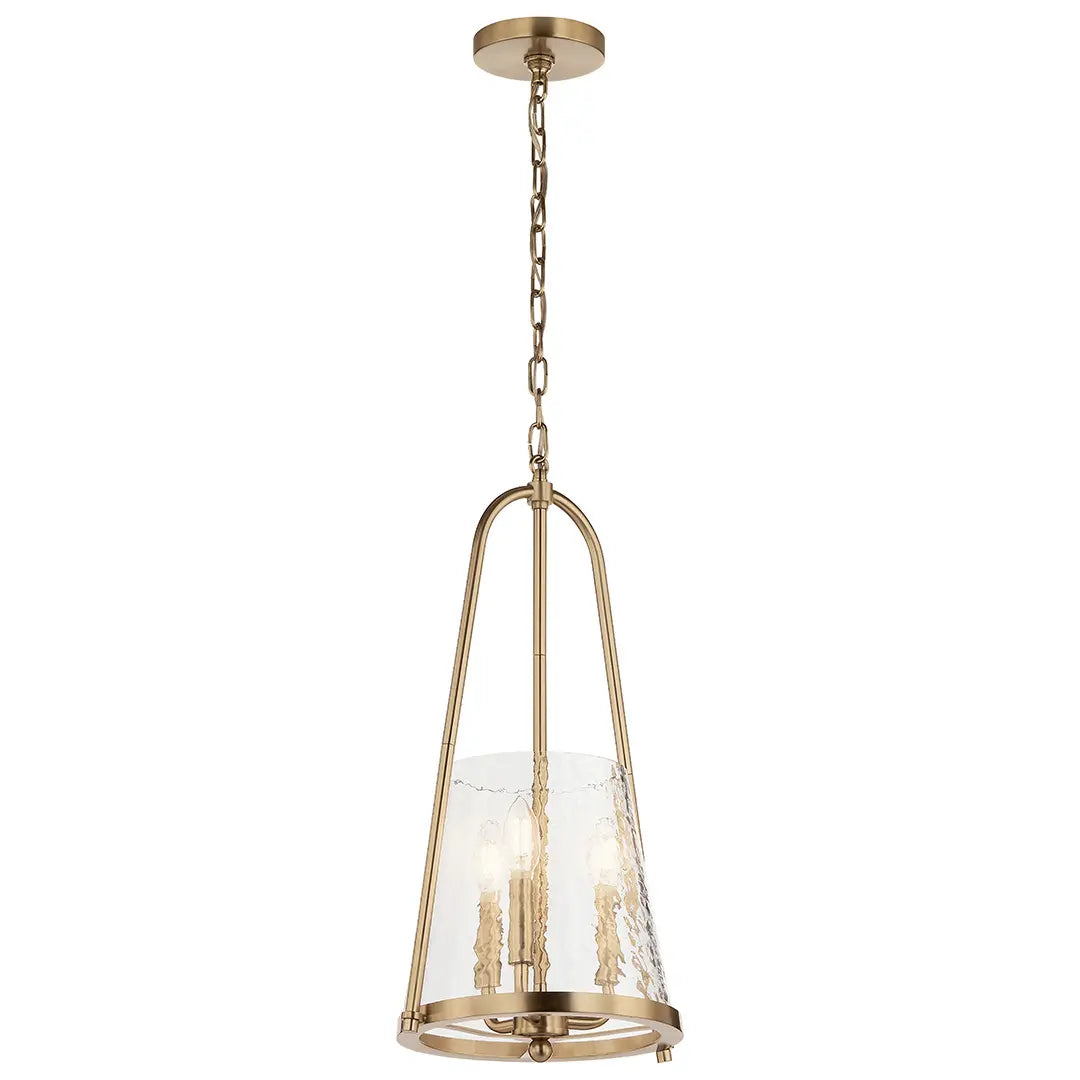
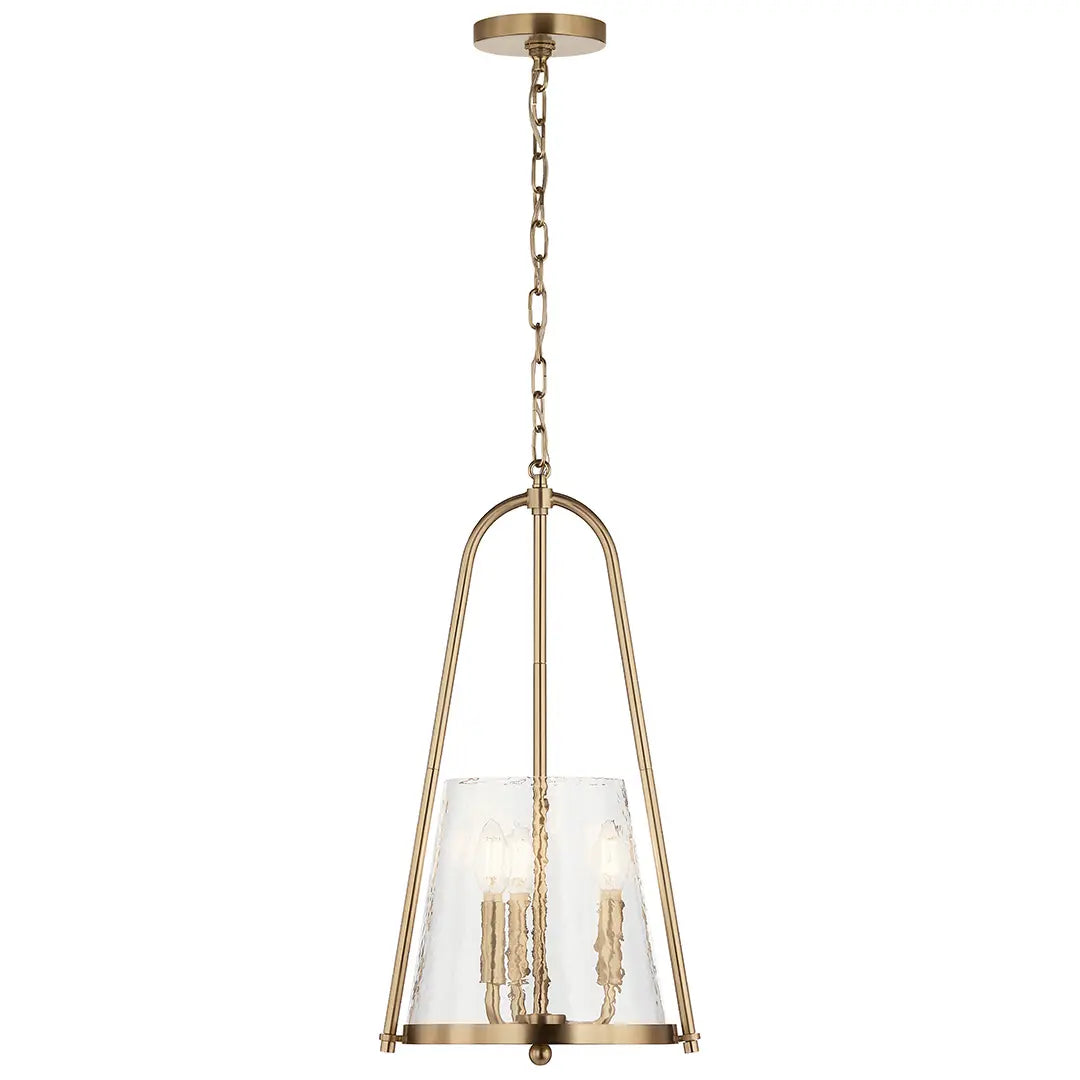
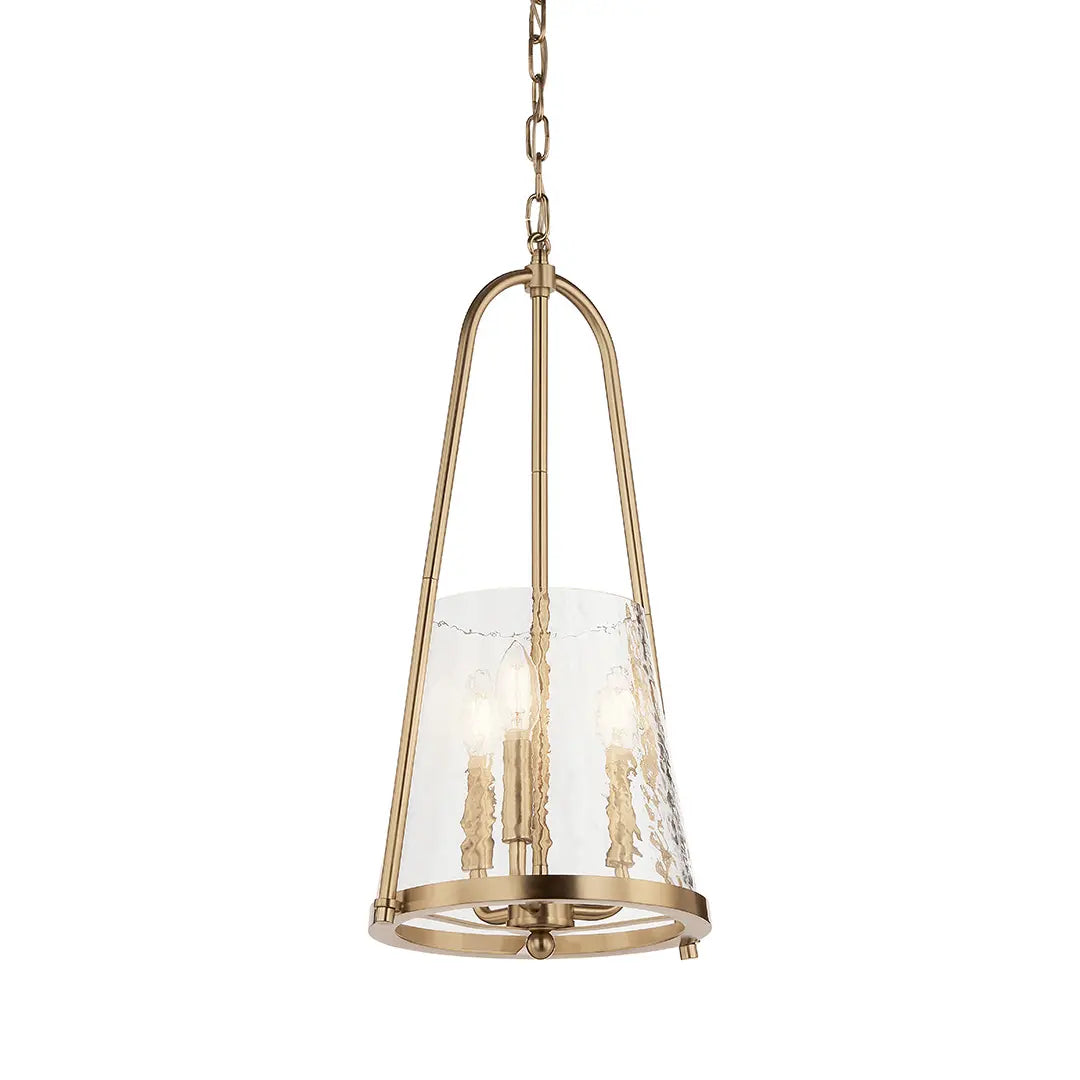
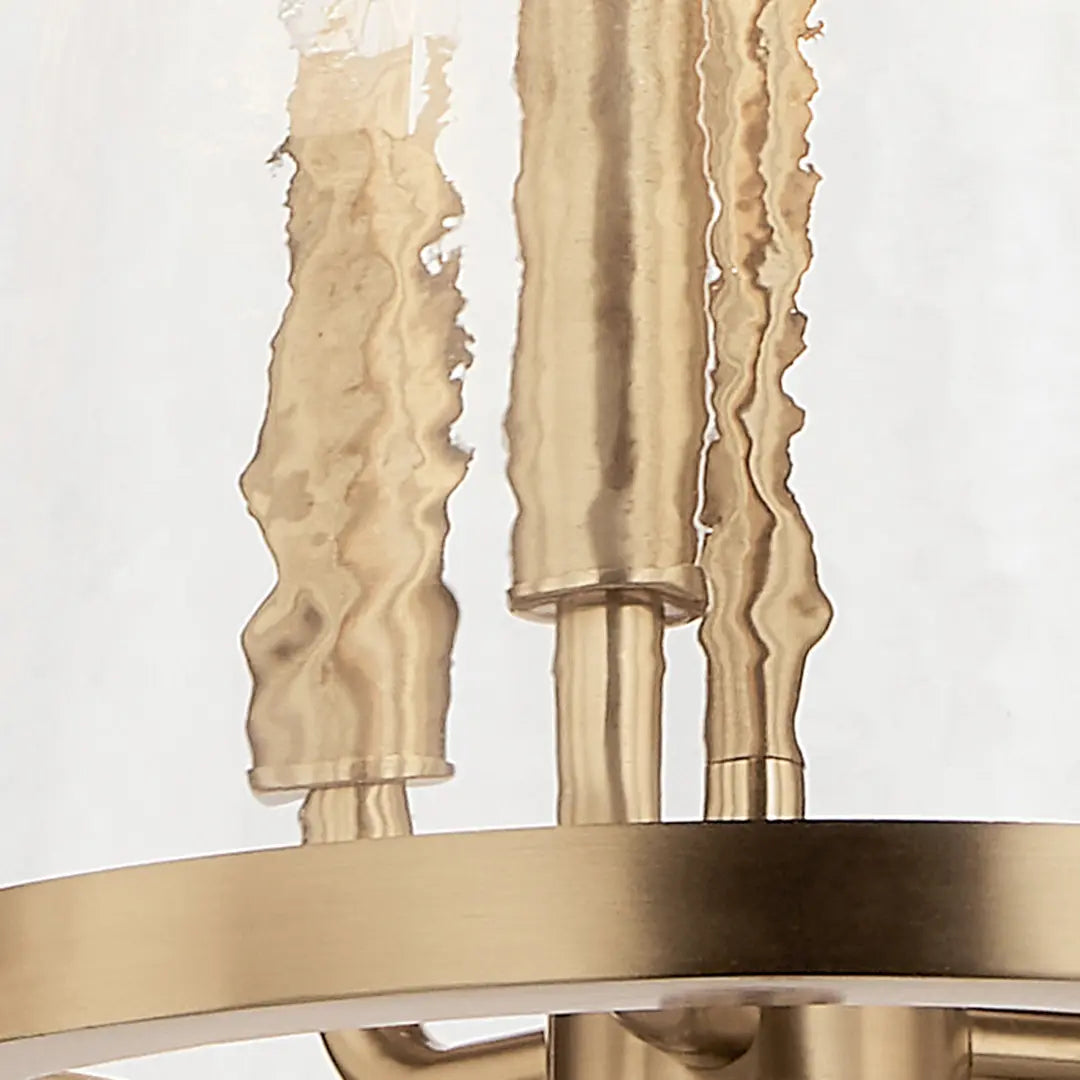
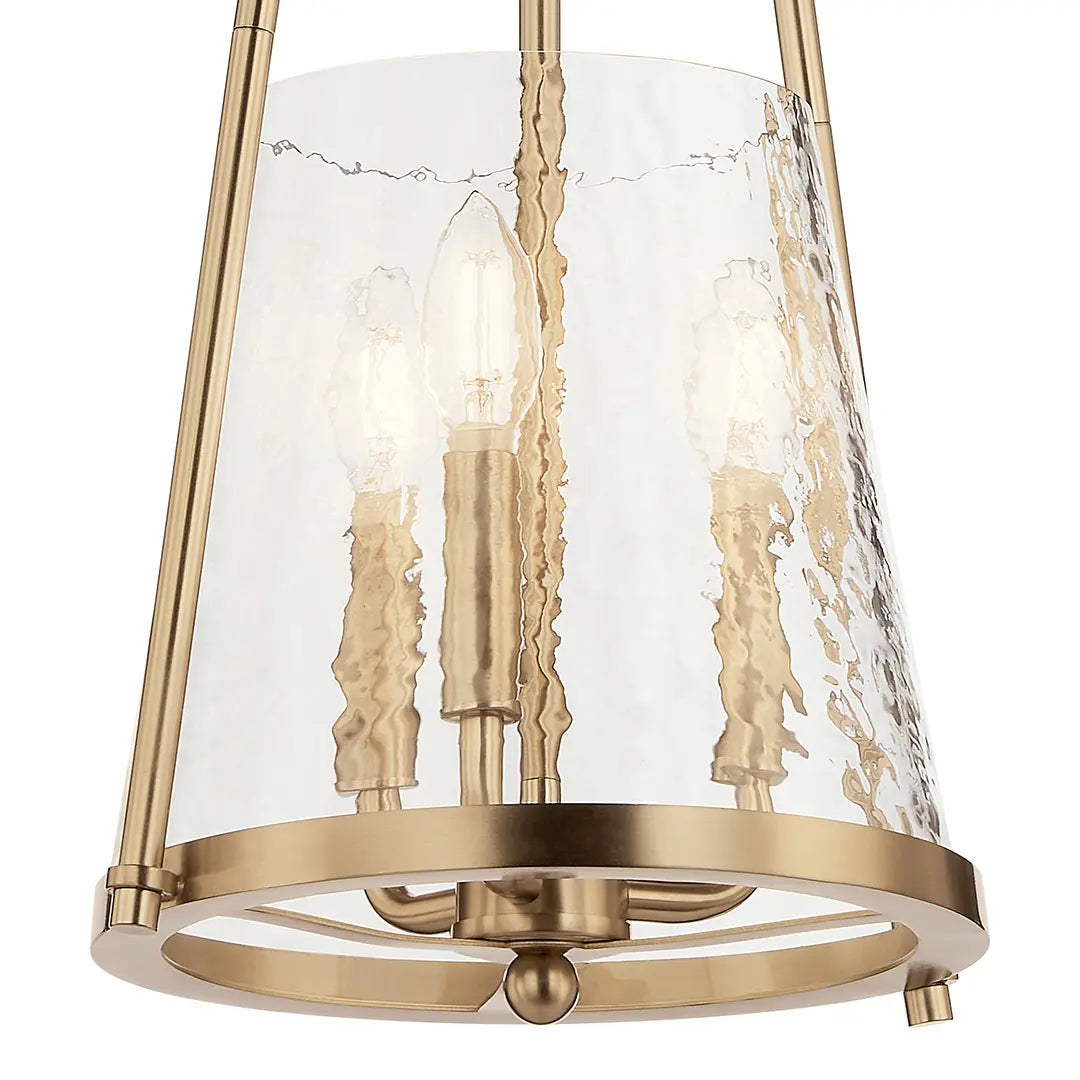
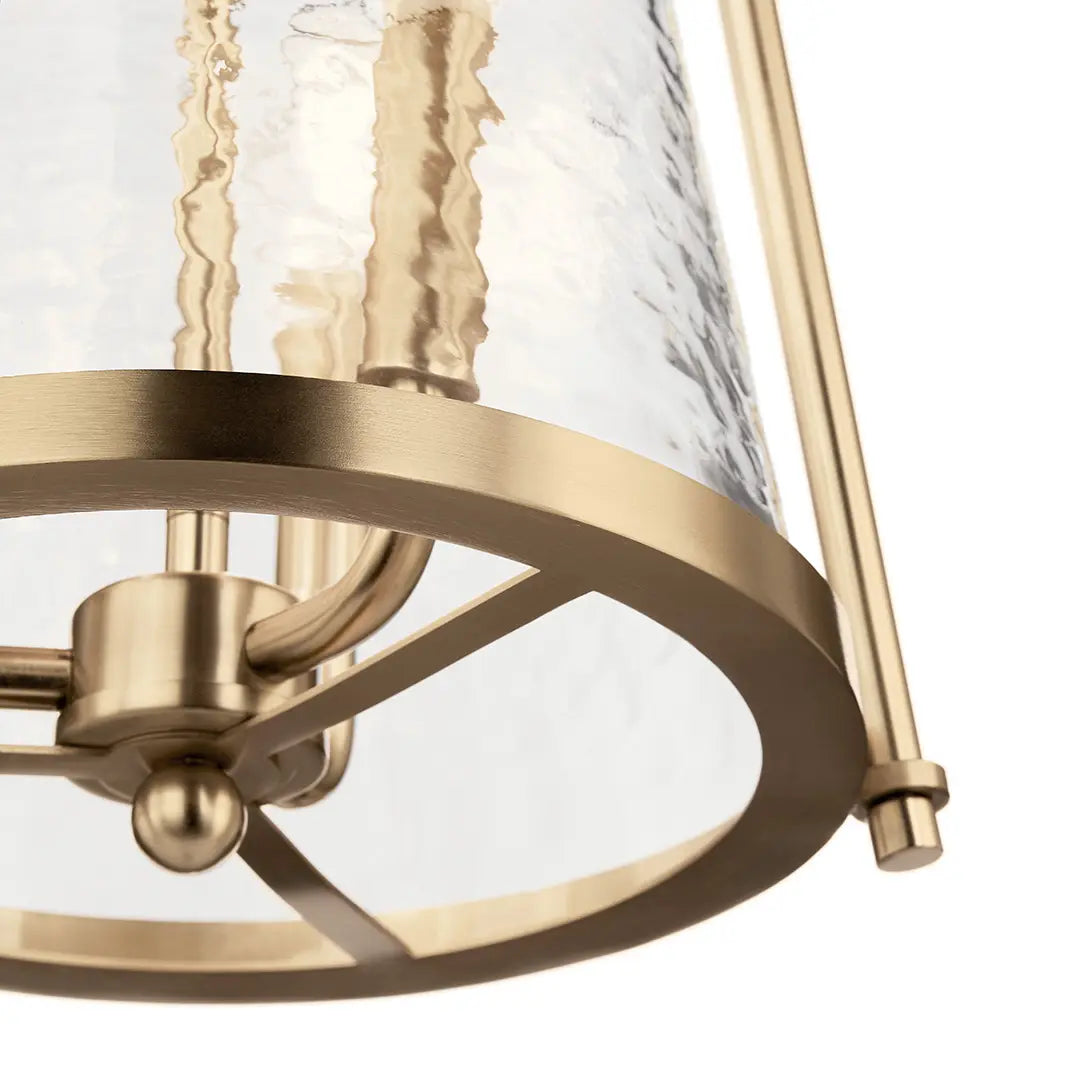
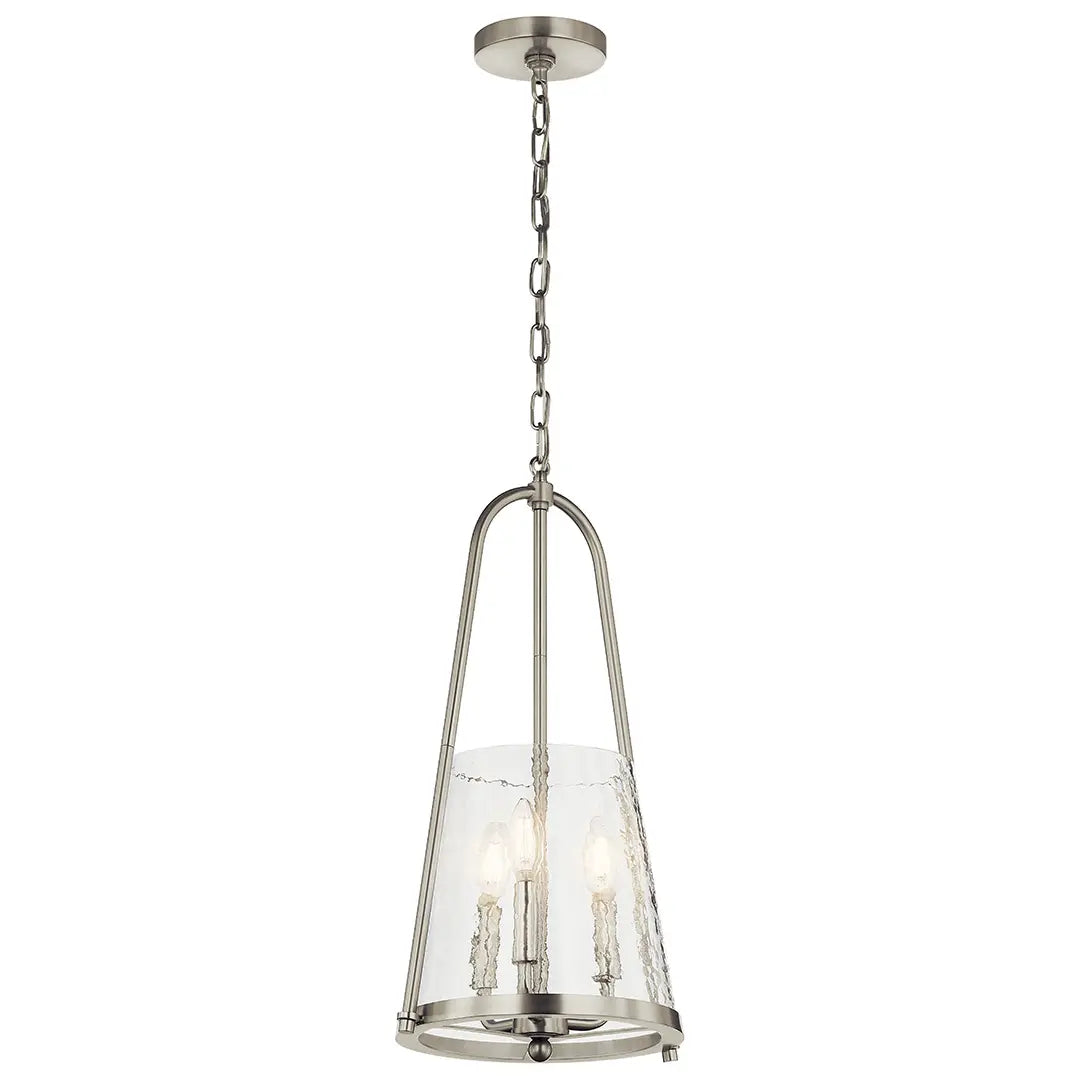
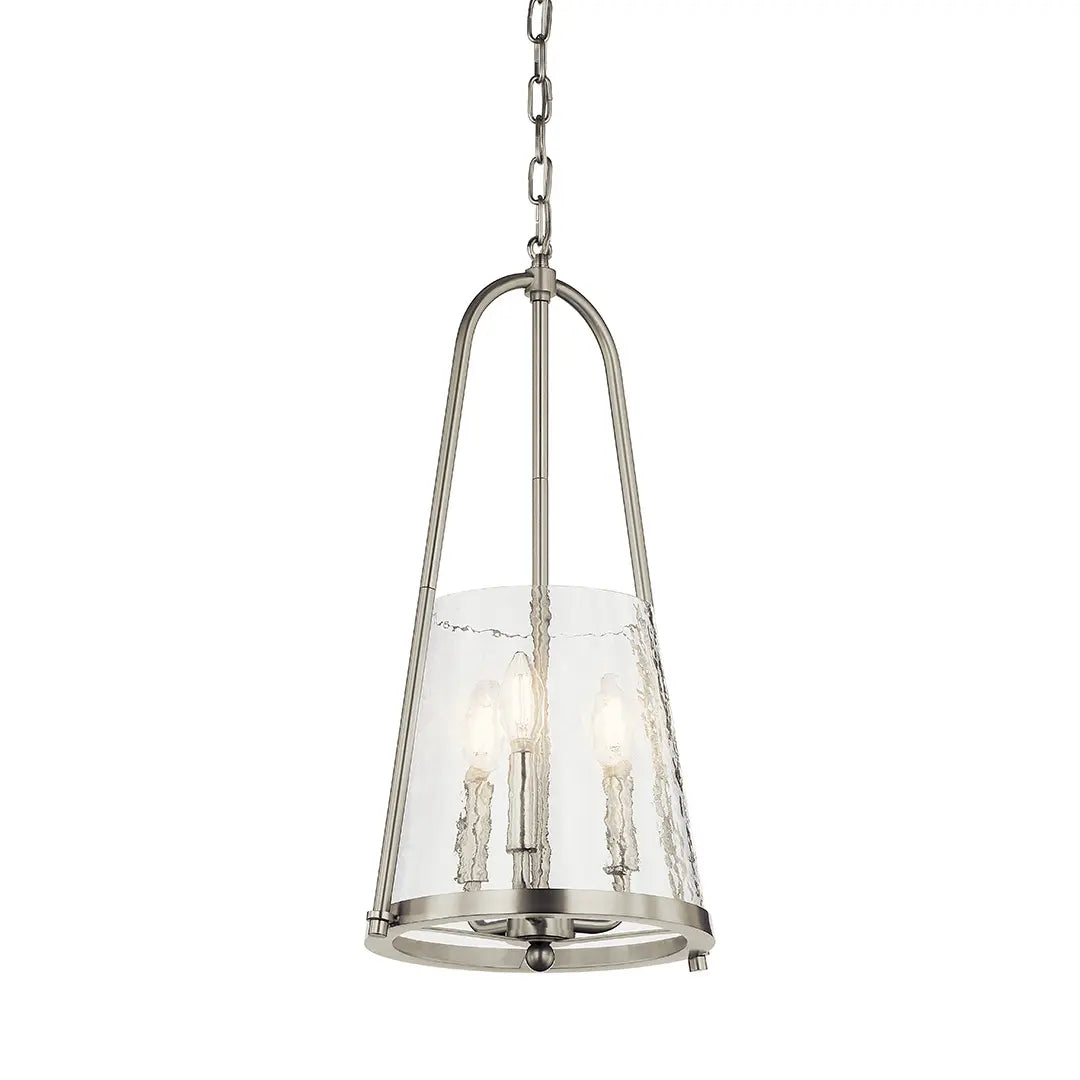
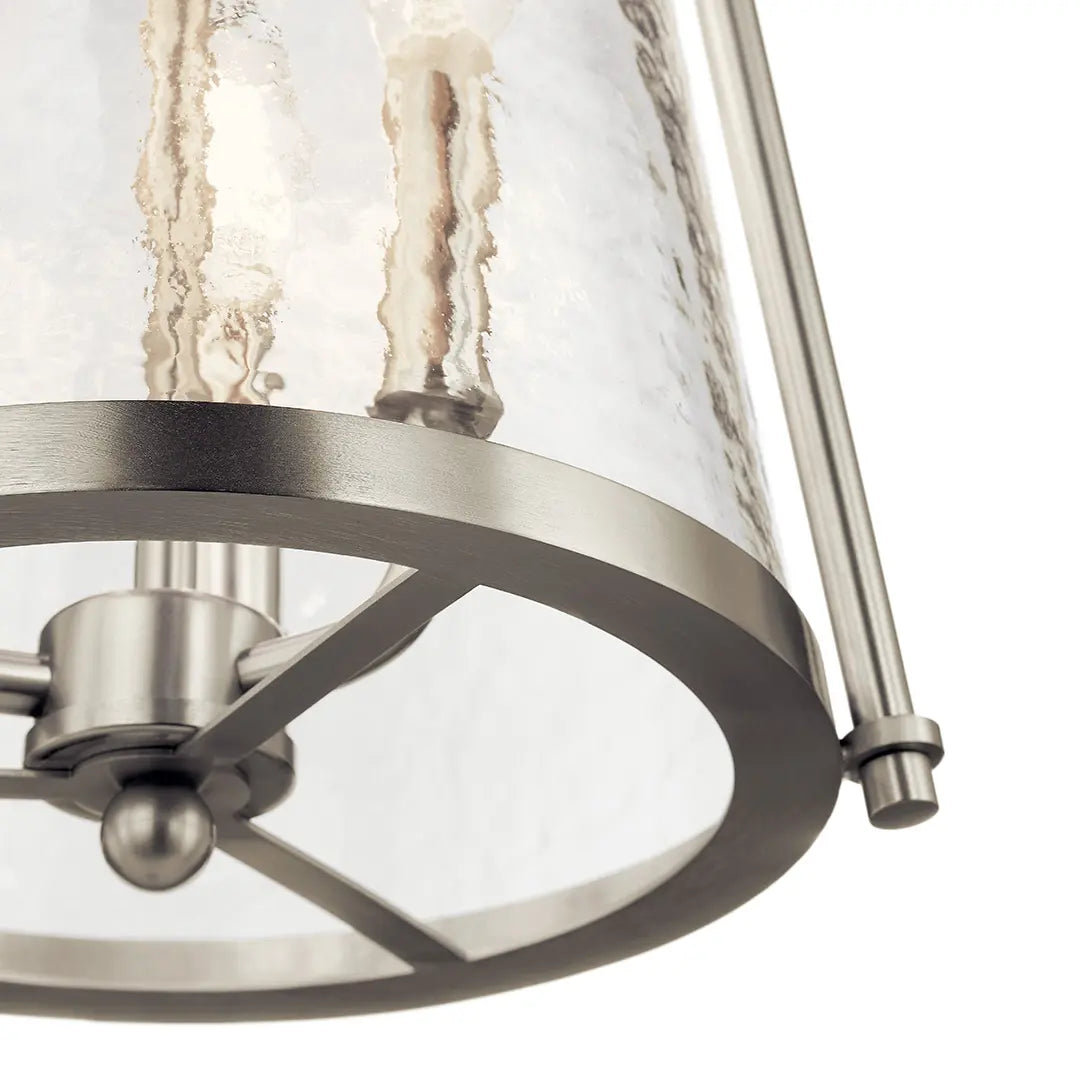
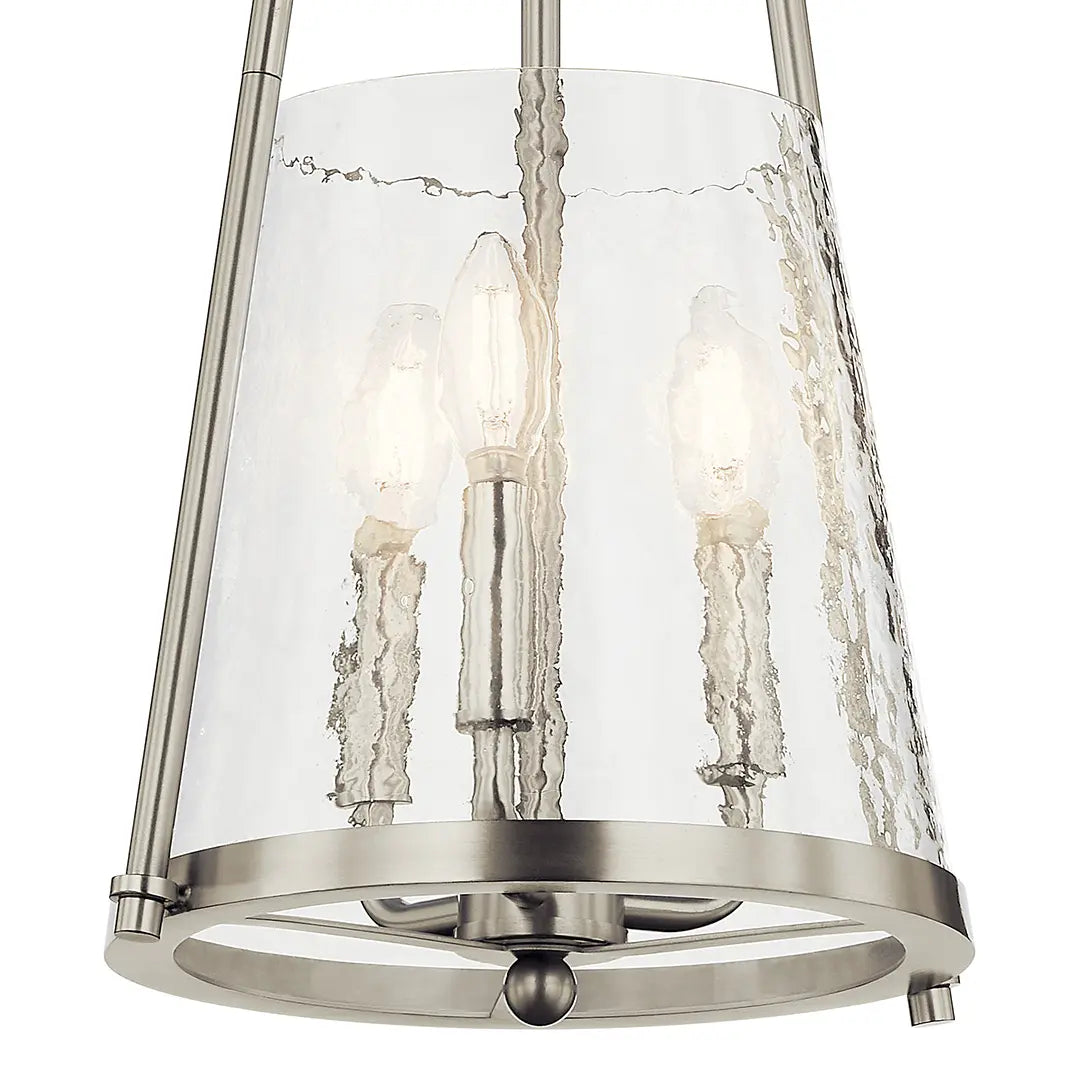
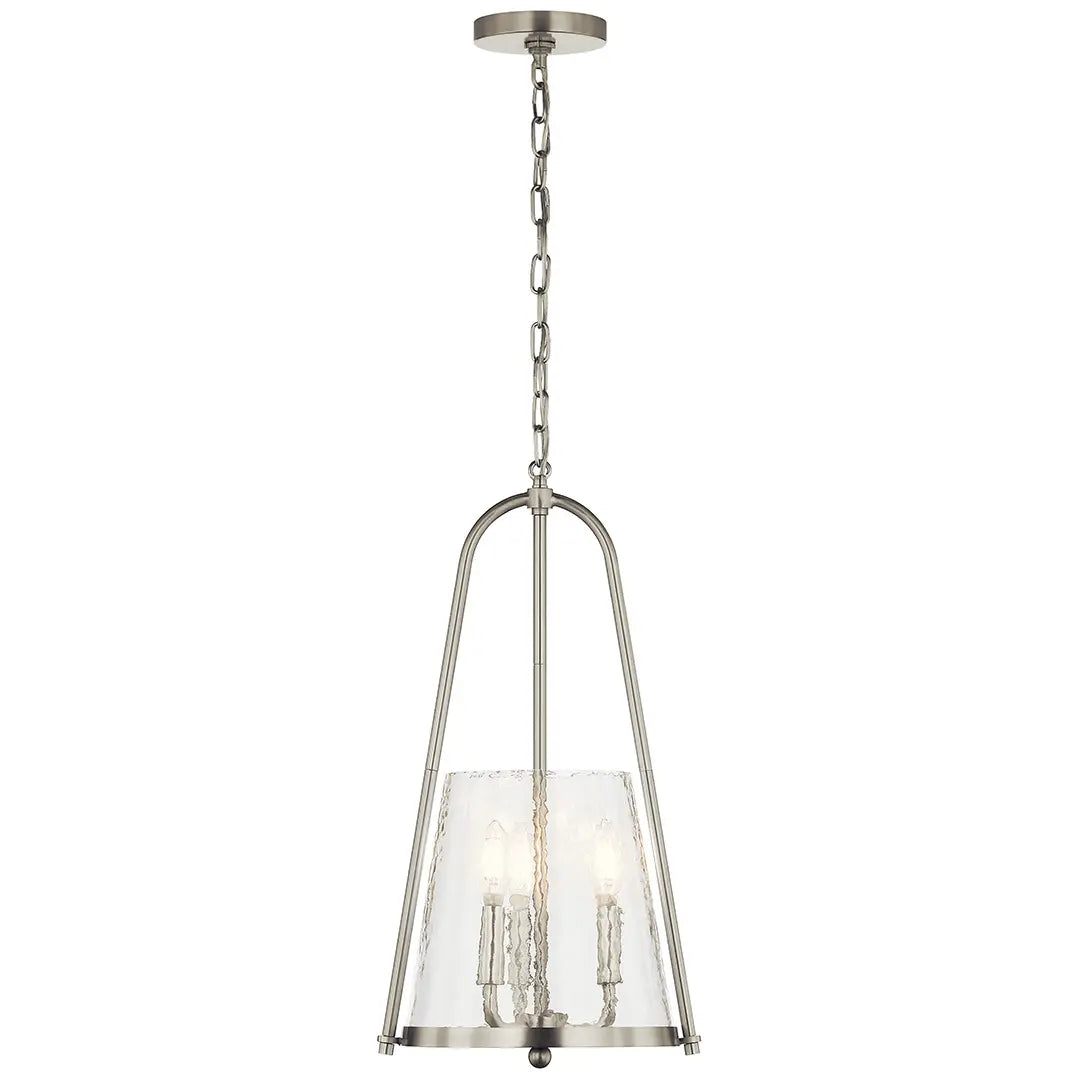
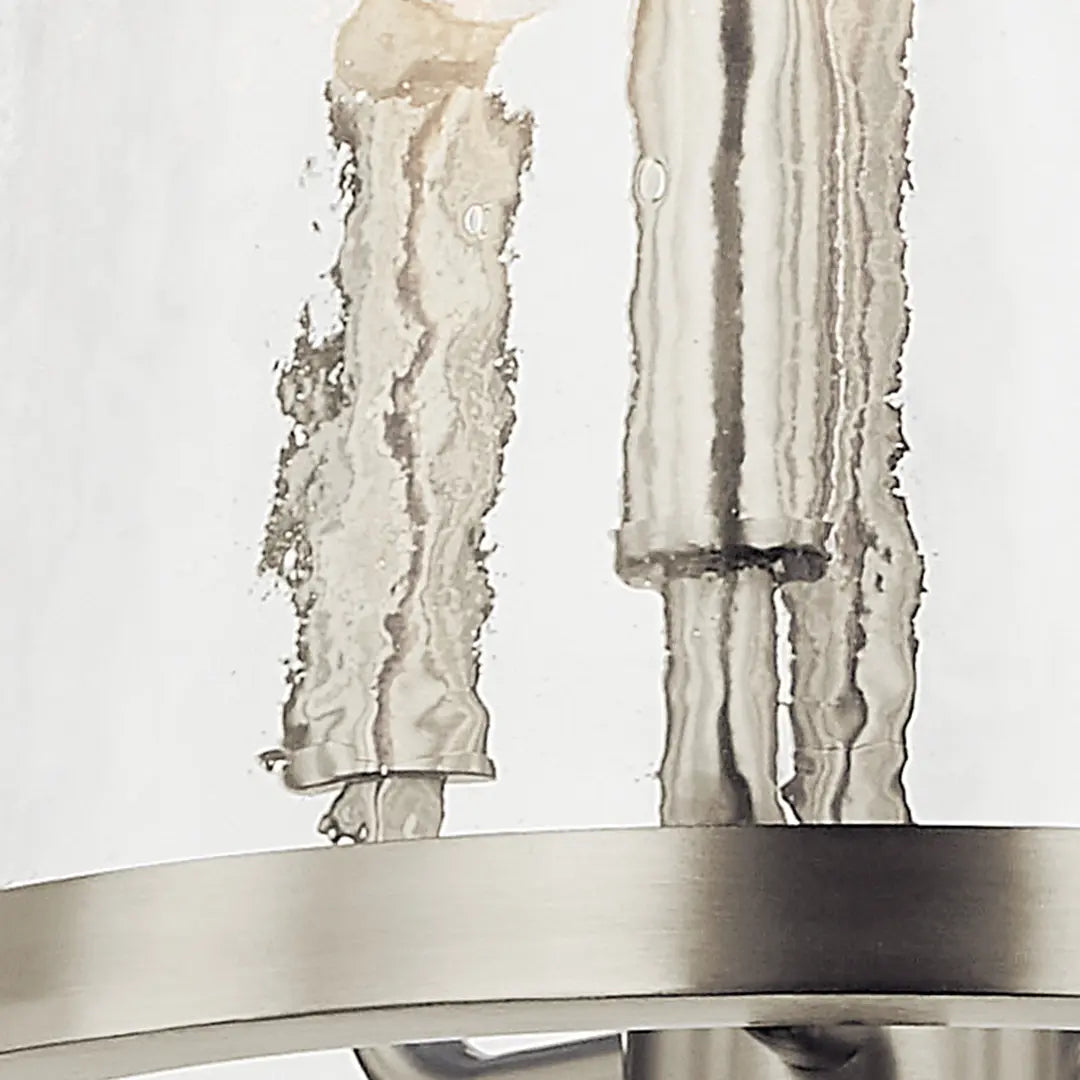
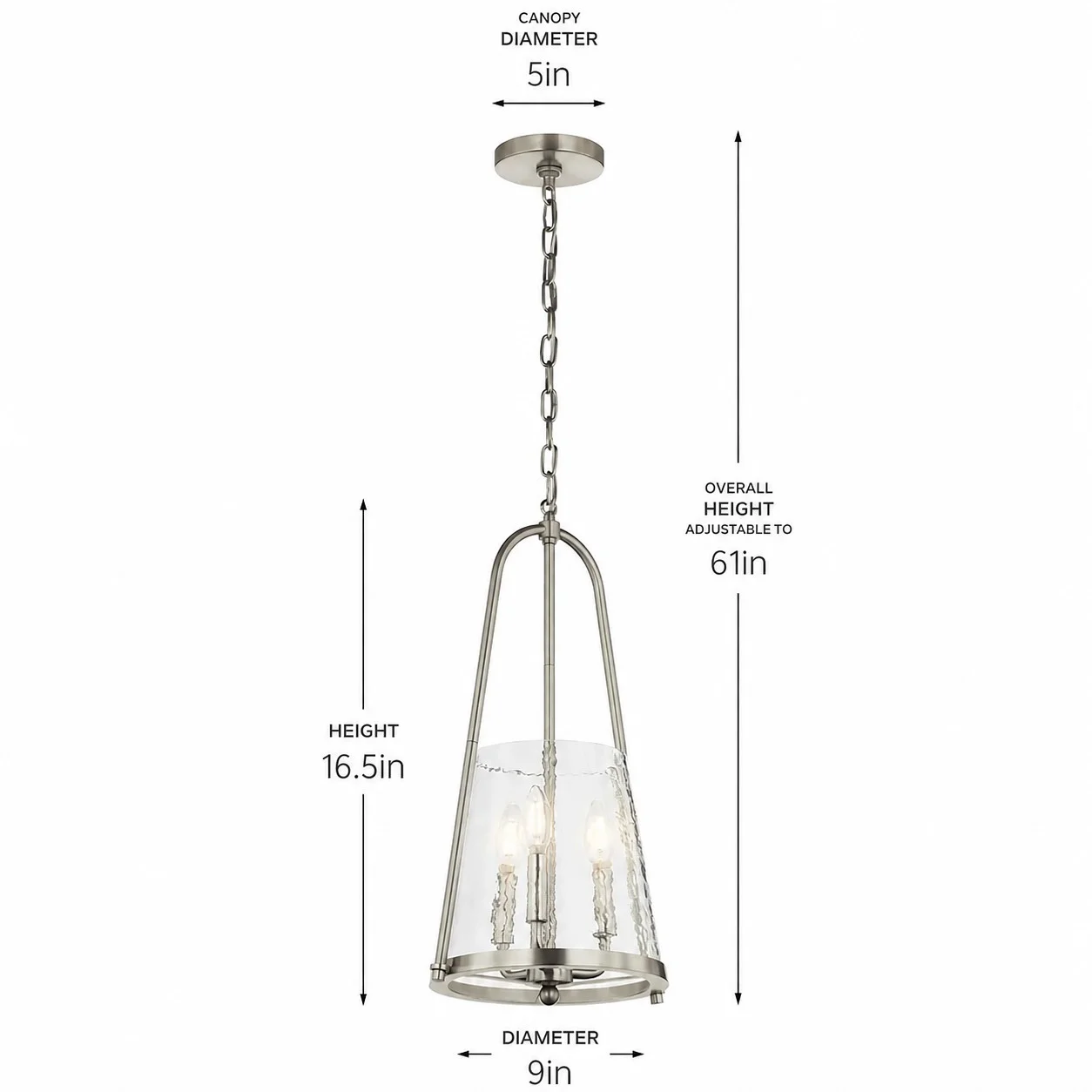
The Ismena Industrial Flared Hammered Glass Pendant Light is a useful planning example because it is a single pendant with a 9-inch diameter and a 16.5-inch height. Its hammered-glass shade and metal frame come in Brushed Nickel or Champagne Bronze, while the E12 base supports one bulb up to 60W. The bulb is not included, and the fixture is designed for 120V hardwired ceiling installation.
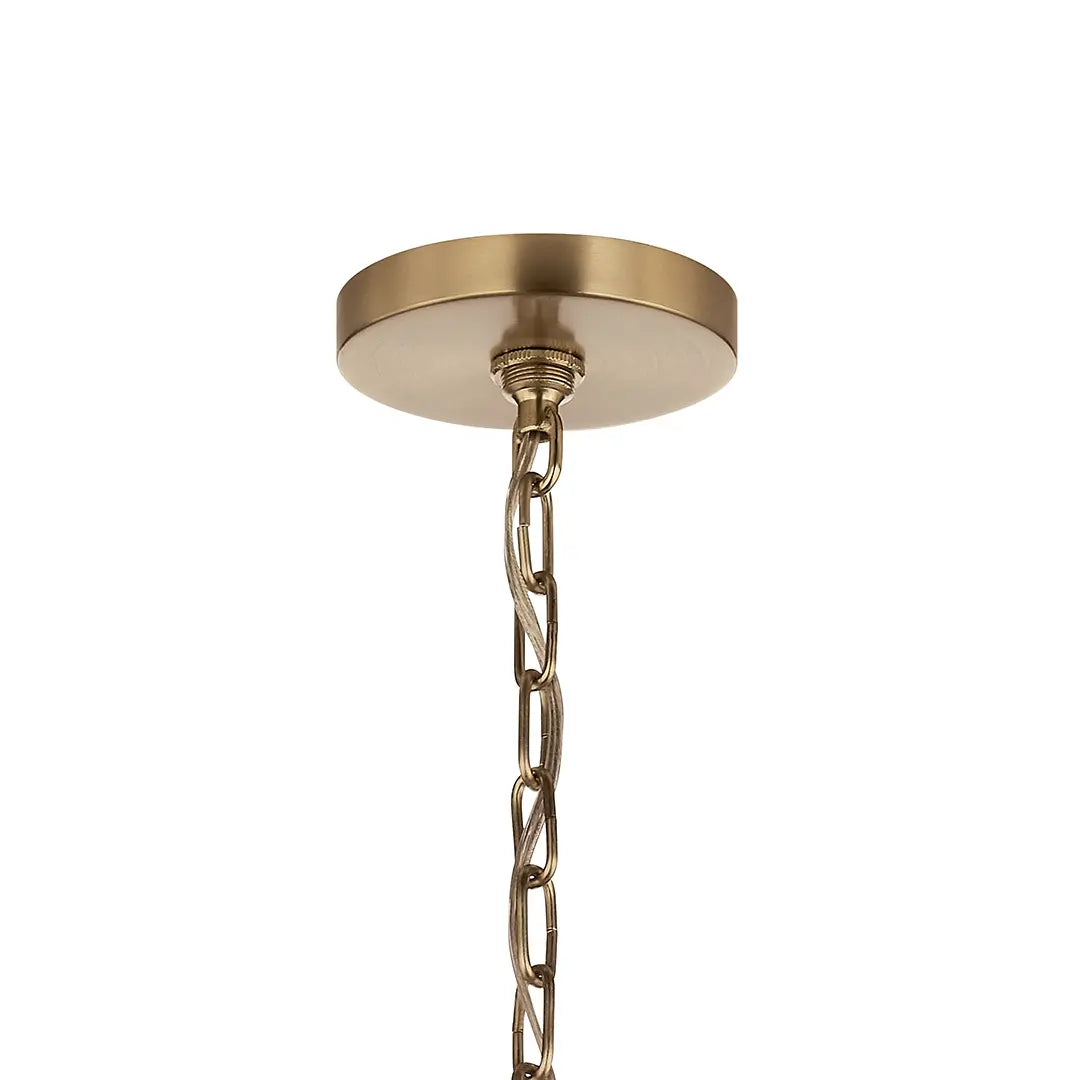
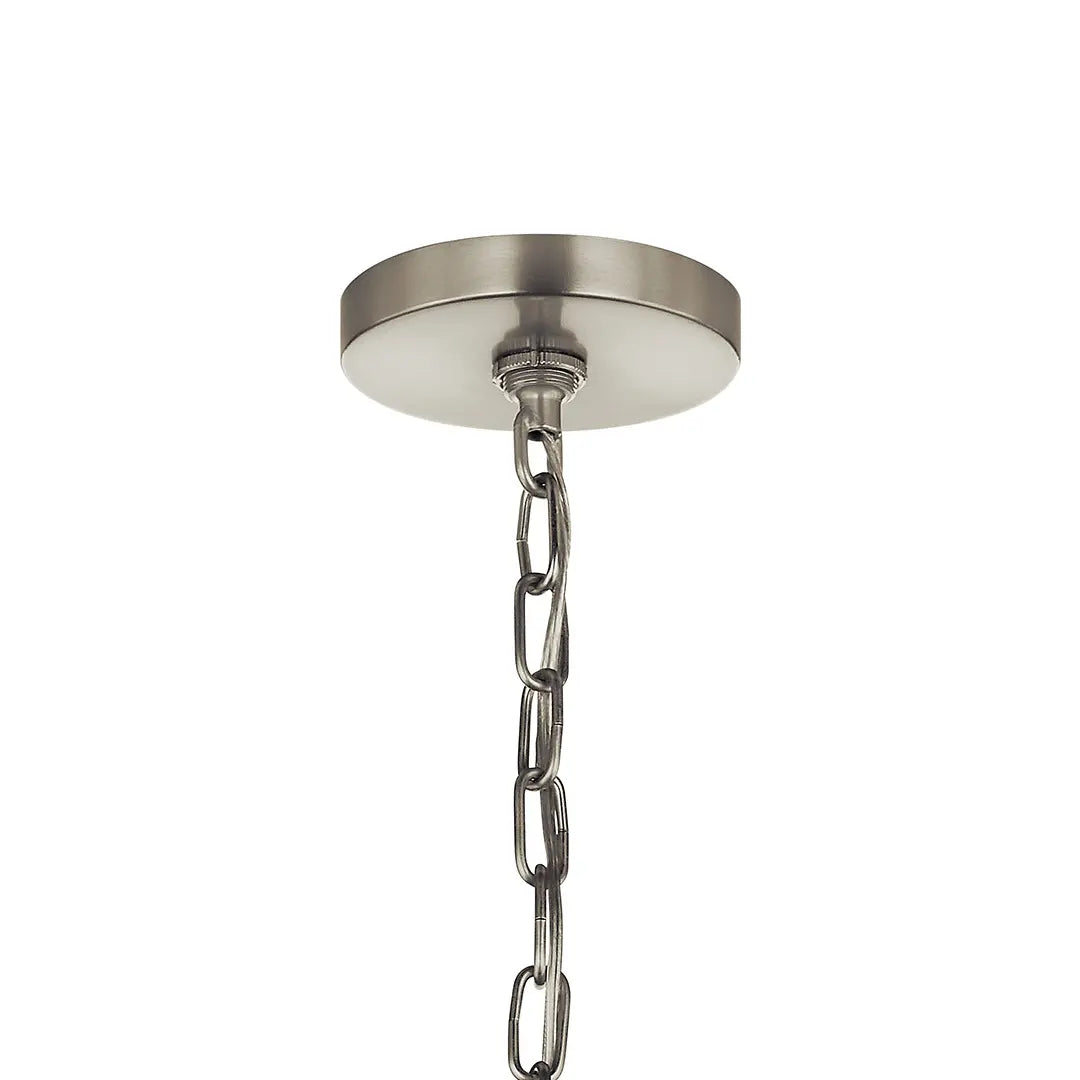
Use one Ismena pendant as a focused anchor over a short island, or repeat the same single pendant over a longer surface when the spacing works. Choose the finish that suits the room, then confirm the chain drop, ceiling support and electrical connection with a qualified installer.
- Measure the island's usable length and mark the center.
- Test one, two or three paper circles at the intended shade diameter.
- Check the view from standing and seated positions.
- Match the bulb base and maximum wattage to your chosen bulb.
- Compare the porcelain pendant sizes only after the layout feels balanced.
Good pendant lights for kitchen island planning is less about following a fixed count and more about proportion. When the island, shade size and sightlines agree, one, two or three lights can all look deliberate.