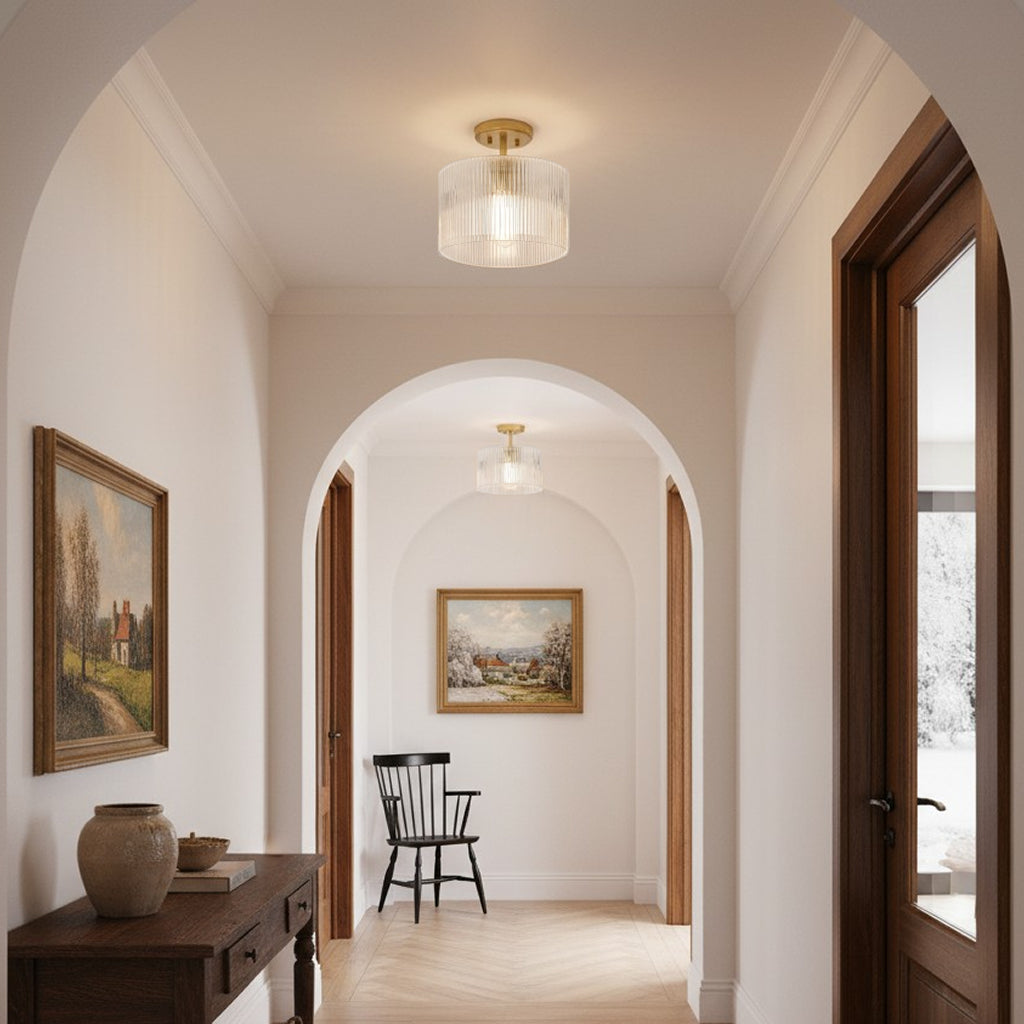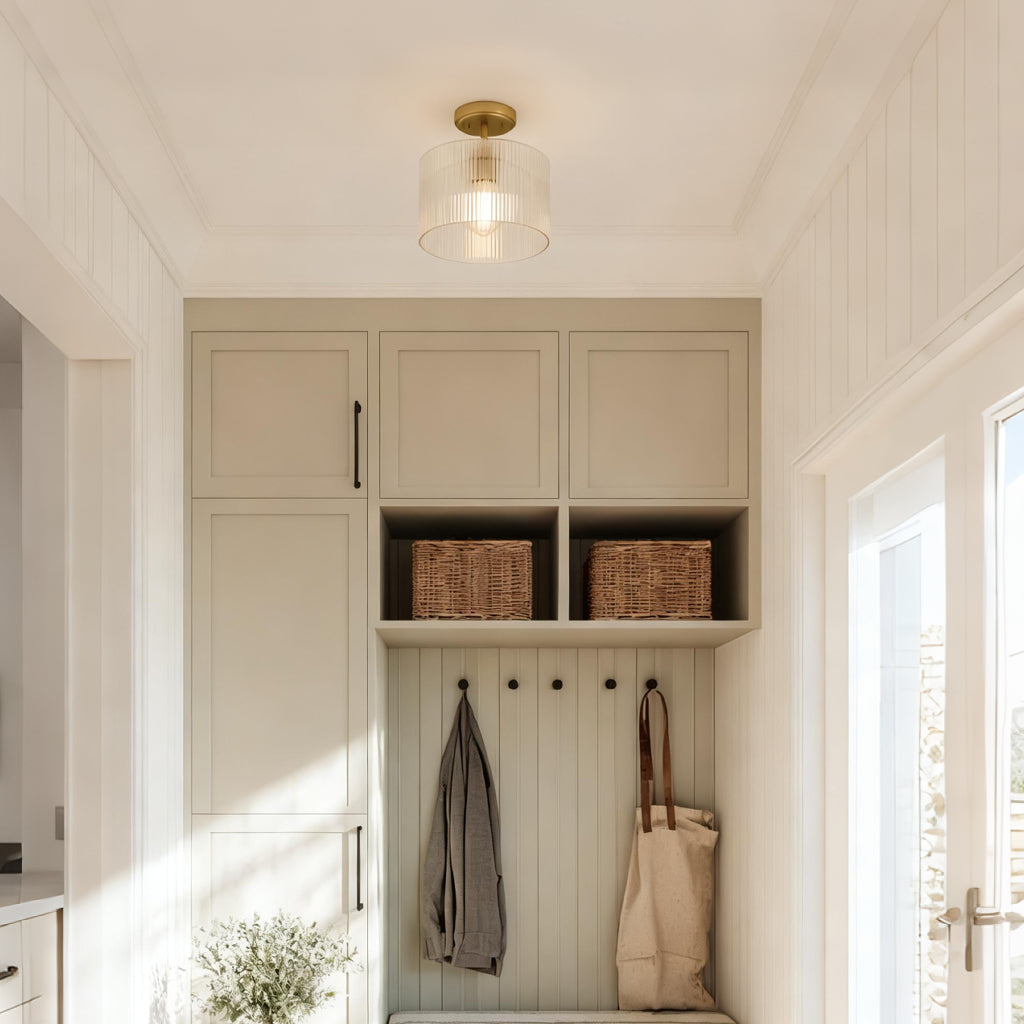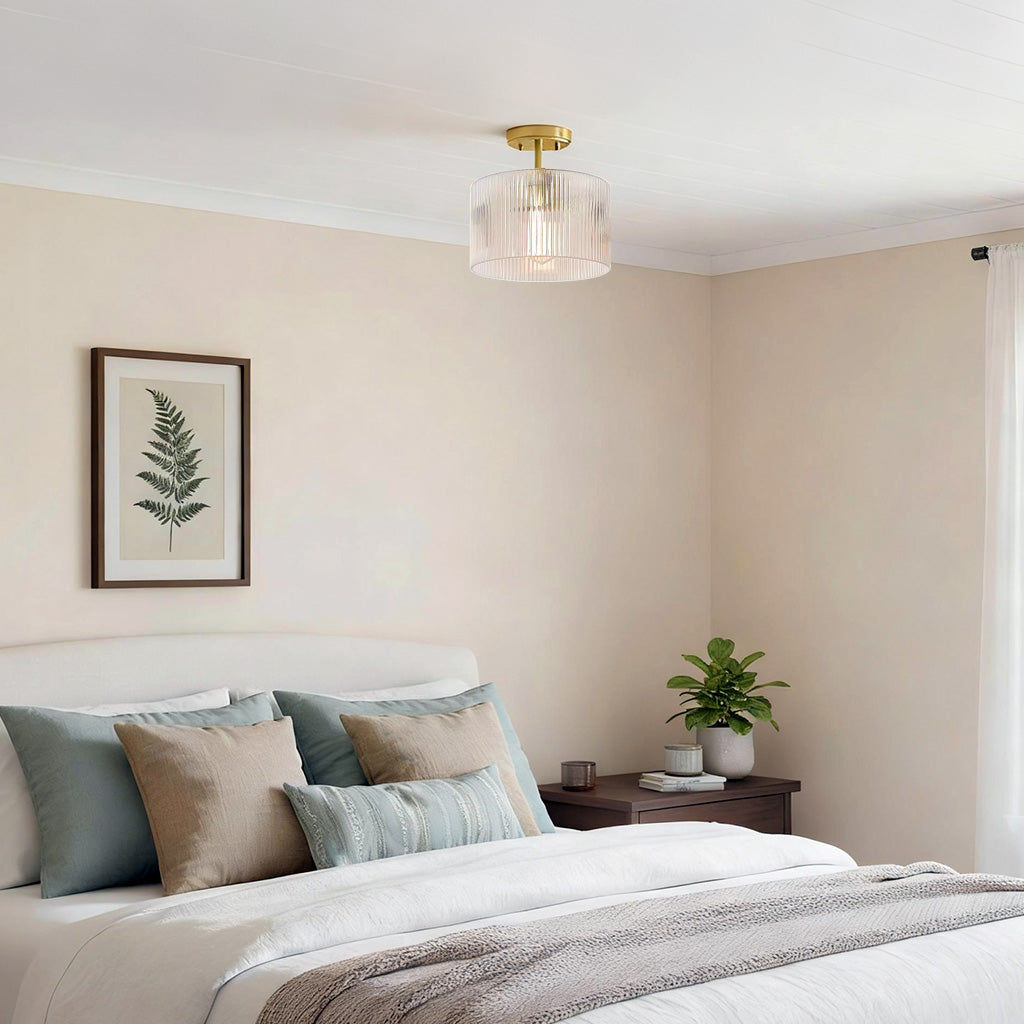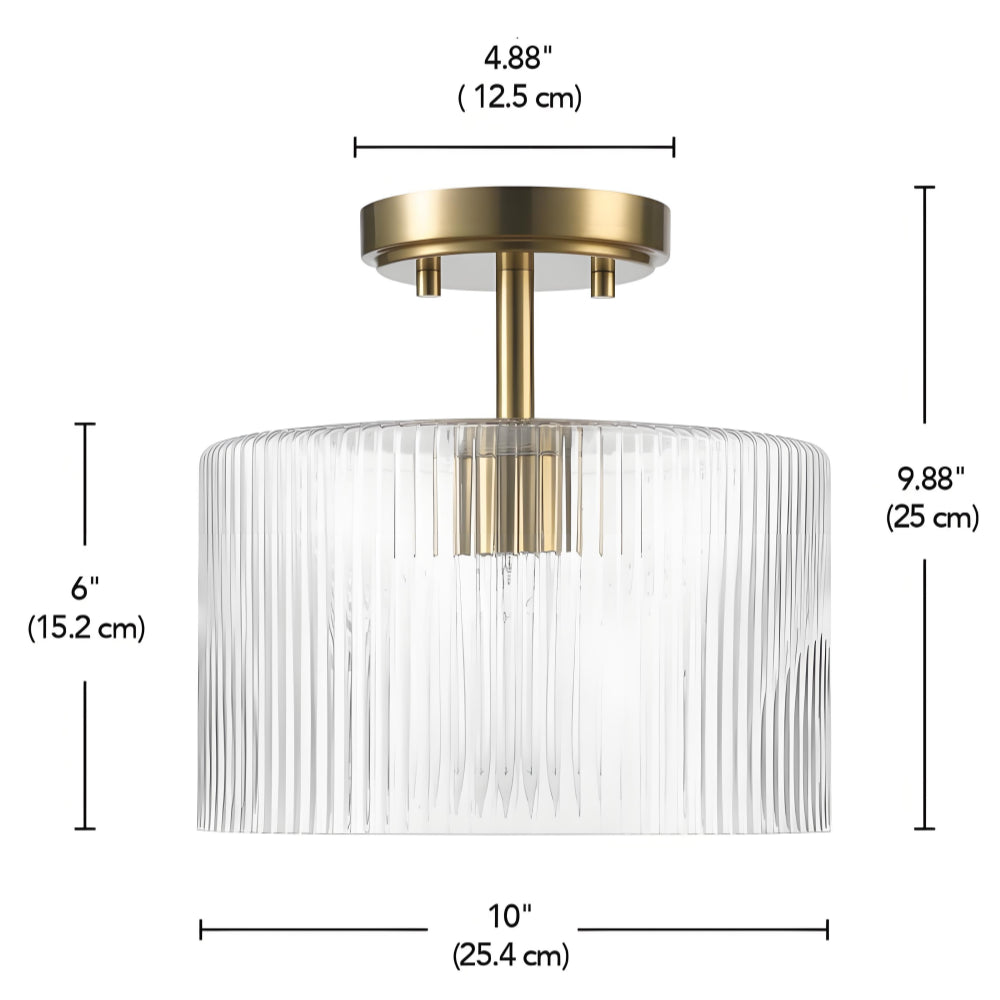
Choose hallway ceiling lights by checking the fixture's height, width and light distribution before its decorative style. In a narrow space, the right light should leave the passage comfortable to use, suit the scale of the ceiling and help you see where you are going. A compact shade is a useful starting point, but diameter alone cannot tell you whether a fixture fits.
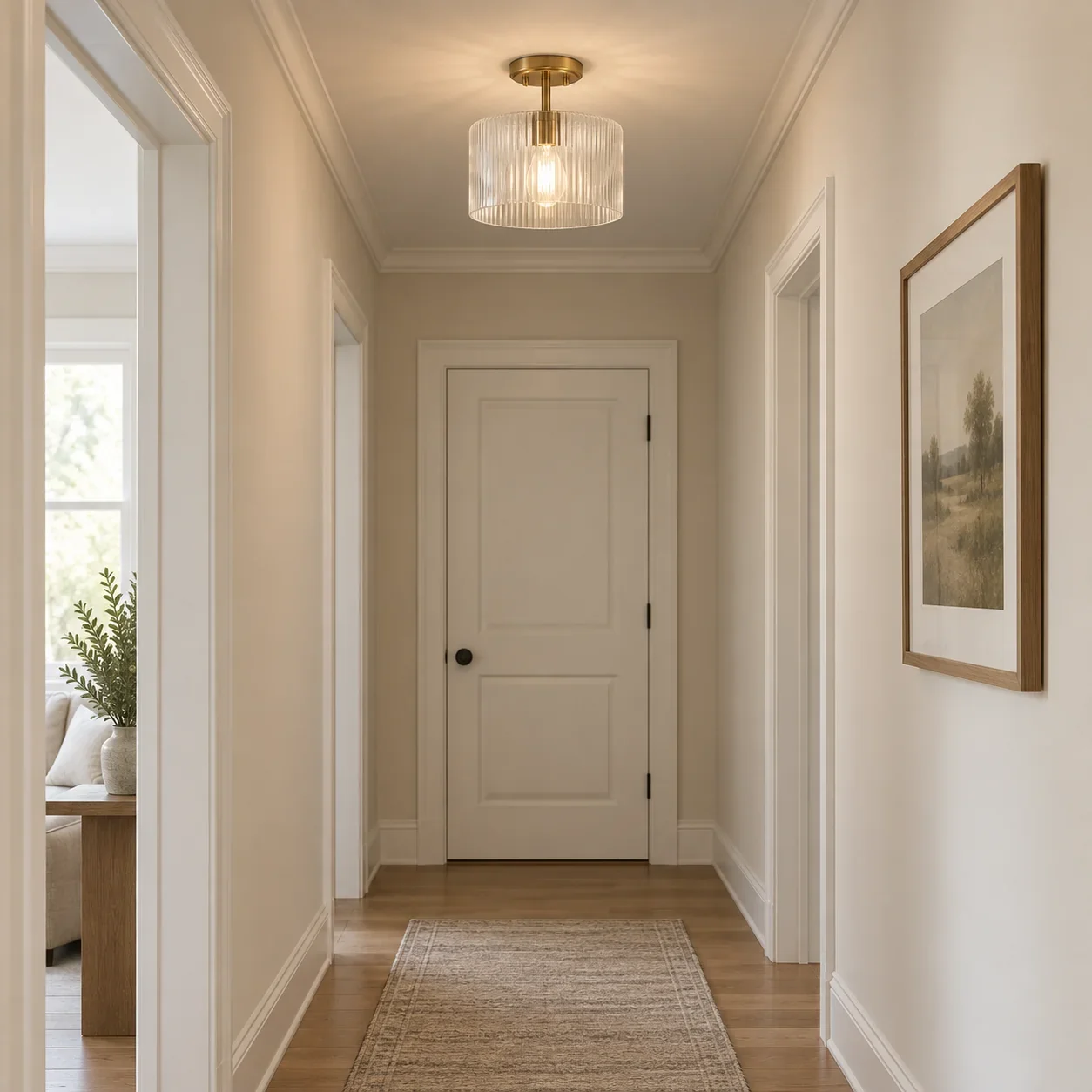
Measure the passage, not just the ceiling
Record the hallway's width, length and ceiling height. Then note doorways, beams, closet doors and the existing ceiling outlet. These details matter more than a photograph of an empty room: a light can look balanced from one end of the hall yet feel awkward beside a doorway.
Compare the proposed shade diameter with the hallway width using the same units. A 10-inch shade in a 42-inch-wide passage occupies a little under one quarter of that width. That is a visual comparison, not a universal sizing rule. Make a paper circle of the proposed diameter and view it against the ceiling from both ends before deciding.
Check the installed height of hallway ceiling lights
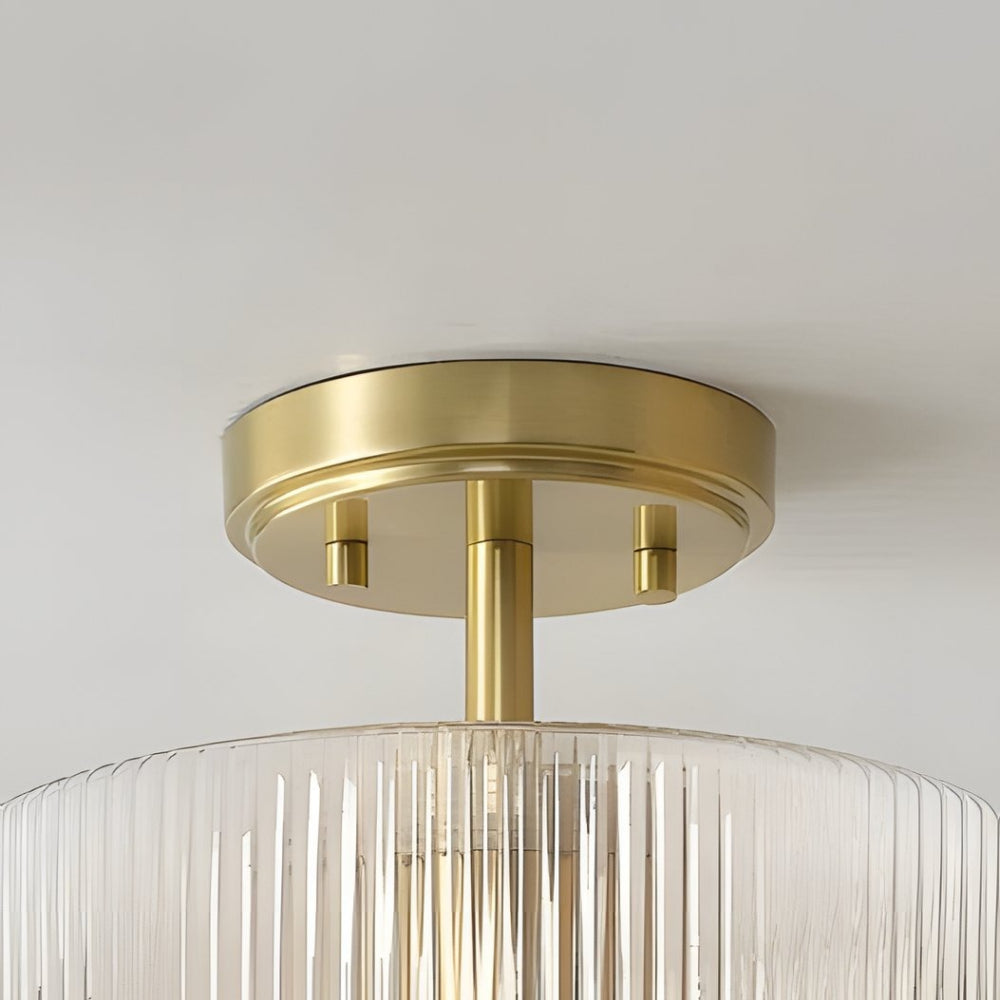
Do not assume that every fixture described as flush mount is nearly flat. Read the total ceiling-to-bottom measurement, not just the glass shade height. Subtract that measurement from your ceiling height to estimate the space beneath the fitting, then check nearby door movement and everyday activities such as carrying luggage.
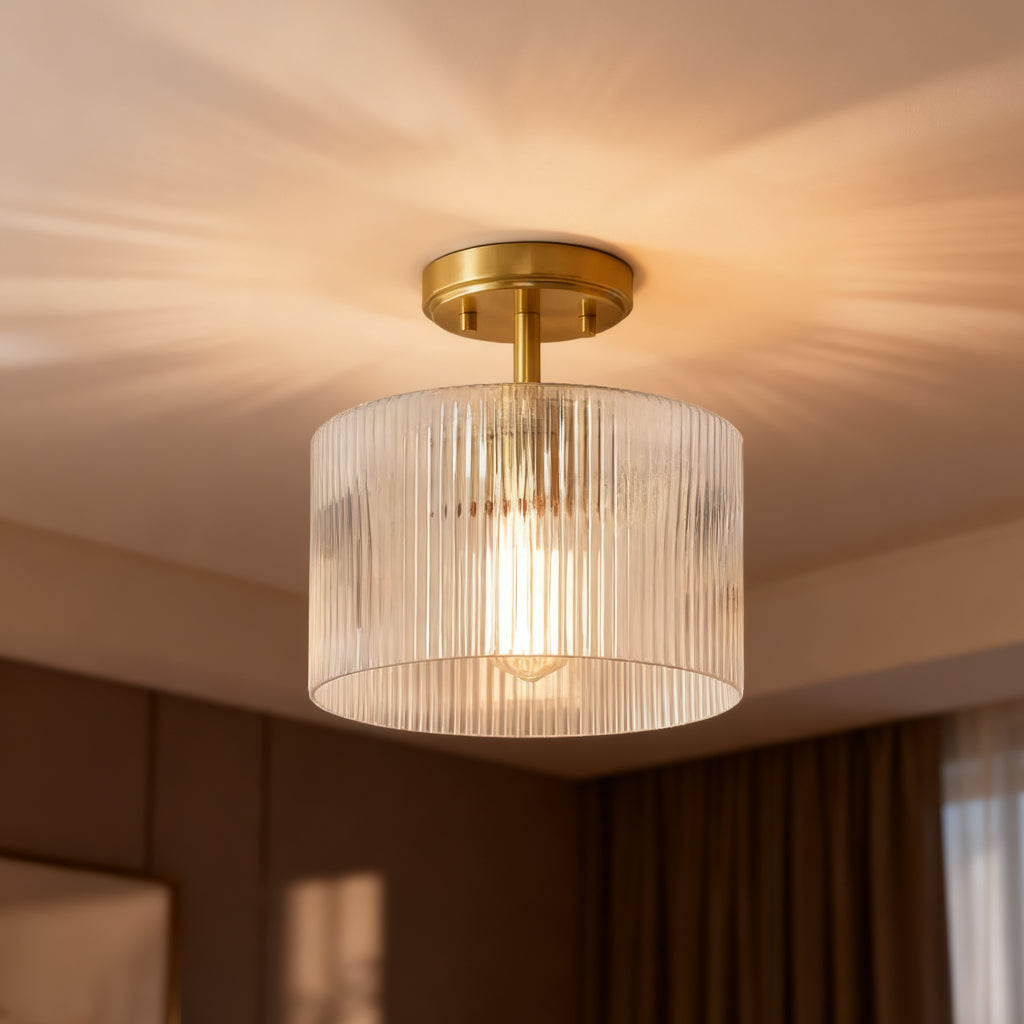
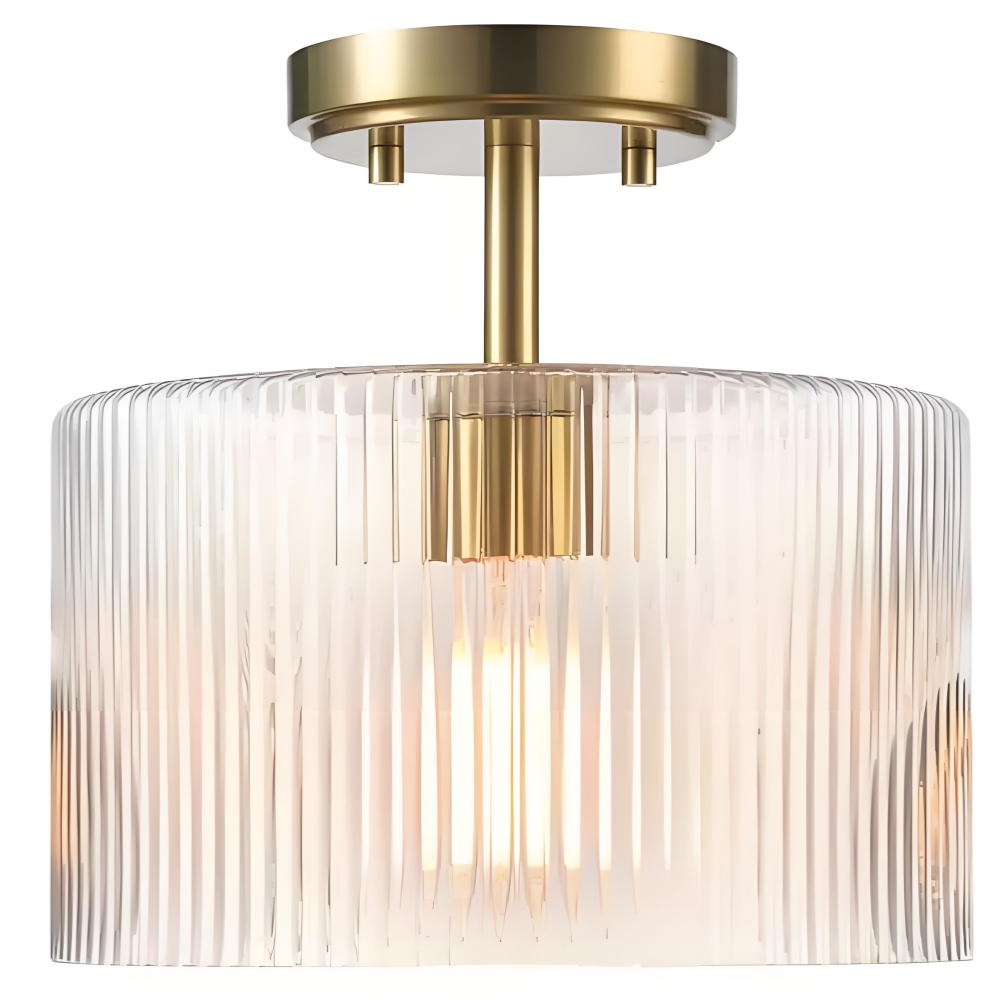
For example, the Calliope ribbed glass ceiling light is listed as 10 inches in diameter and 9.88 inches high. Its compact width may suit a narrow passage visually, but the nearly 10-inch drop still needs checking. Confirm installation conditions and any applicable clearance requirements with your installer before buying; the product name is not a clearance guarantee.
Look beyond the brightest spot
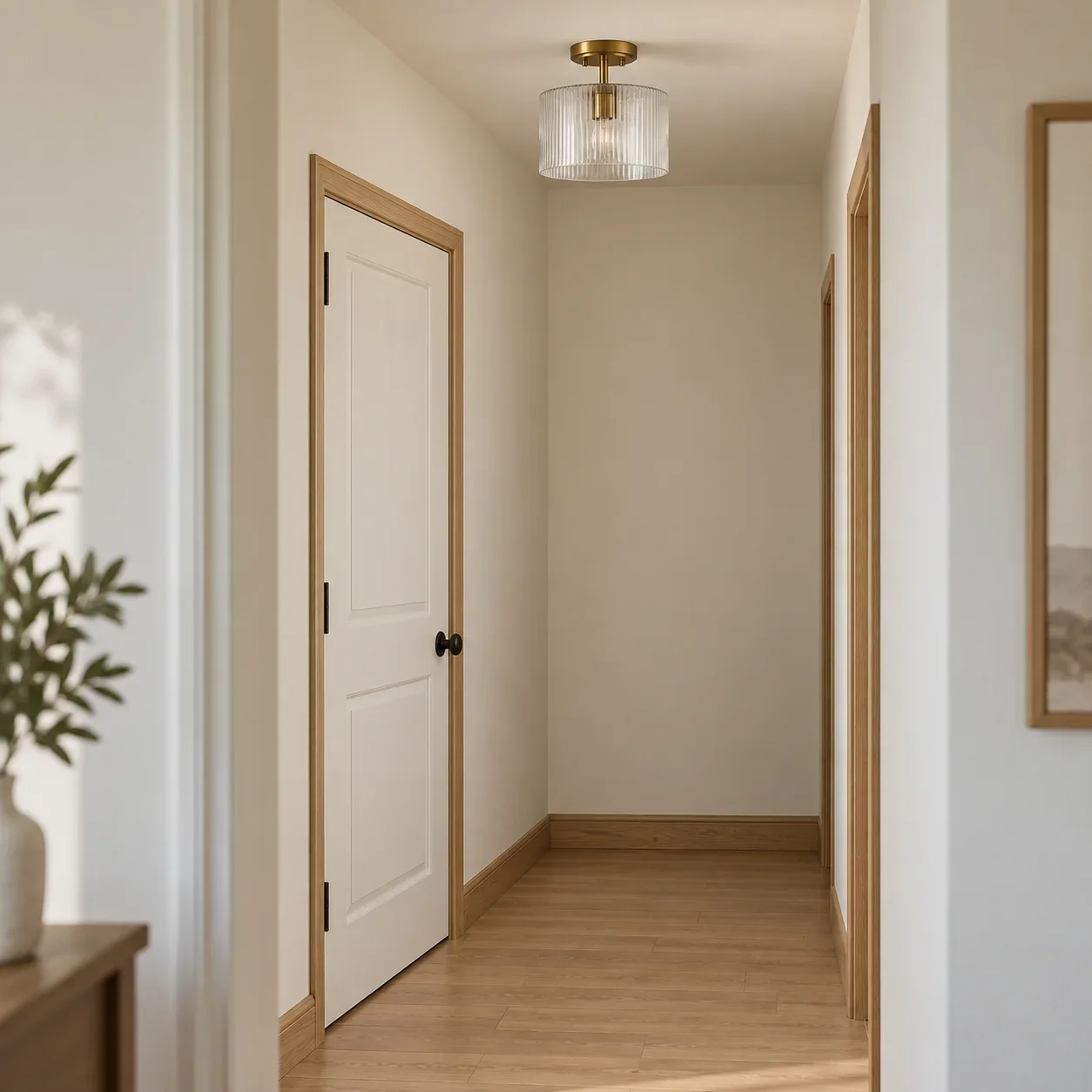
Stand at each end of your current hallway after dark. Look for dim areas near doors, abrupt changes between rooms and reflections that feel uncomfortable at eye level. This helps distinguish a fixture-size problem from a placement or light-distribution problem.
In a long hallway, one brighter bulb may leave the far end dim. Discuss fixture positions and the overall lighting plan before adding fittings or changing wiring. Check bulb brightness in lumens rather than using wattage as a brightness comparison, and stay within the fixture's stated bulb limits. Do not assume a decorative glass light illuminates a particular floor area without supporting lighting data.
Choose glass and finishes thoughtfully
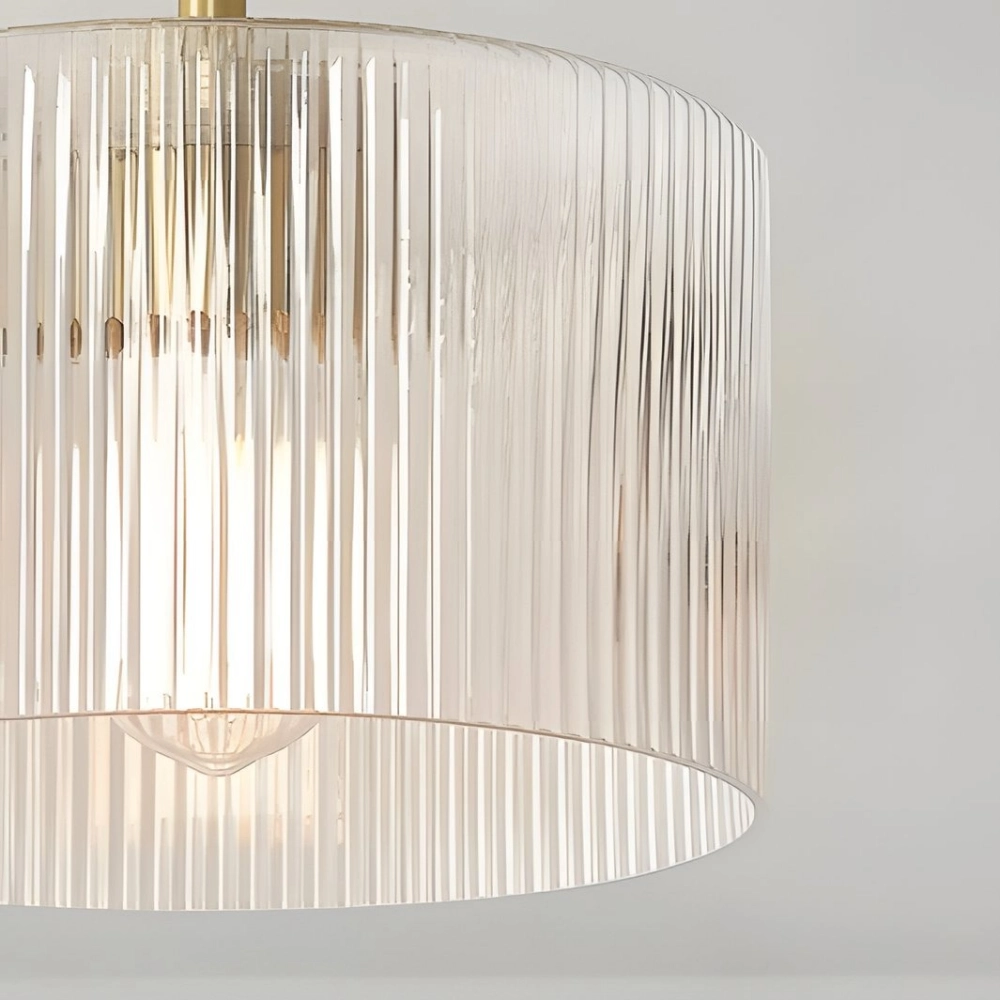
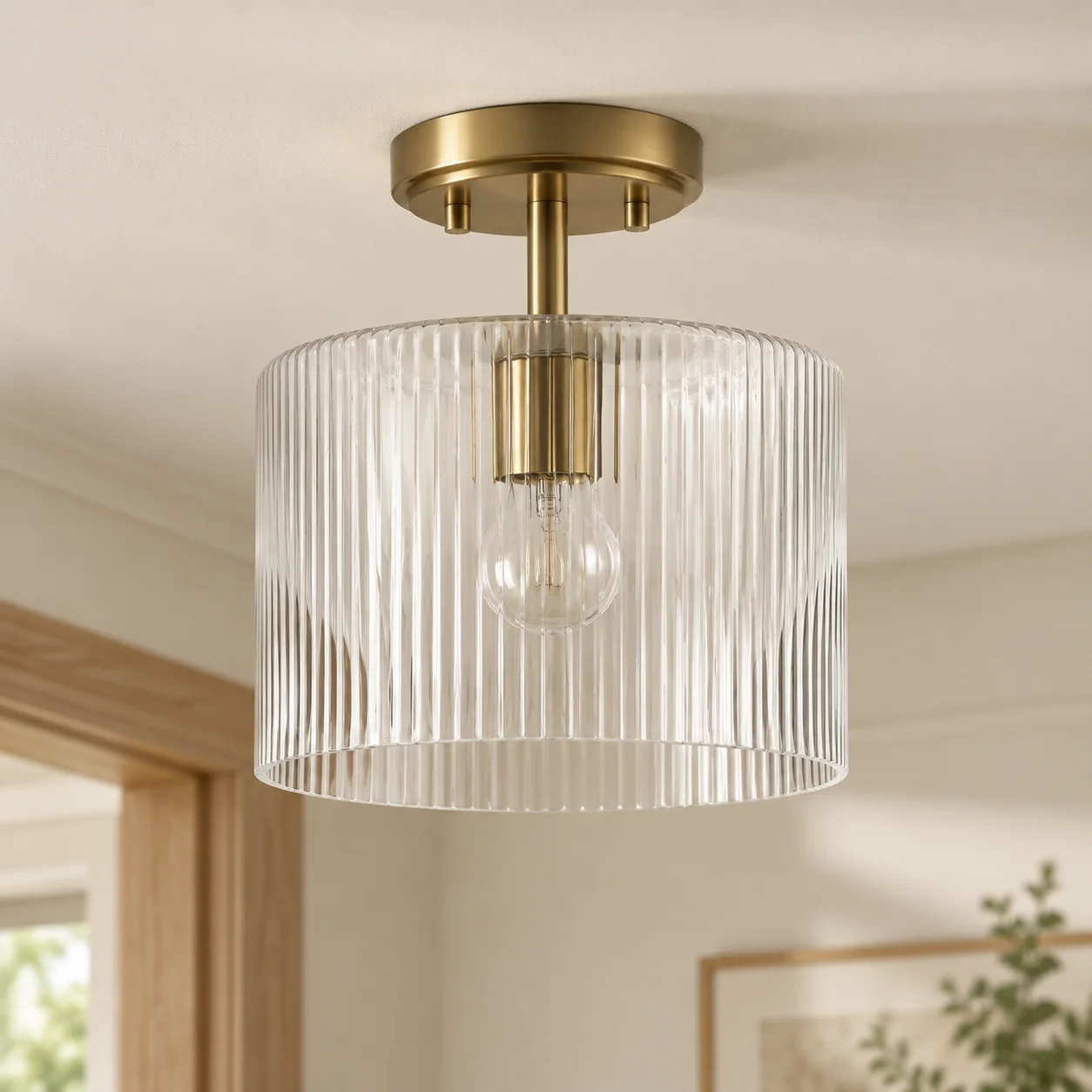
Clear ribbed glass adds texture while leaving parts of the bulb and metalwork visible. Consider that appearance in daylight as well as when the light is on. Ribs are a decorative feature, not a promise that a visible bulb will be glare-free.
Keep the surrounding finishes simple if the shade already has a strong pattern. One repeated metal accent, such as a nearby door handle or picture frame, can connect the fixture to the room. Avoid choosing a bulb solely for its decorative shape: confirm the base, physical fit and permitted wattage first.
Your before-ordering checklist
- Measure width, ceiling height and the fixture's full drop.
- Check door movement and the view from both directions.
- Review darker areas instead of judging only the space below the bulb.
- Confirm bulb compatibility and access for cleaning.
- Have the installation conditions checked before committing.
Once those practical checks are complete, review Calliope's dimensions and specifications alongside your measurements. Let the room determine the fit, then use the glass and brass details to give a hardworking passage a considered finish.