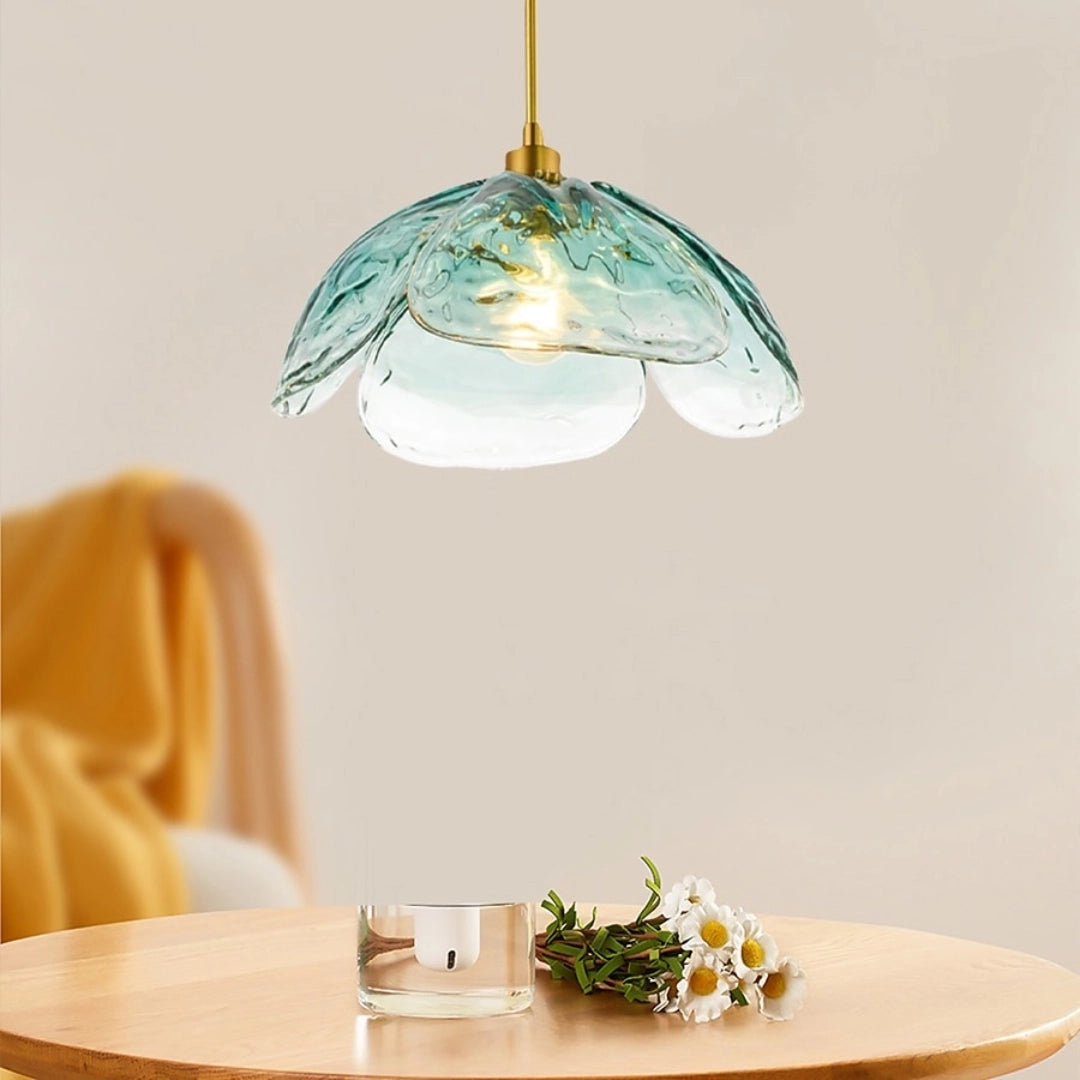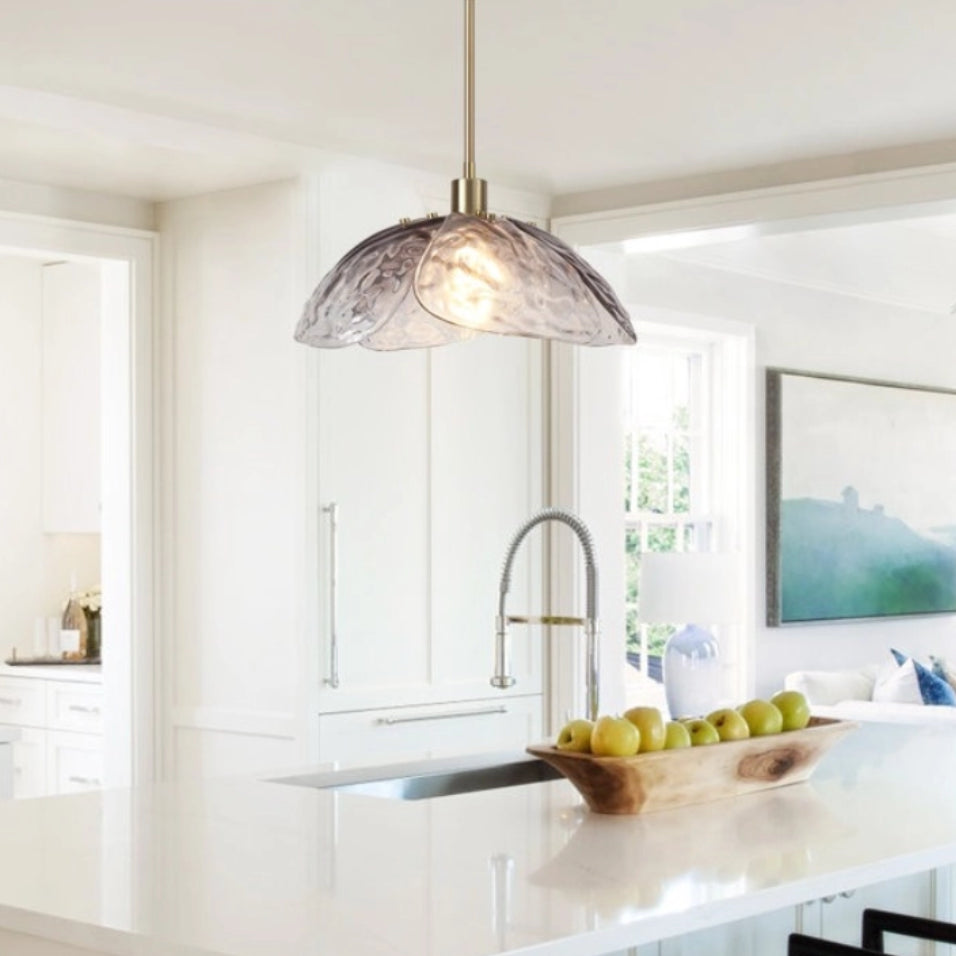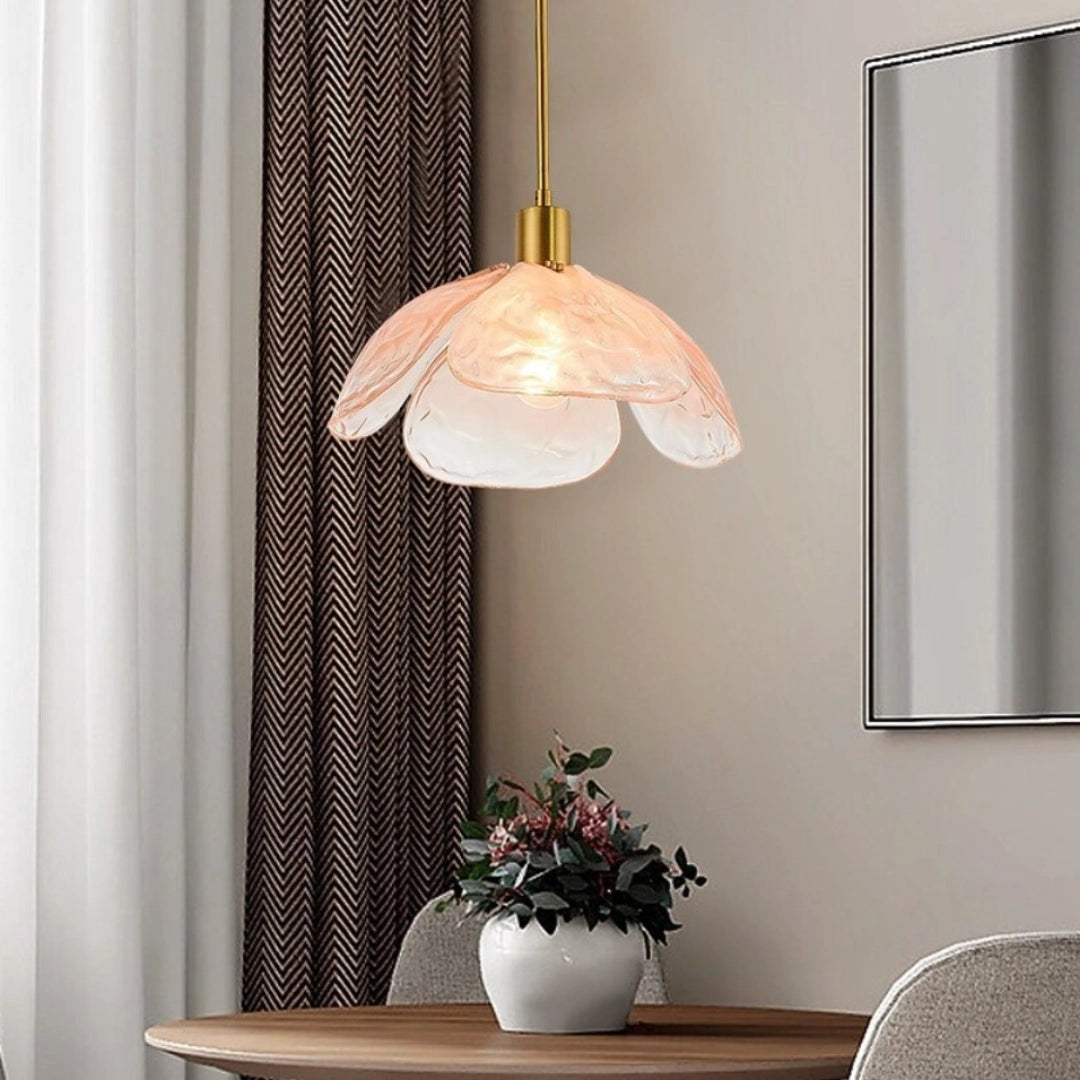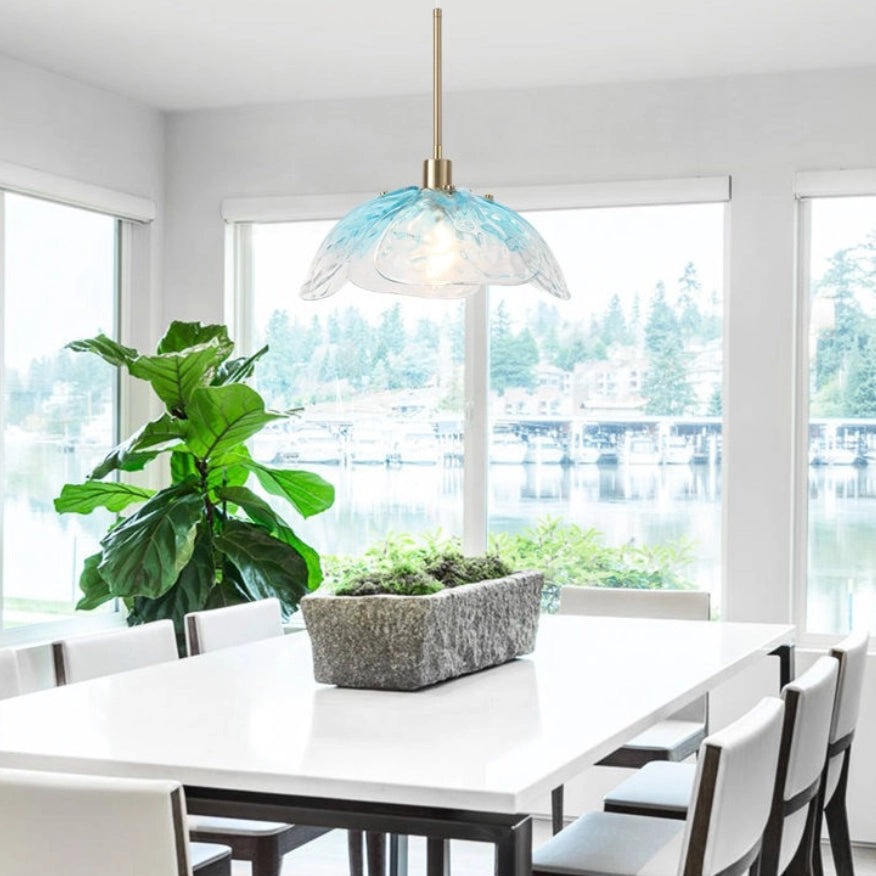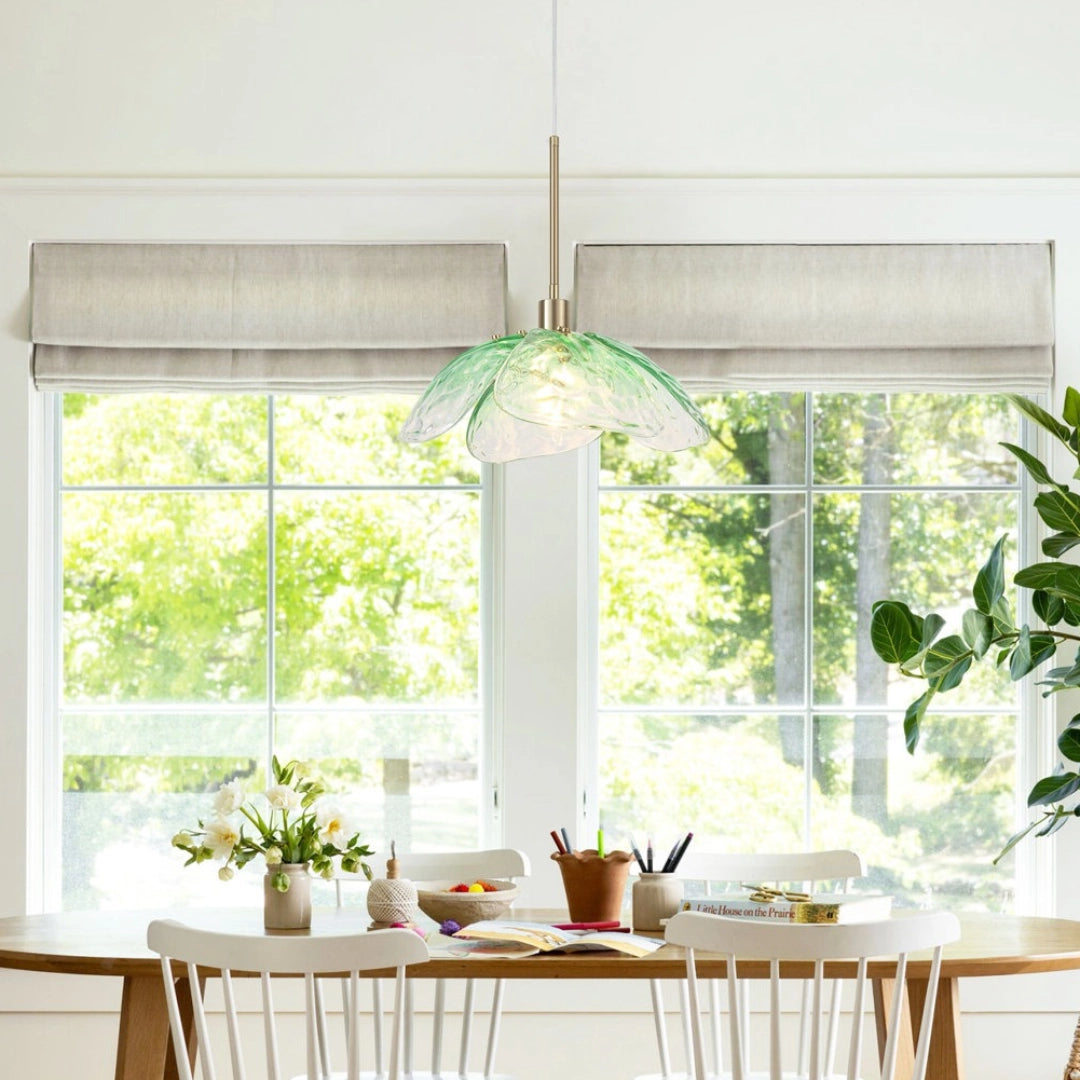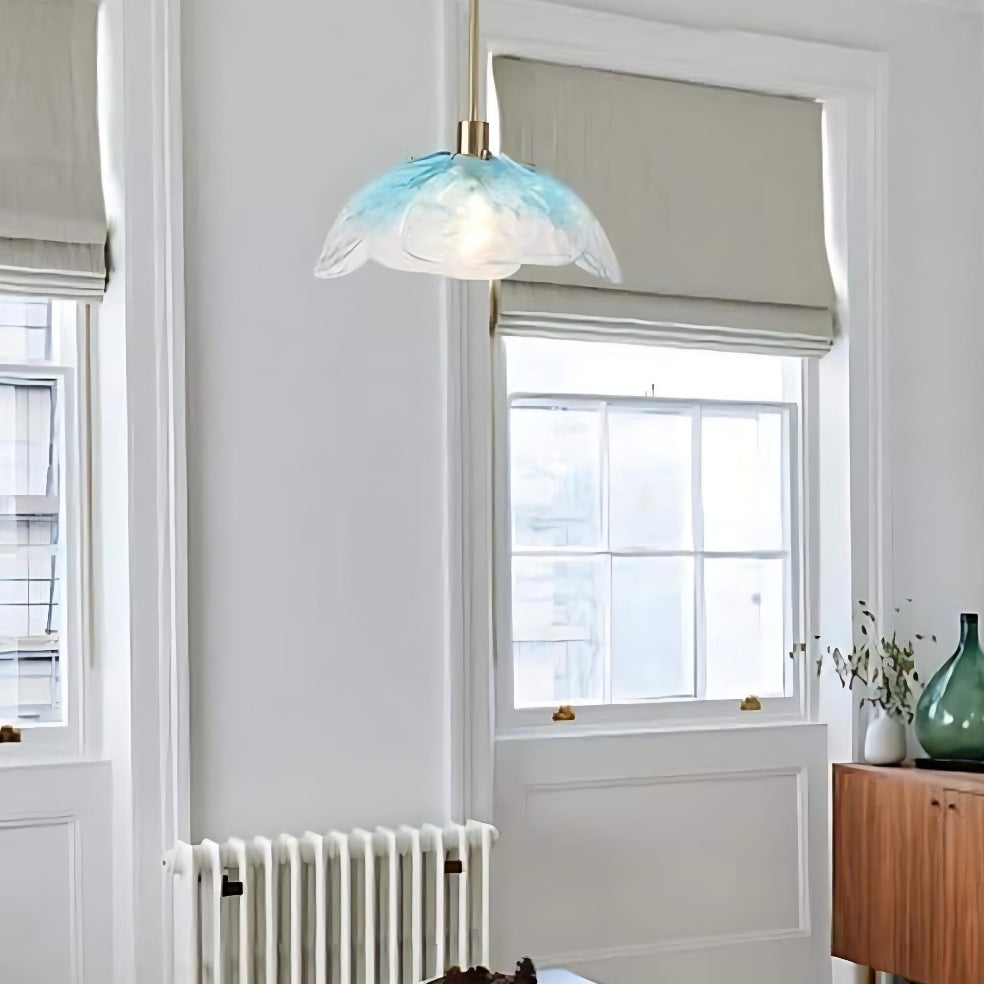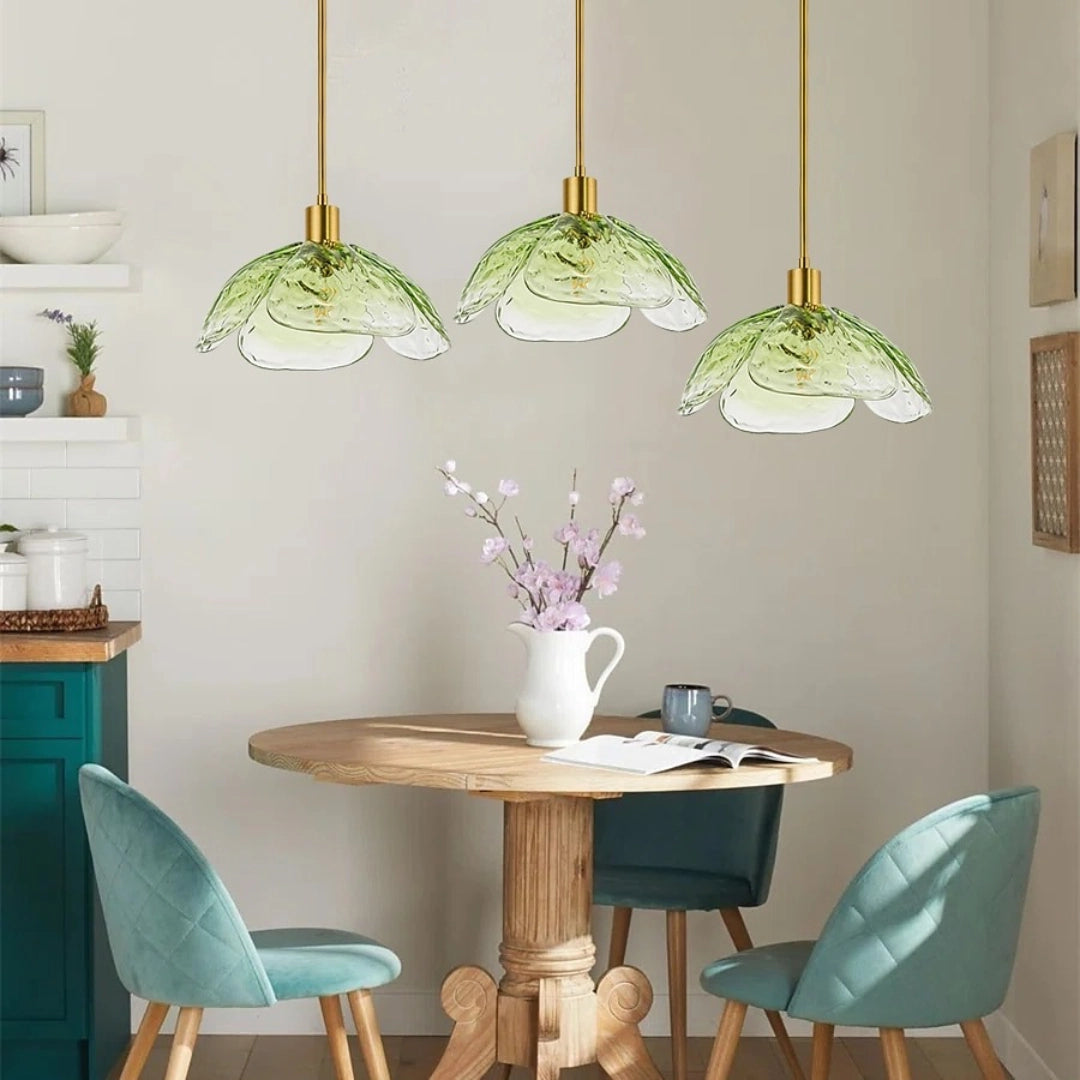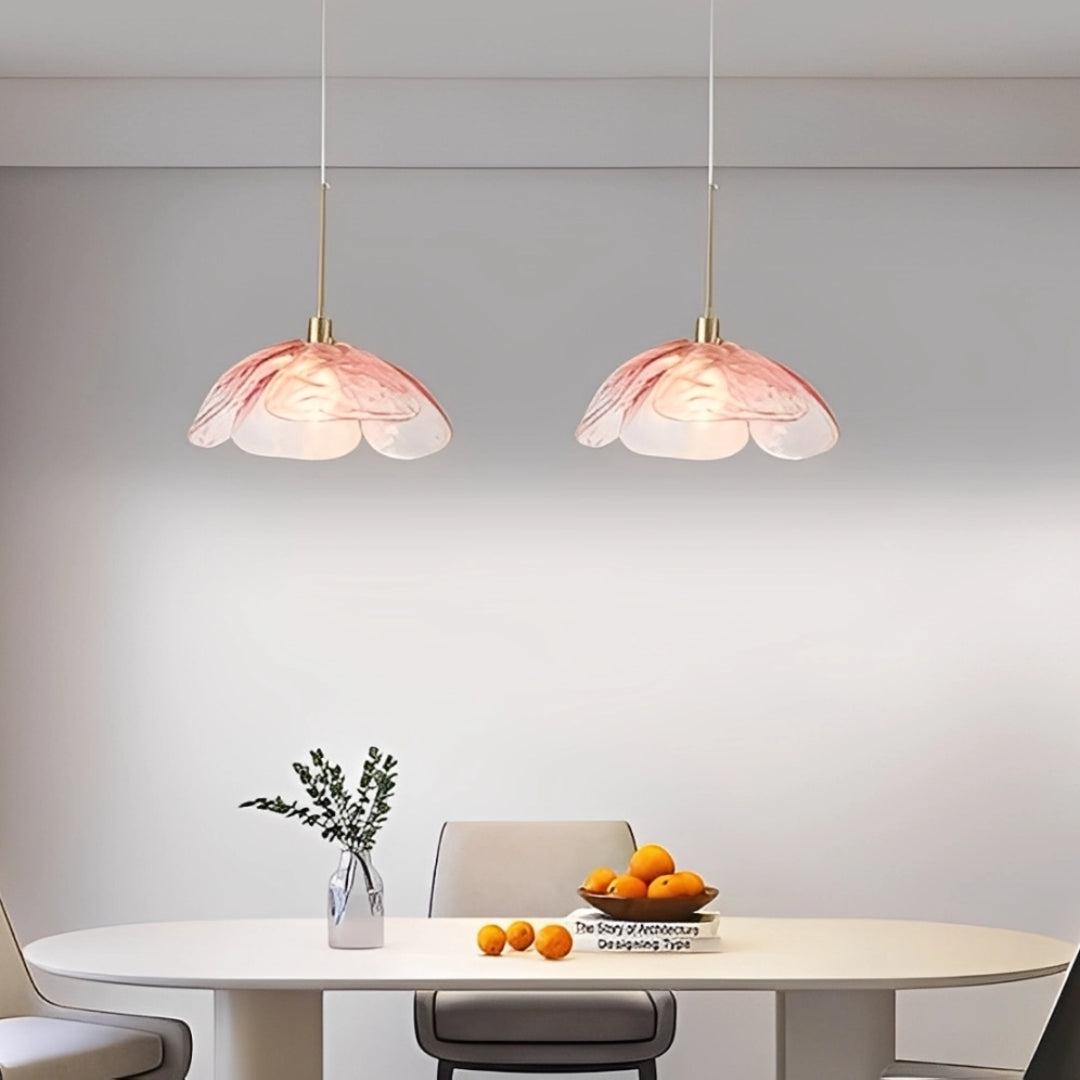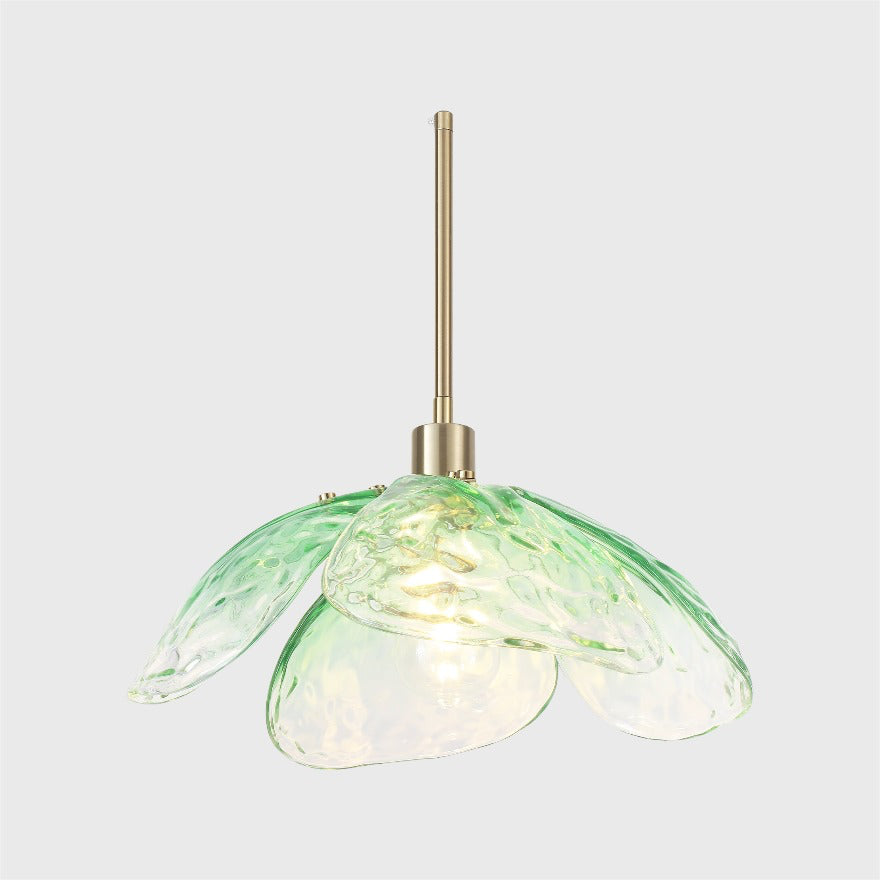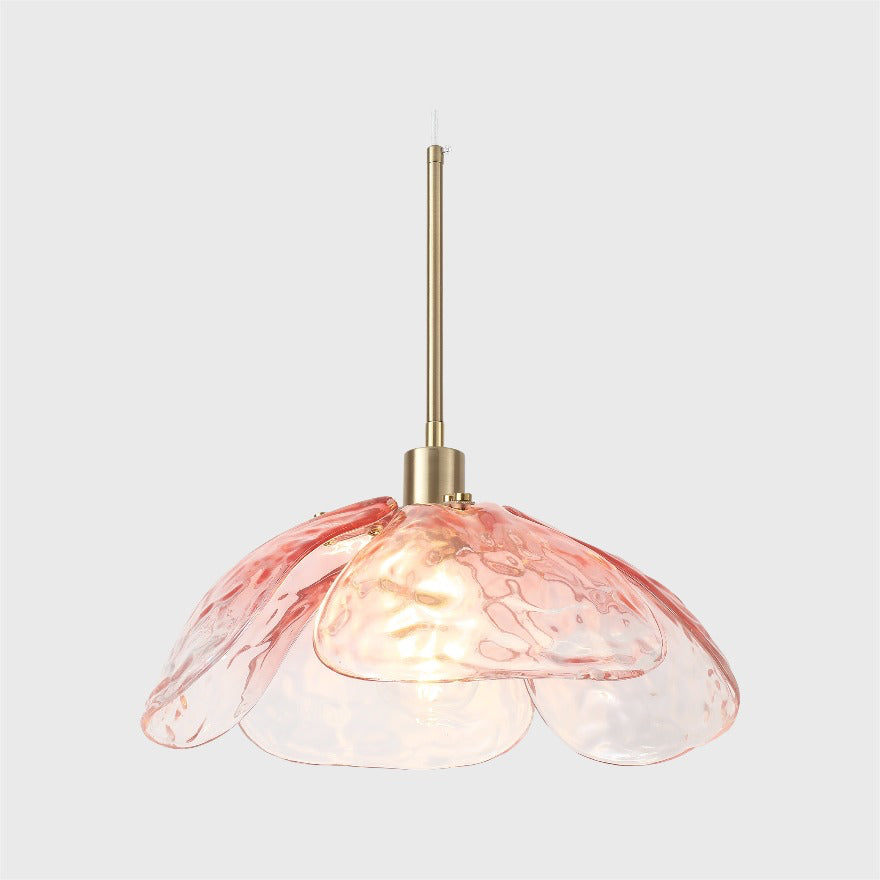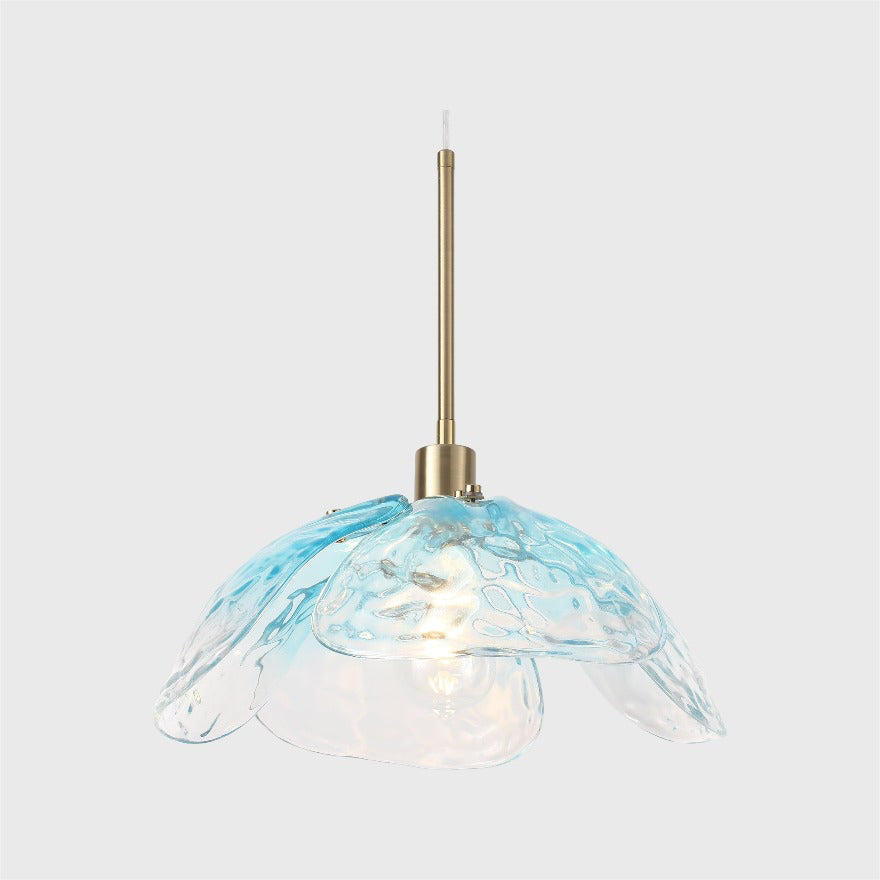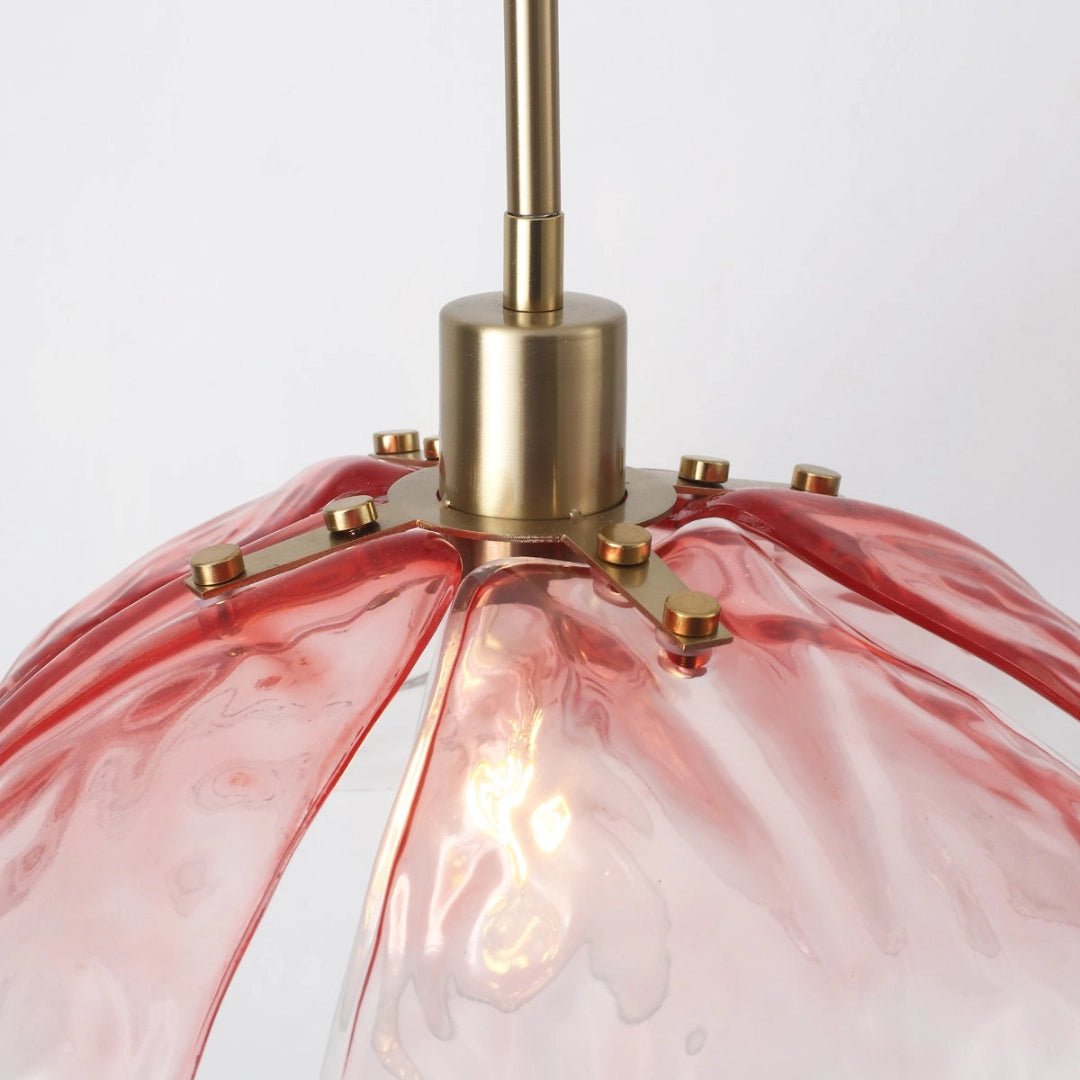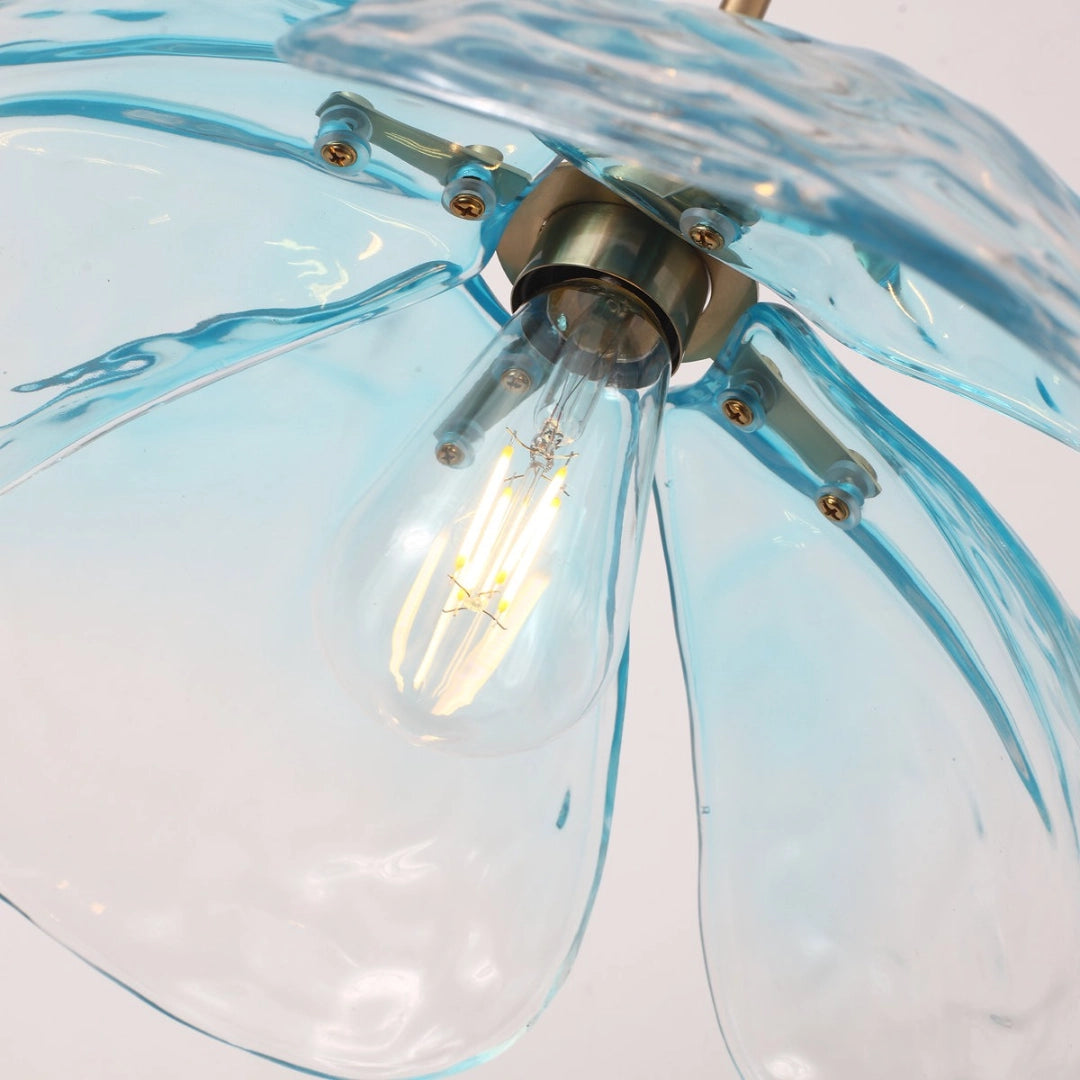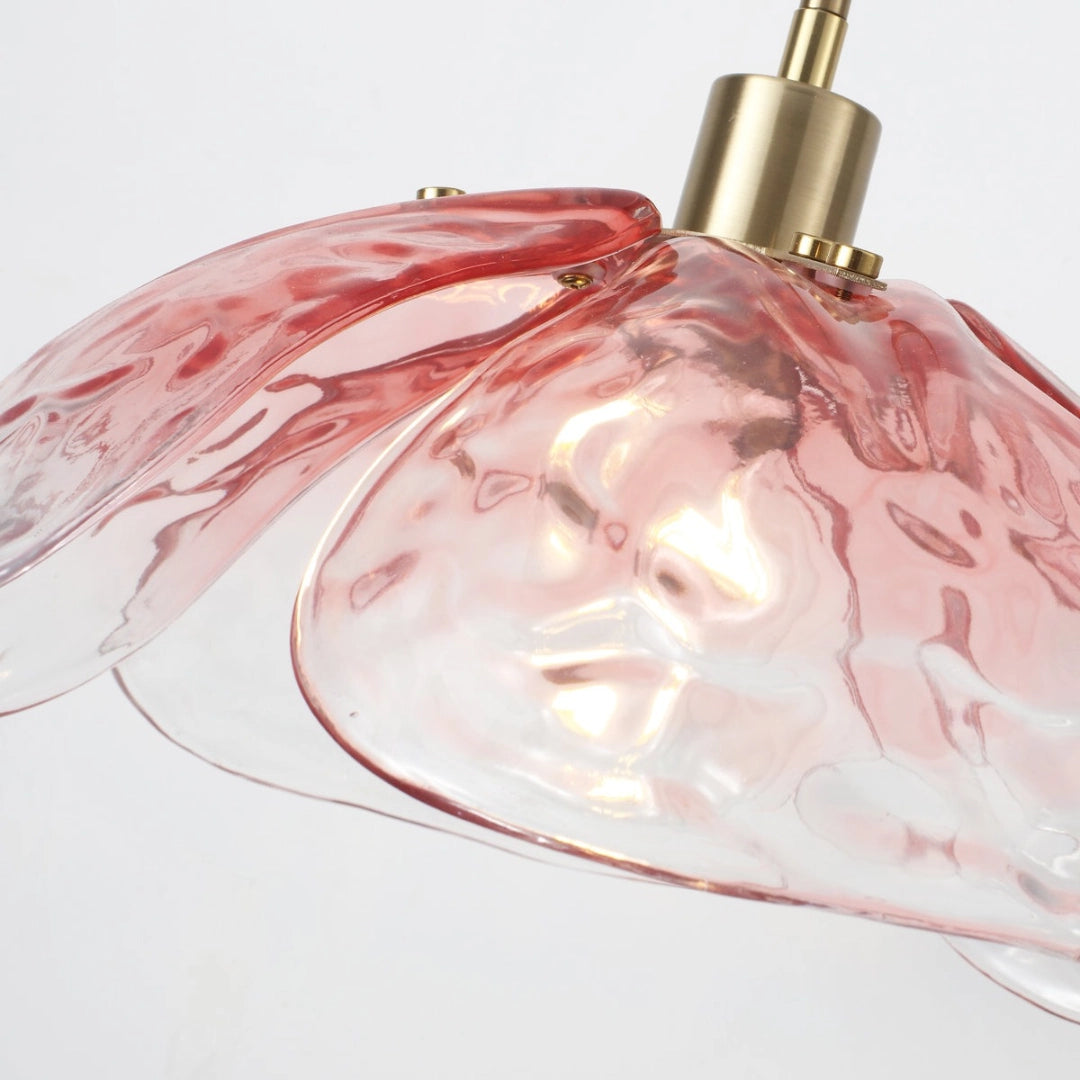
A flower lamp can feel fresh and modern when the rest of the room gives its sculptural shape room to breathe. The easiest approach is to treat the fixture as one expressive object, then support it with simple lines, a controlled color palette and only a few carefully repeated details.
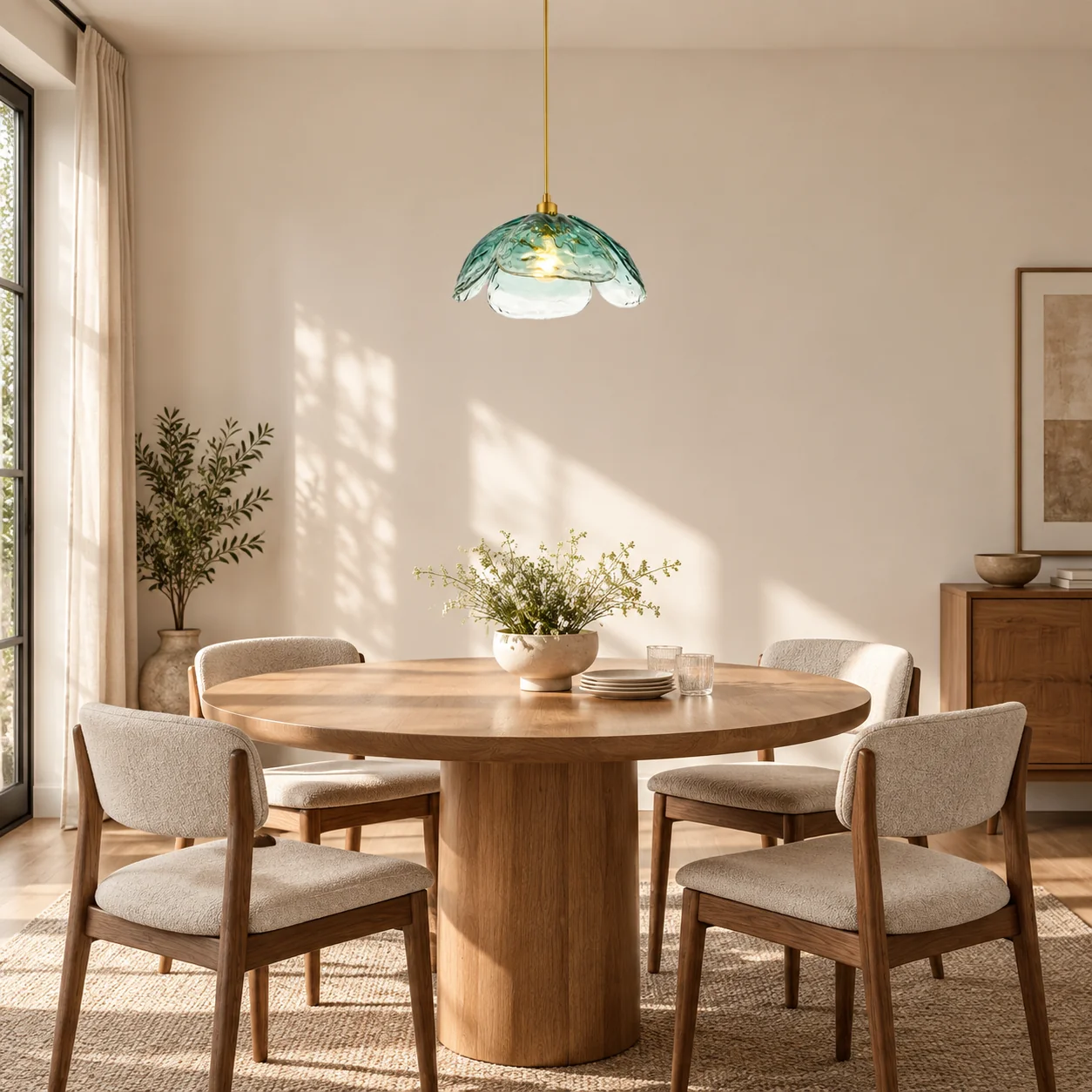
Let the flower lamp be the one focal point
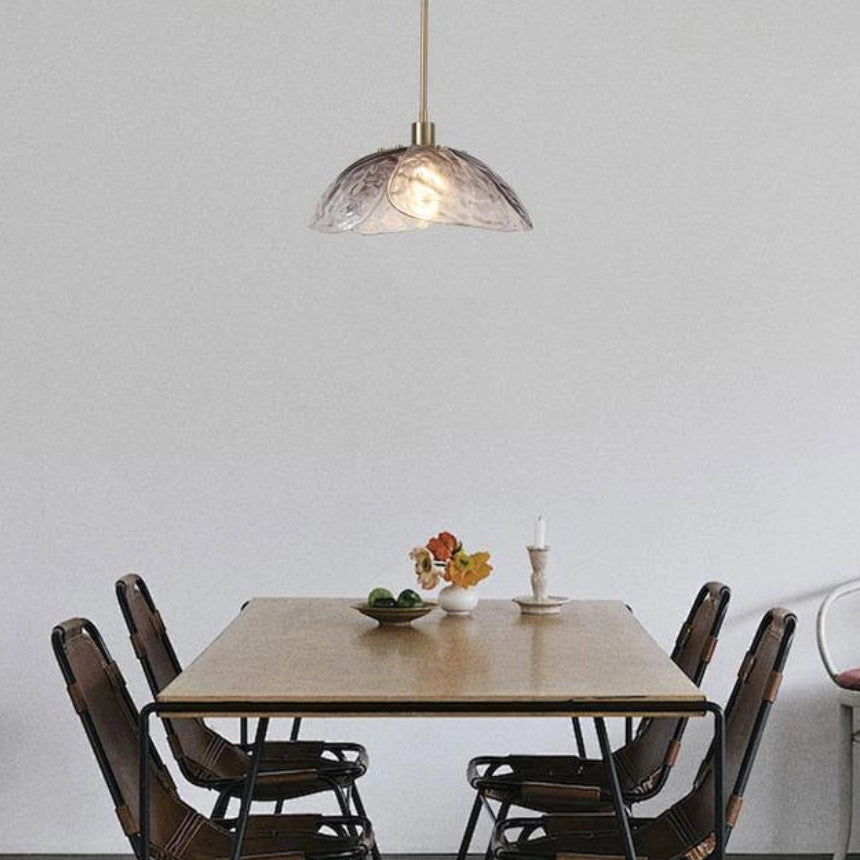
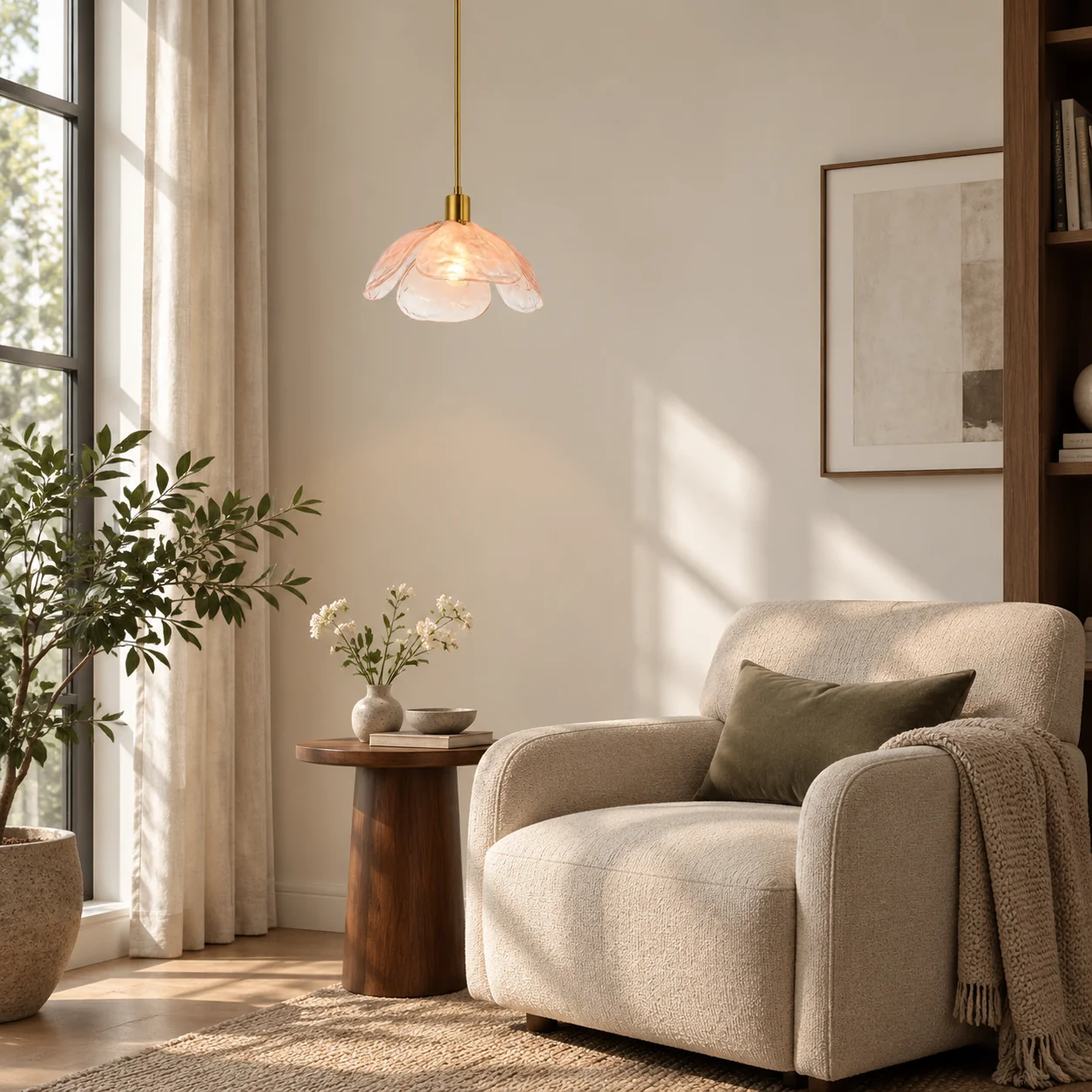
Start by deciding what you want the eye to notice first. If the pendant has layered petals, colored glass or a pronounced silhouette, it already has enough personality to lead the room. Avoid placing it beside several equally decorative pieces. A quiet wall, an uncomplicated table and artwork with plenty of open space will make the fixture look intentional instead of busy.
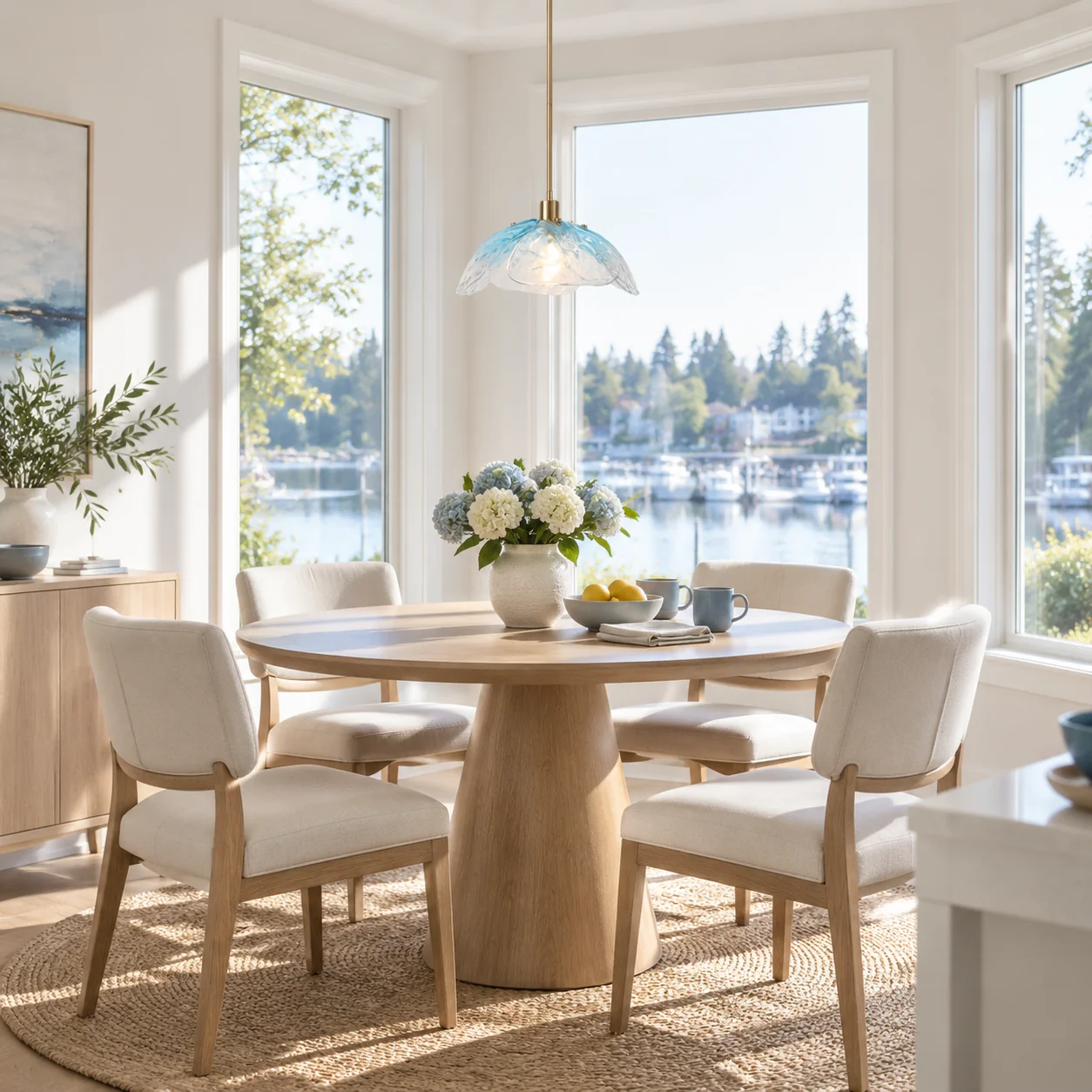
This principle works especially well above a small dining table, in a breakfast nook or over a compact seating area. Center the fixture on the activity below it rather than automatically centering it in the entire room. The arrangement will feel more connected to daily life and less like a decoration floating on its own.
Balance petals with clean, structured shapes
A floral fixture brings curves and movement, so nearby furniture can provide contrast. Pair it with a rectangular console, a tailored chair, a round table with a solid pedestal or cabinetry with flat fronts. The goal is not to make every object minimalist. It is simply to give the eye a mix of soft and structured forms.
Materials matter too. Natural oak, walnut, linen, matte ceramics and lightly textured rugs can make colored glass feel grounded. Skip a room full of ruffles, floral prints and ornate accessories unless a layered romantic look is genuinely what you want. One botanical reference is memorable; five can turn a theme into a costume.
Choose a color strategy before adding accents
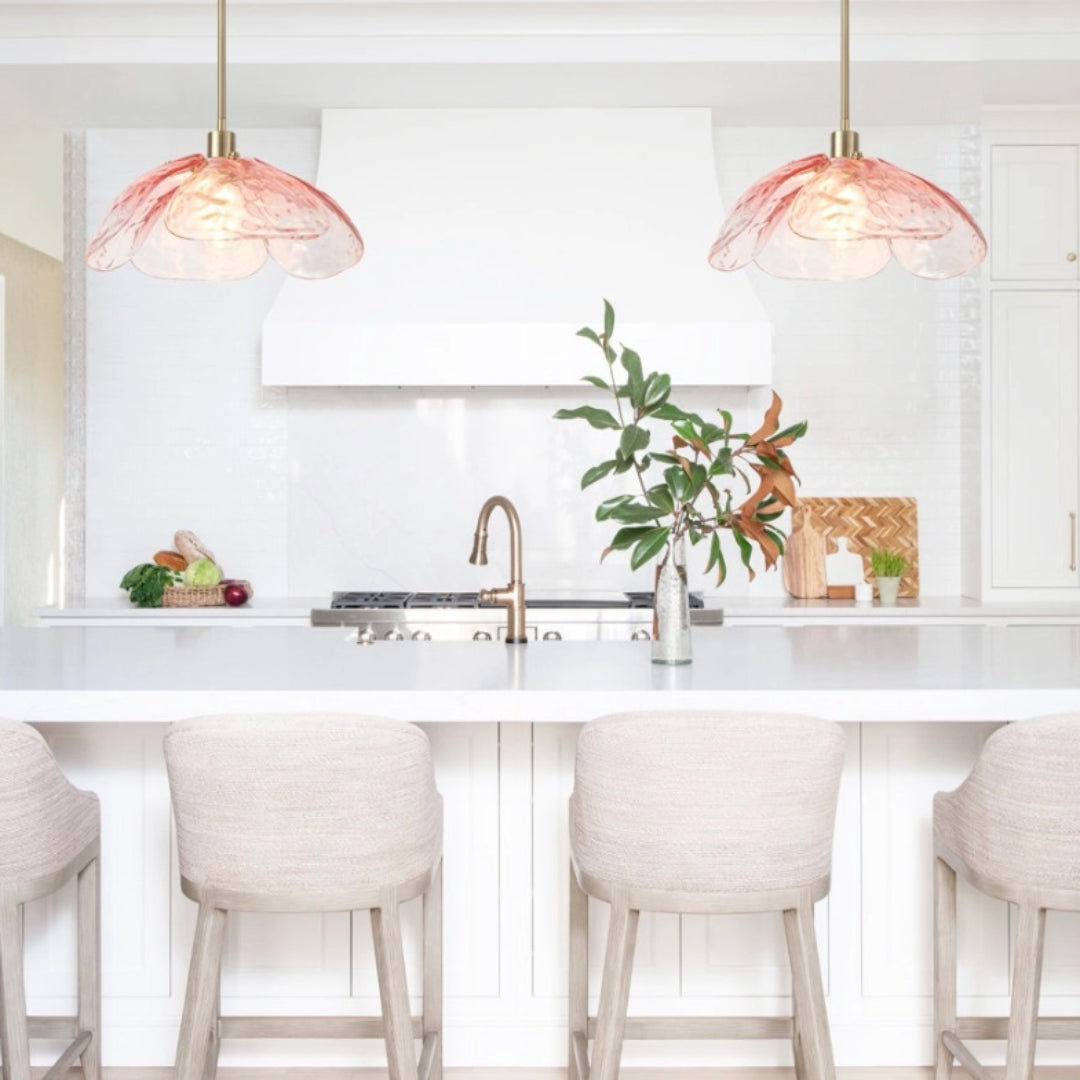
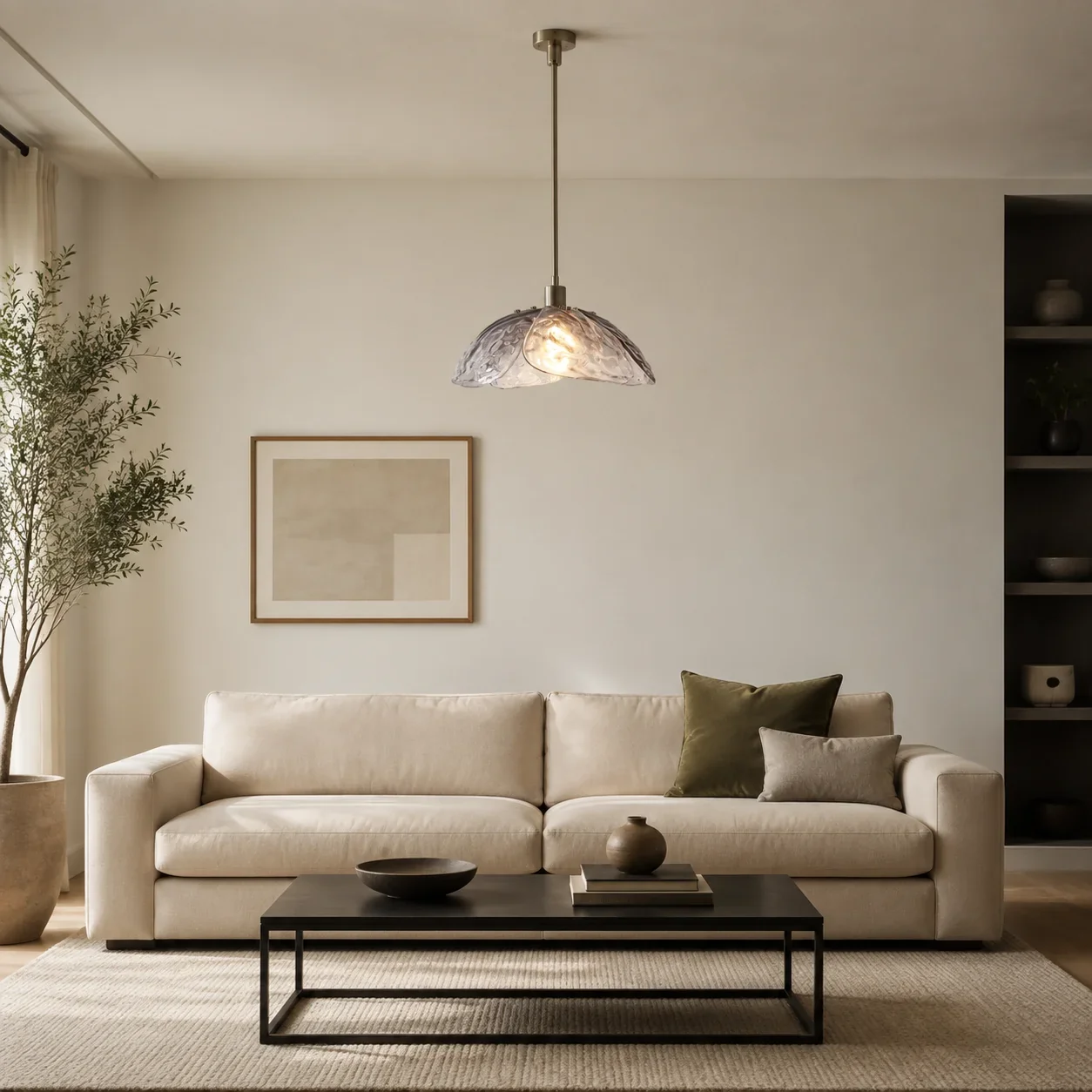
There are two reliable ways to style a colored flower lamp. For a calm room, surround it with warm whites, beige, pale wood and one muted green or gray accent. The glass becomes a gentle focal point without controlling the whole palette. For a bolder room, repeat the pendant color only once or twice in small objects, such as a cushion, bowl or framed print.
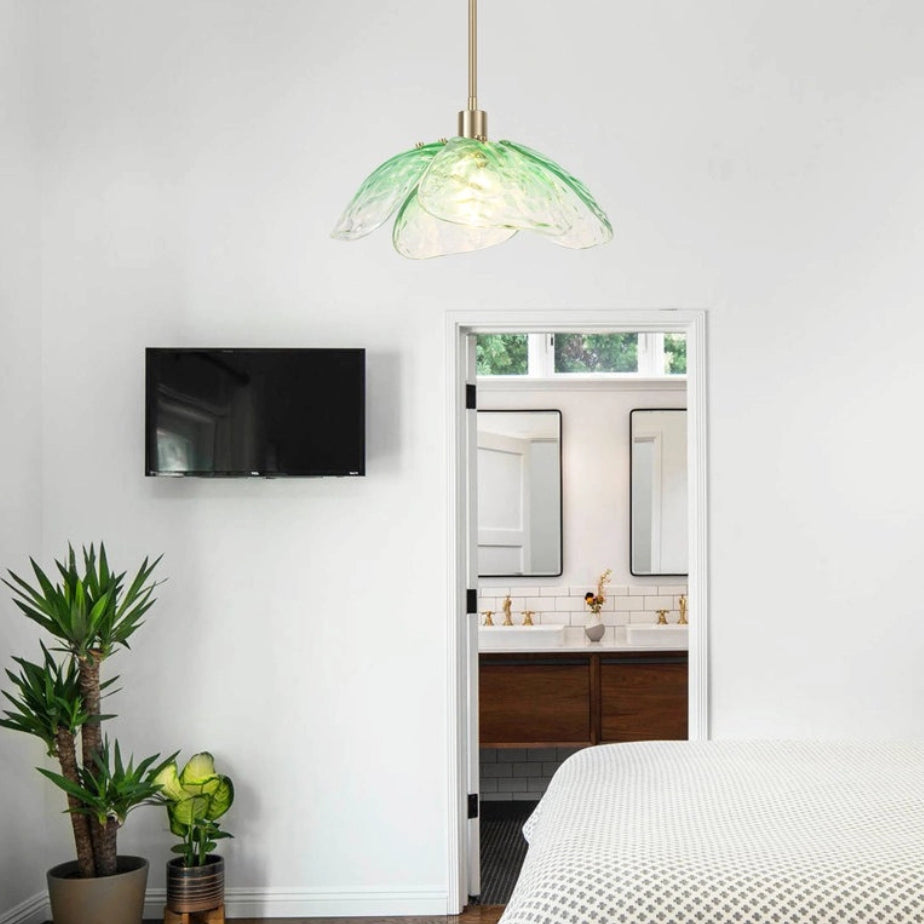
Do not chase an exact color match. Slightly varied tones usually look more natural than identical shades. Pink glass can sit comfortably with clay, burgundy or warm cream. Blue can connect with dusty denim or slate. Green works with olive, natural wood and off-white, while gray suits nearly any restrained palette.
Check the fixture in daylight and after dark
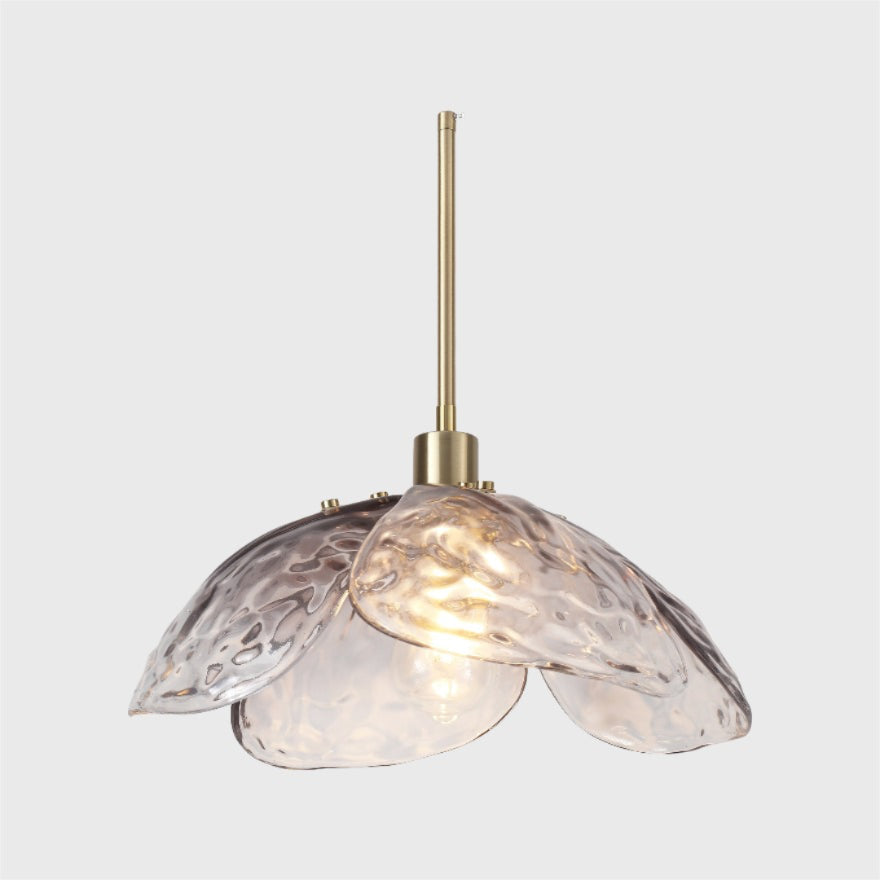
Colored and textured glass changes character throughout the day. In daylight, notice the actual glass color and the shadows created by the petals. After dark, check whether the visible bulb feels comfortable from normal seated and standing positions. Bulb brightness and color temperature will affect the result, so evaluate the room as a complete lighting scene rather than choosing a bulb by appearance alone.
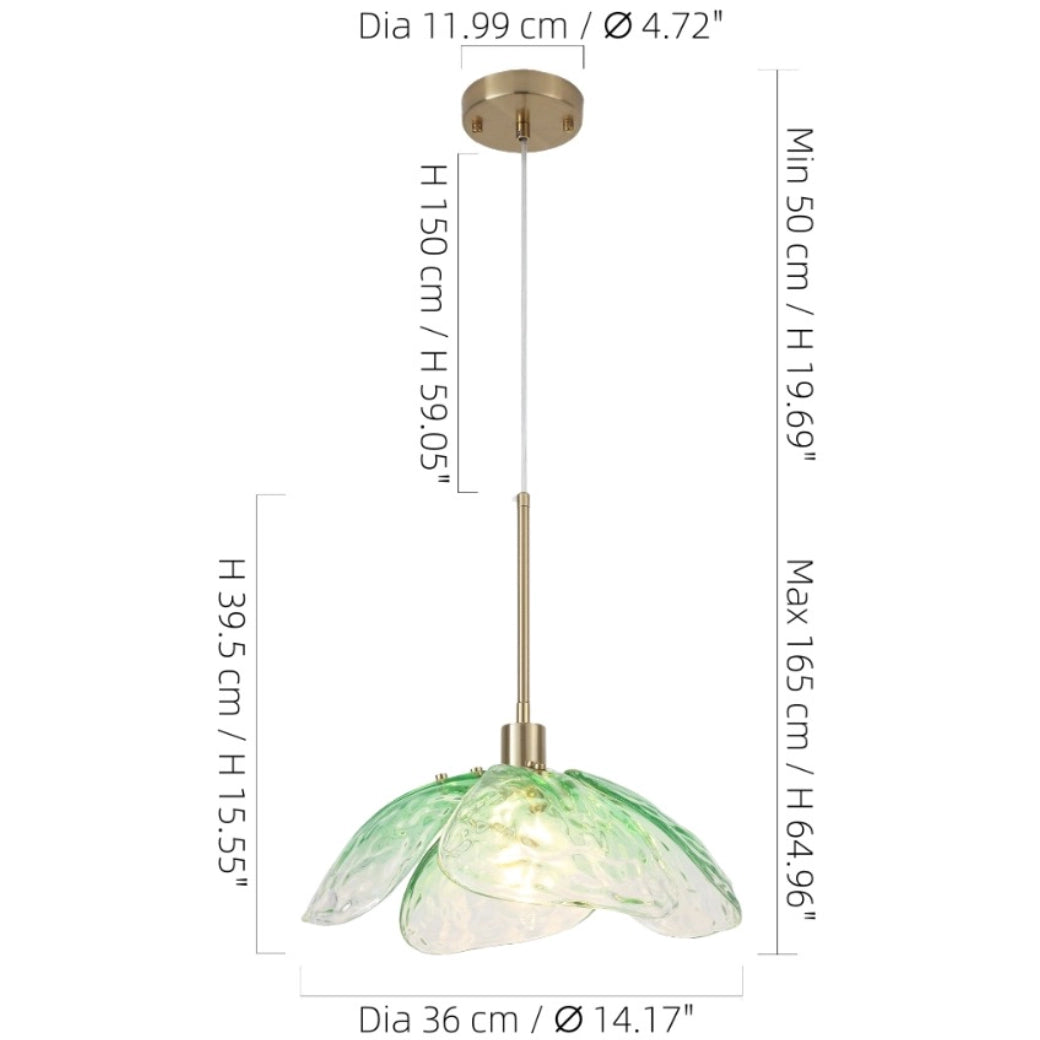
Scale is just as important as color. The Flora hammered glass flower pendant measures about 14.17 inches wide and 15.55 inches high. Use those dimensions to make a paper outline before ordering, then view it from the doorway and the seats below. The fixture uses one E26 bulb, is hardwired and does not include the bulb.
A simple final check
- Keep one main floral statement in the immediate view.
- Use clean furniture lines to balance curved petals.
- Repeat the fixture color no more than a few times.
- Test scale with a paper outline before committing.
- Review the effect in both daylight and evening light.
A flower lamp does not have to make a room feel delicate or themed. Give it neutral space, structural contrast and a measured amount of color, and it can become a confident modern focal point. When you are ready to choose a finish, explore the four Flora glass colors and compare each one with the materials already in your room.