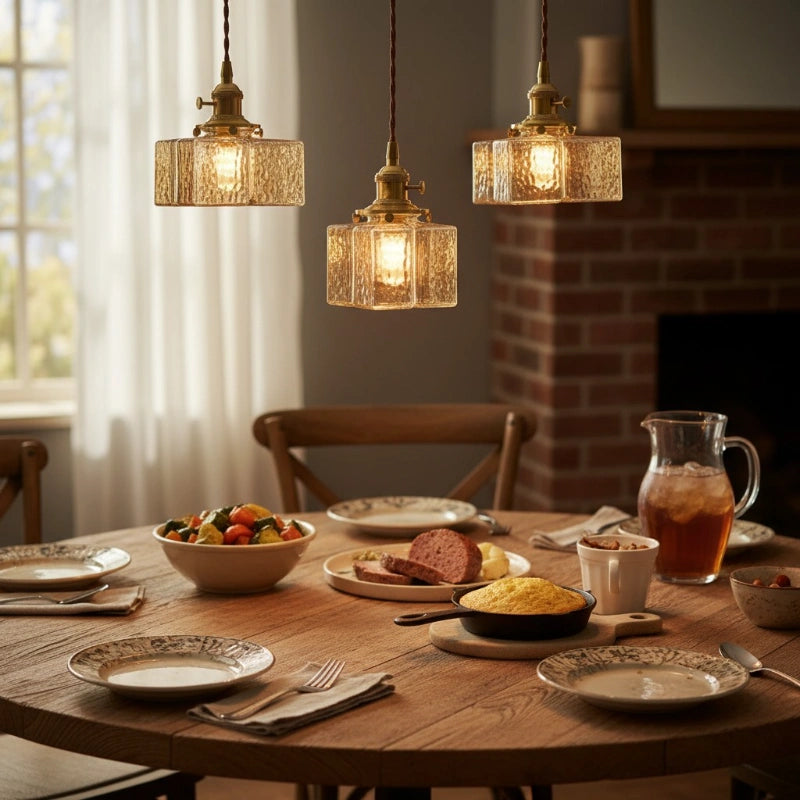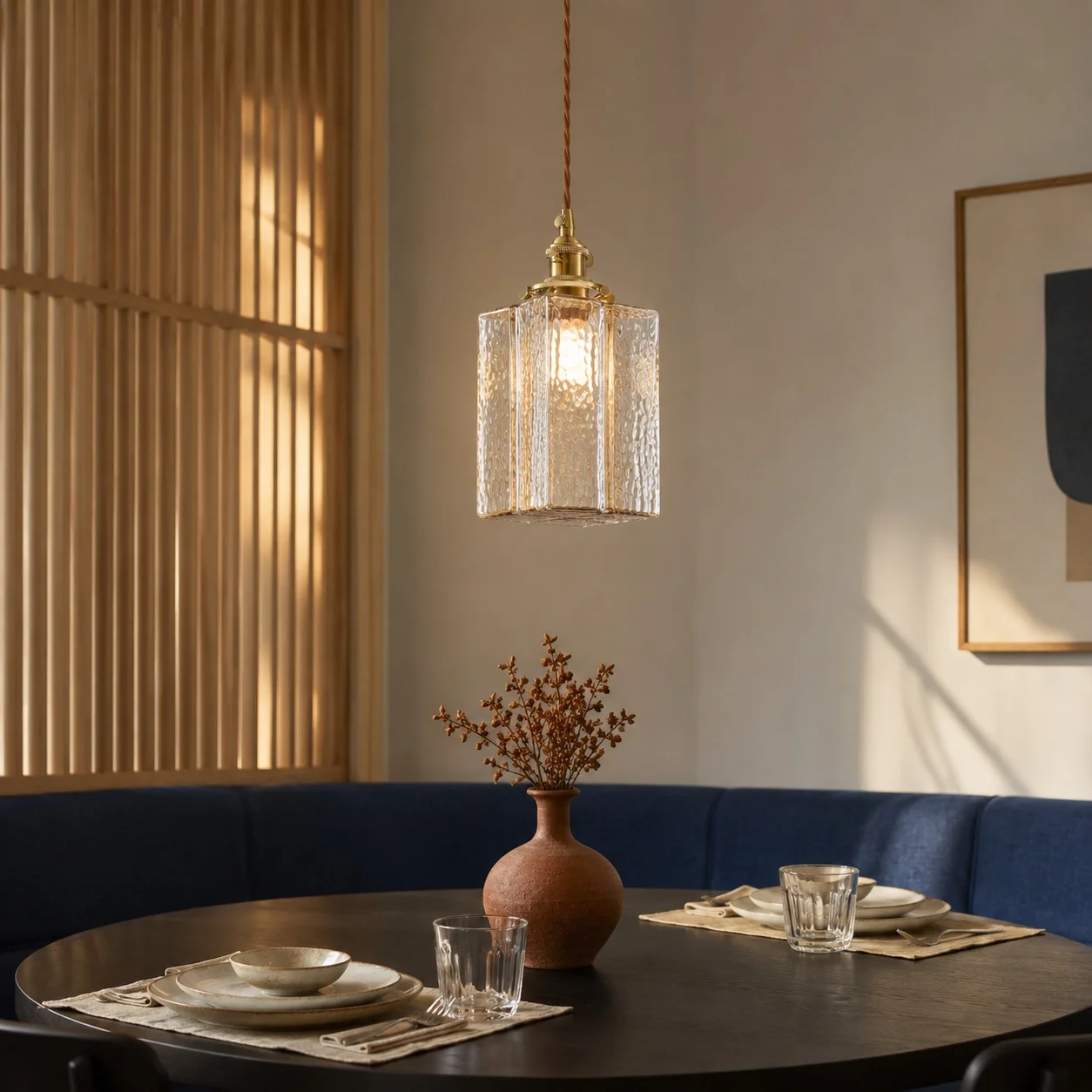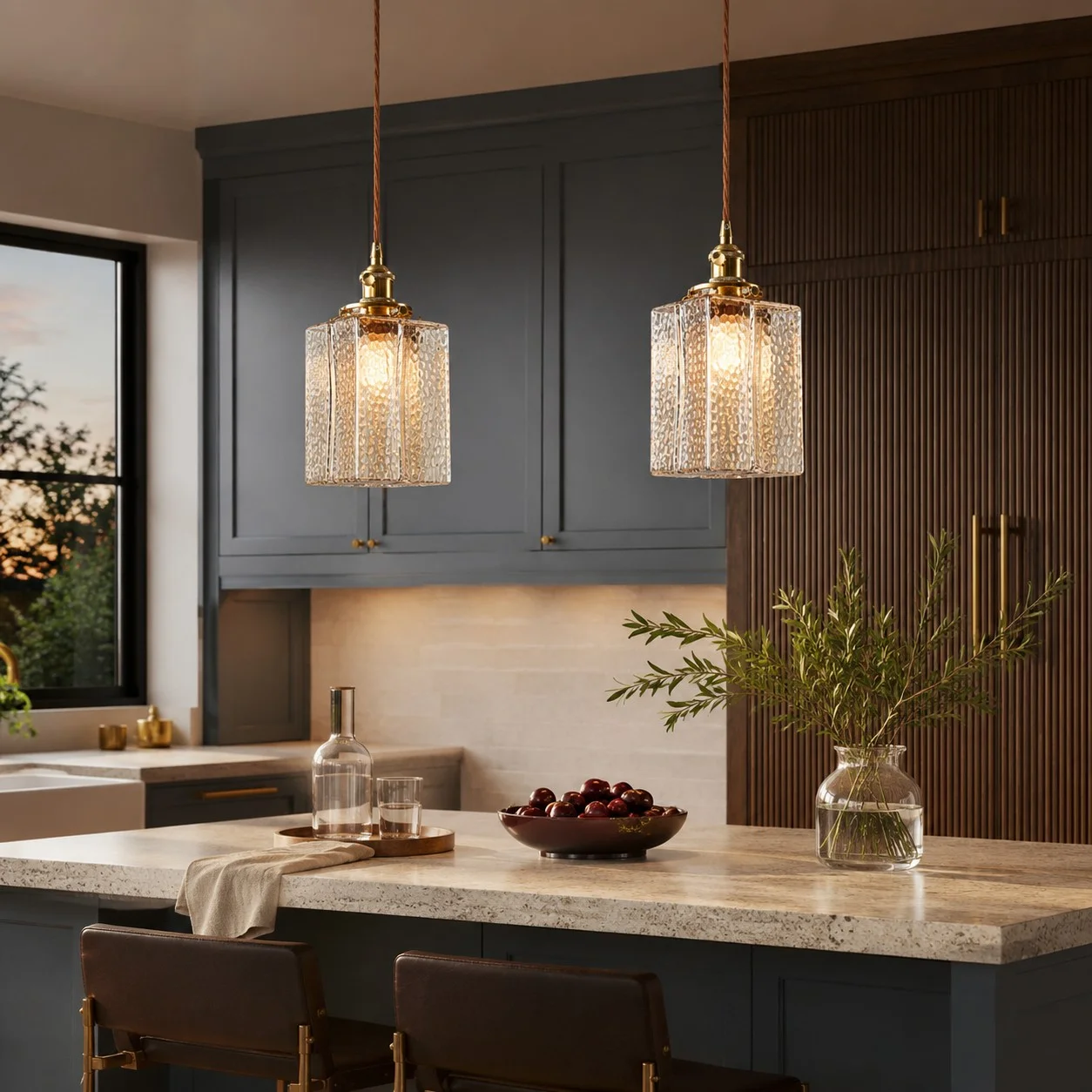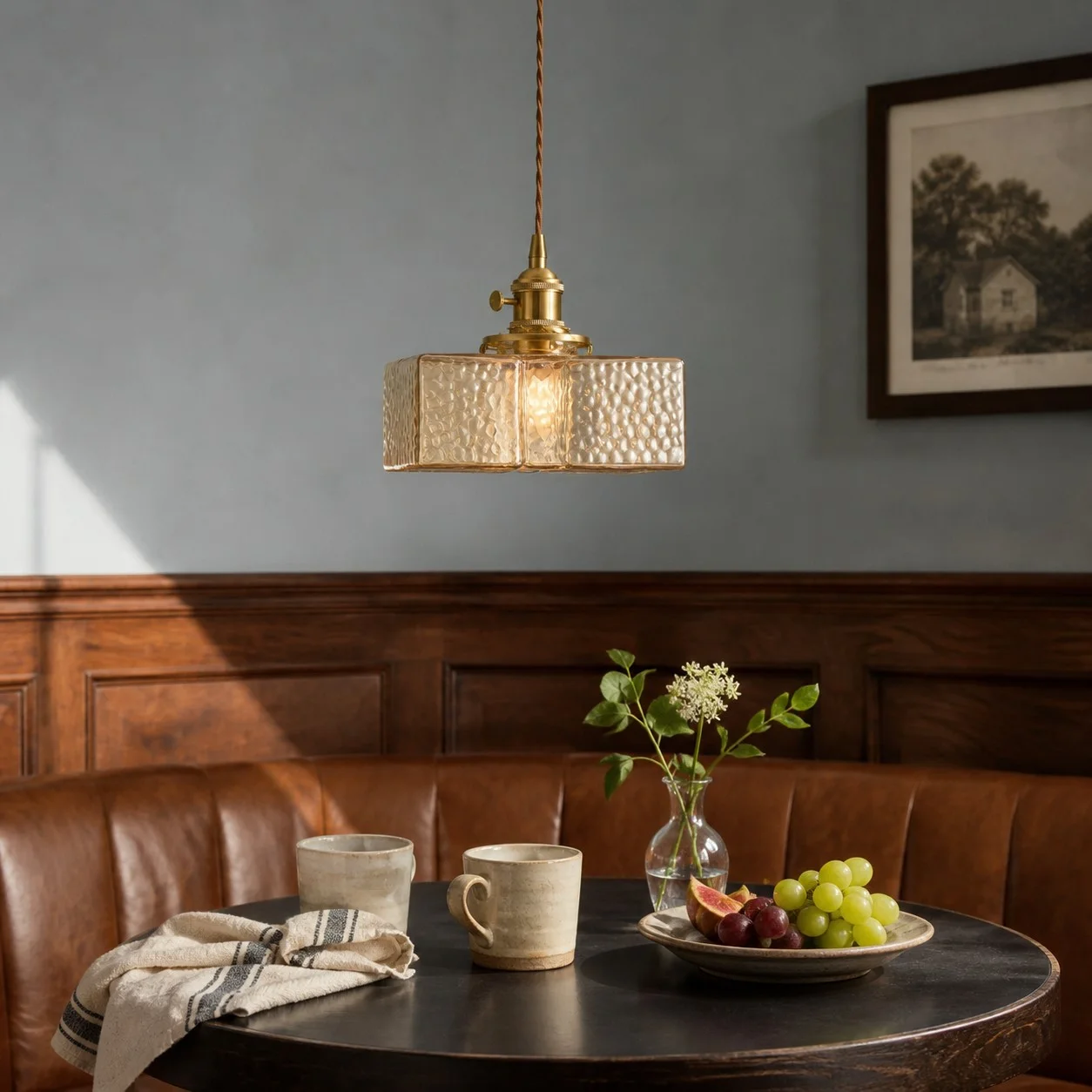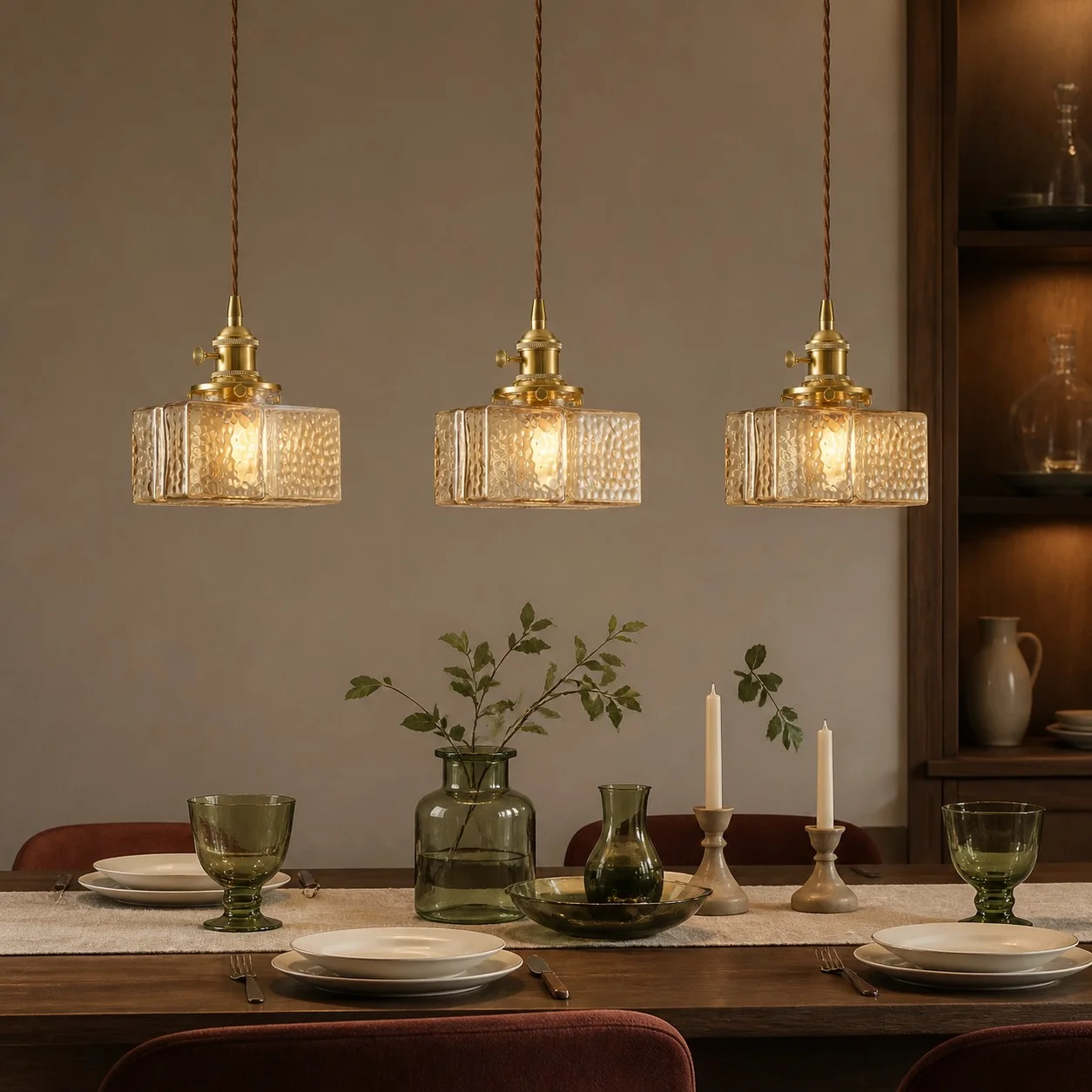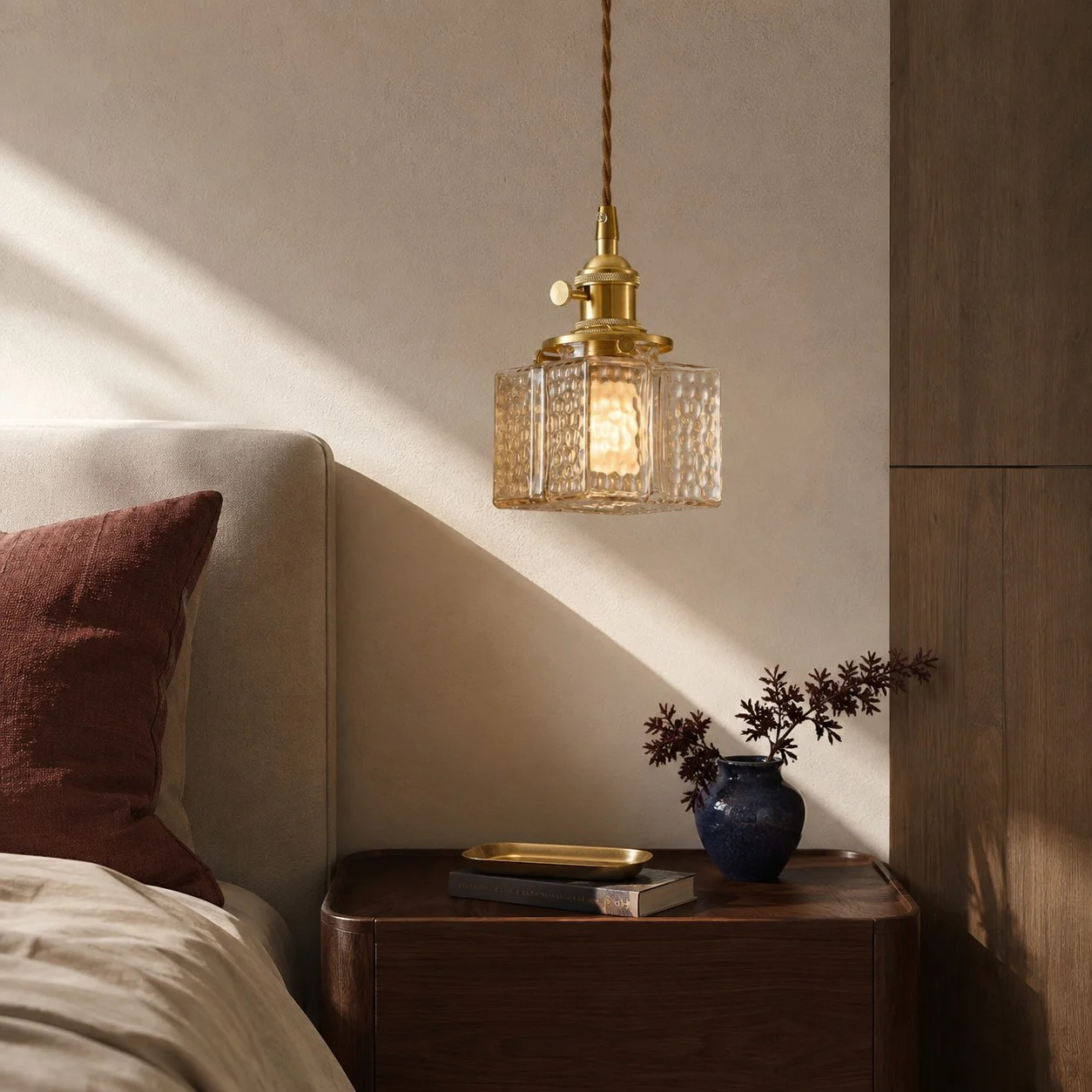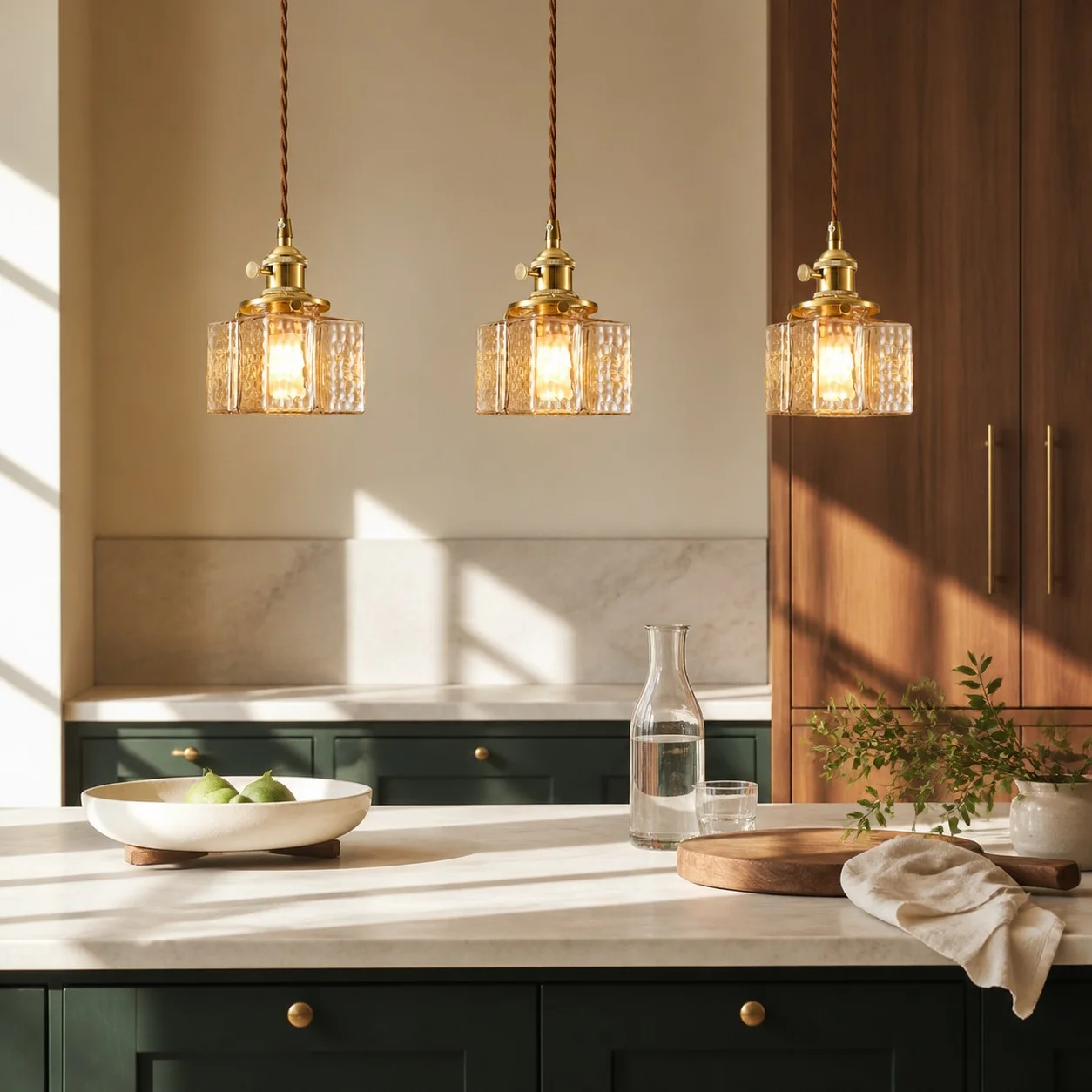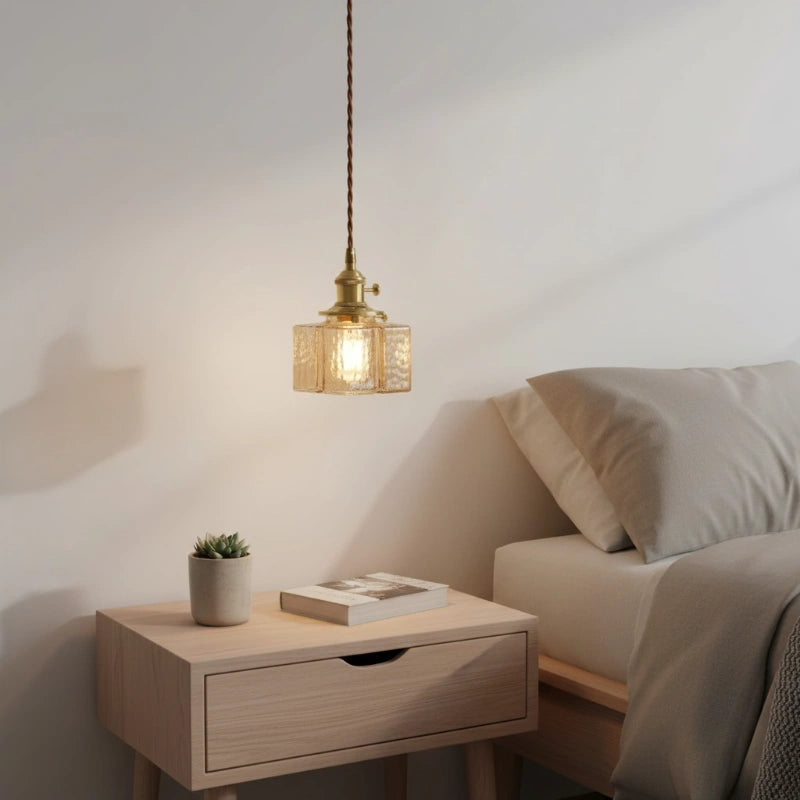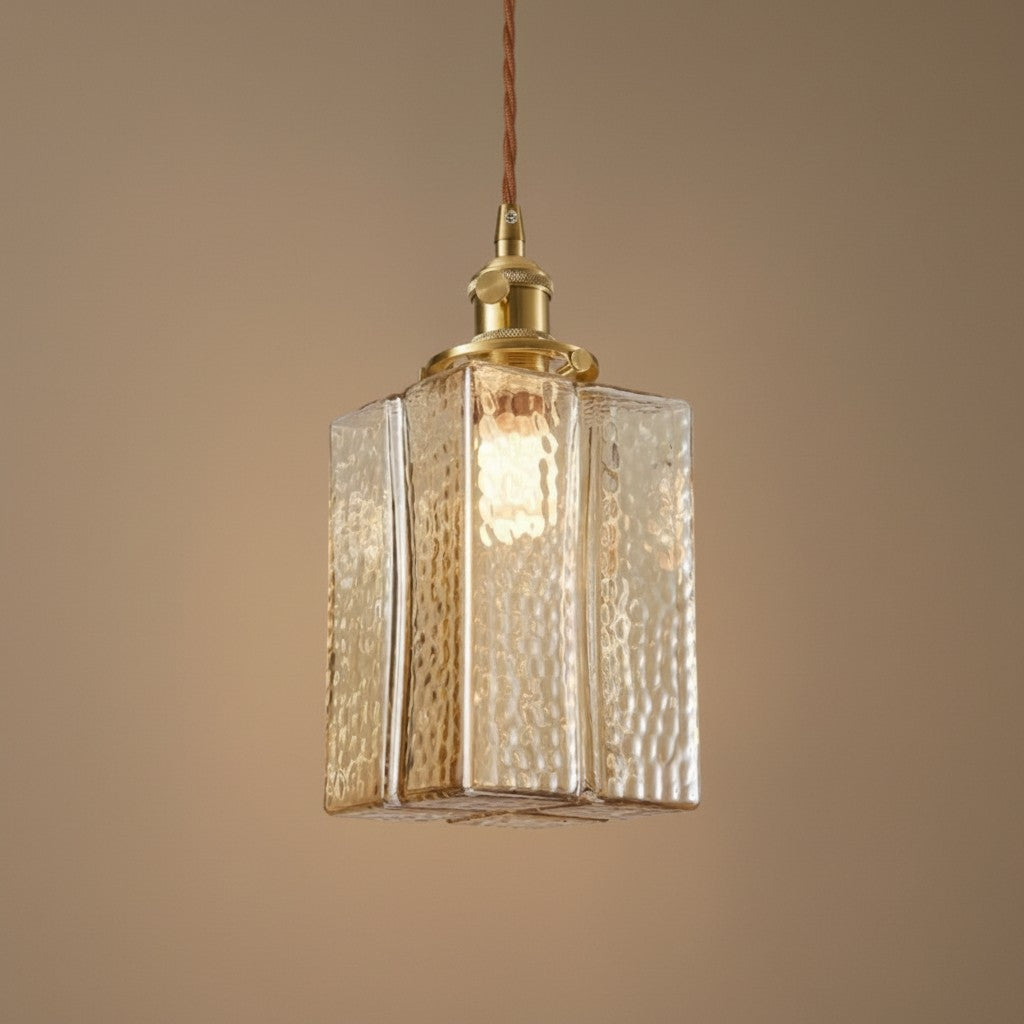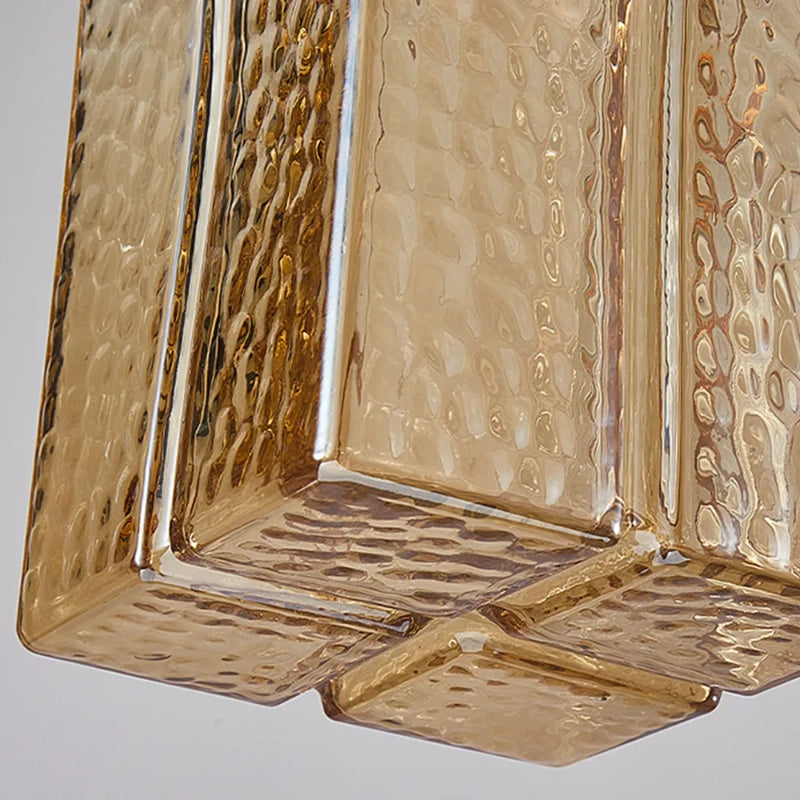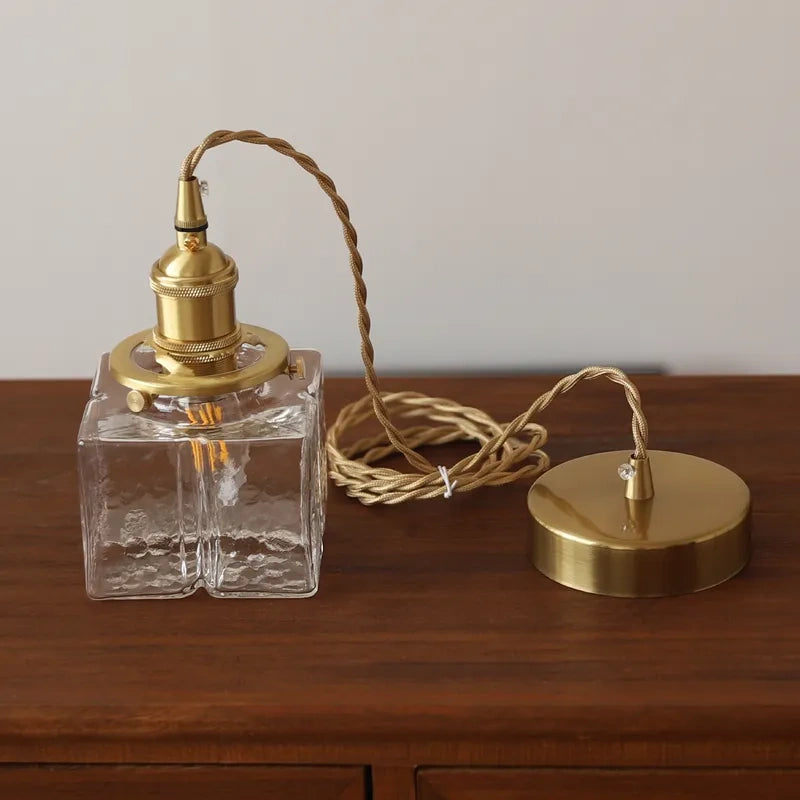
Choosing a cube pendant light is less about finding the largest shade that fits and more about matching the fixture's proportions to the room. A clear, textured glass cube can feel precise and architectural, but the wrong width or height can crowd a dining table or leave a kitchen island underdressed. Start with the room's sightlines, then use the available sizes to refine the choice.
Start With the Room, Not the Fixture
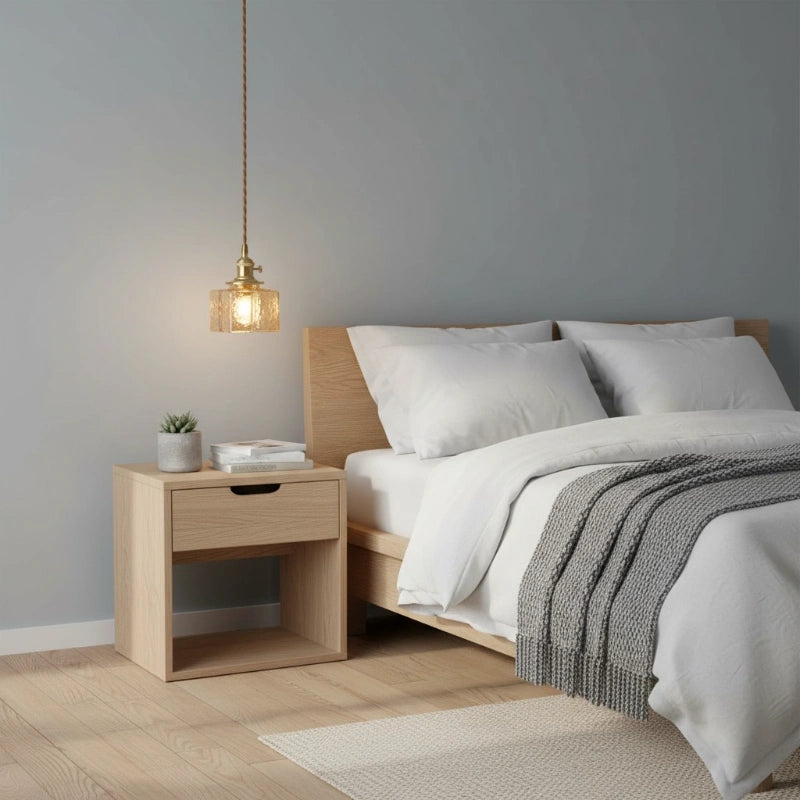
Before comparing dimensions, look at the surface the pendant will hang over. A narrow table, small peninsula or compact reading corner usually benefits from one controlled focal point. A broad island or long dining table may need two or three pendants, but the group should still leave clear sightlines.
Measure the furniture first, then note the ceiling height and walking paths. A glass cube has a defined outline, so it can feel substantial even when the shade is not especially wide. Leave enough open space for people to sit, stand and move comfortably.
How to Compare Cube Pendant Sizes
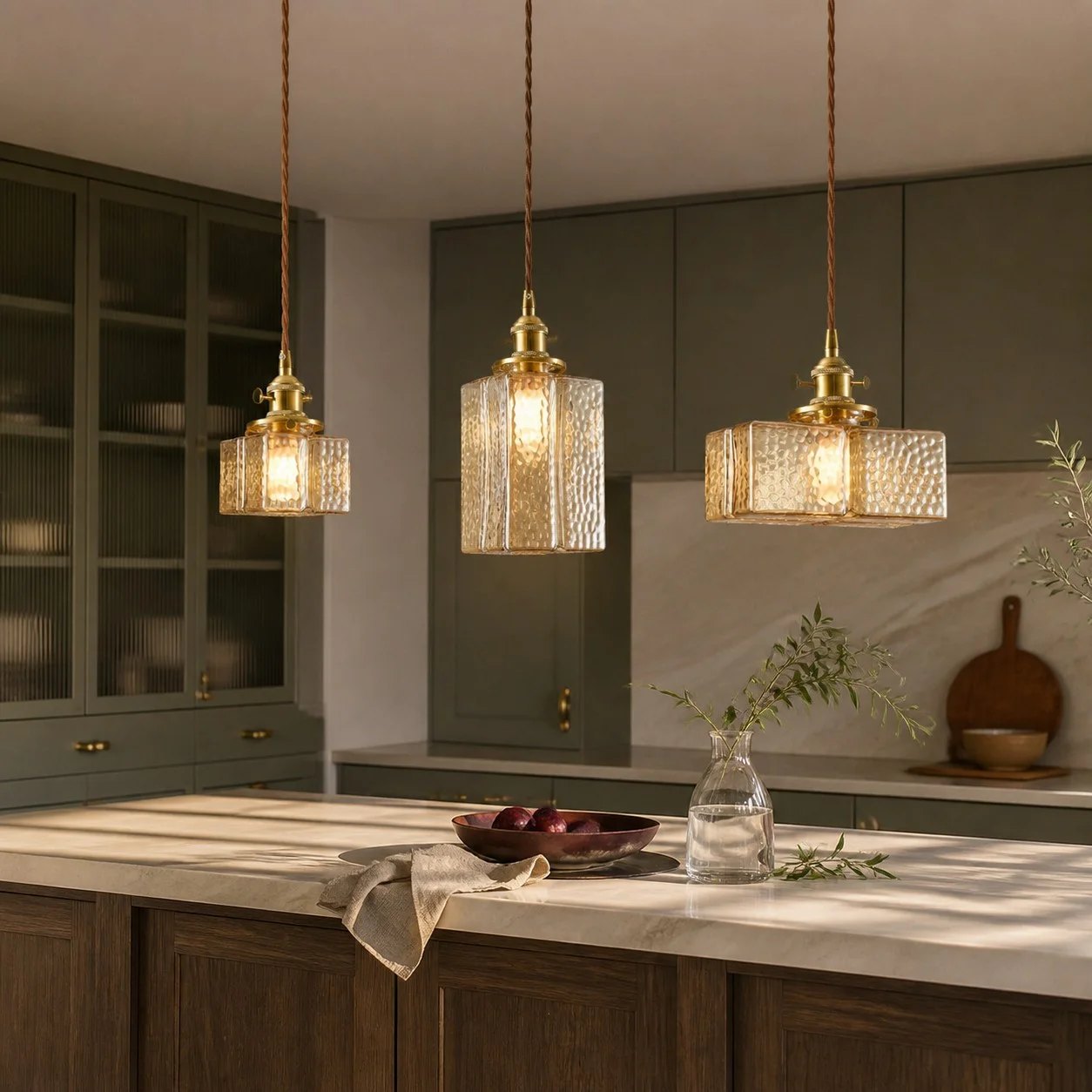
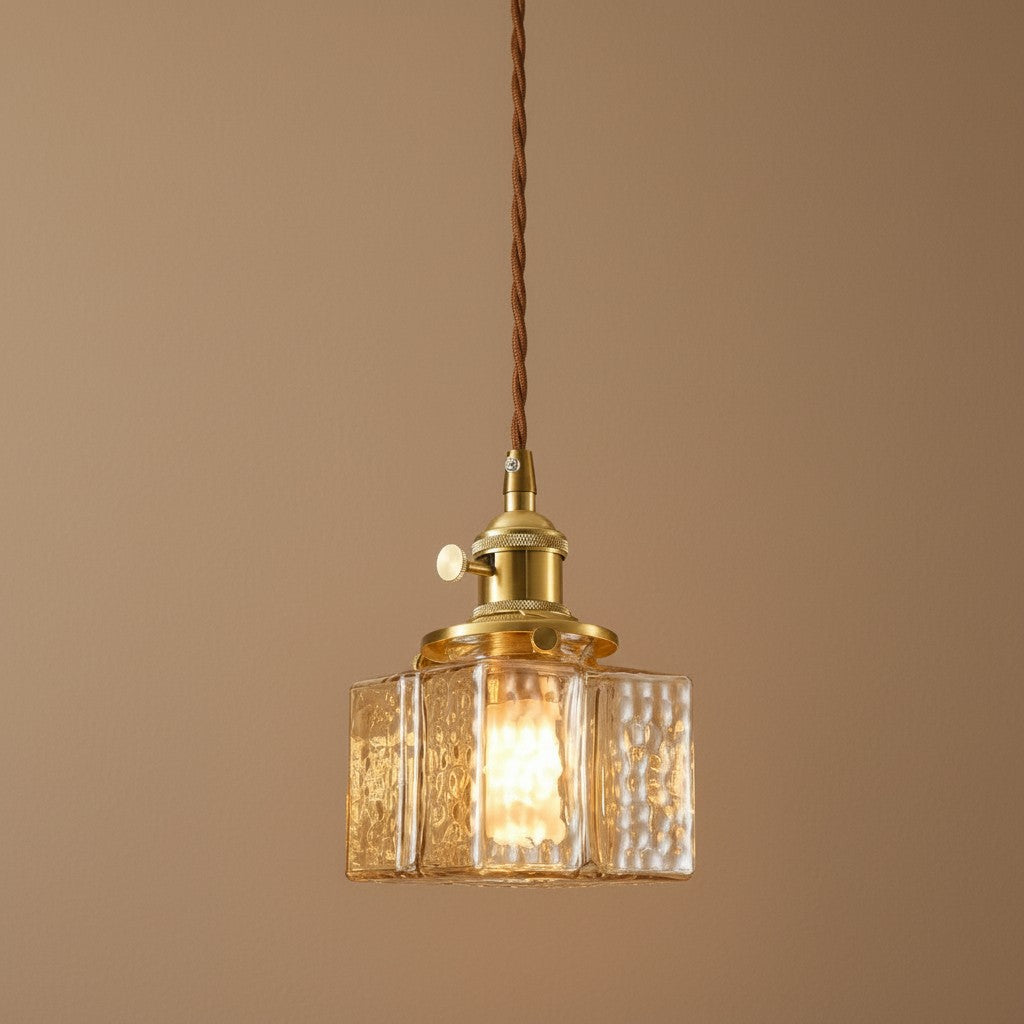
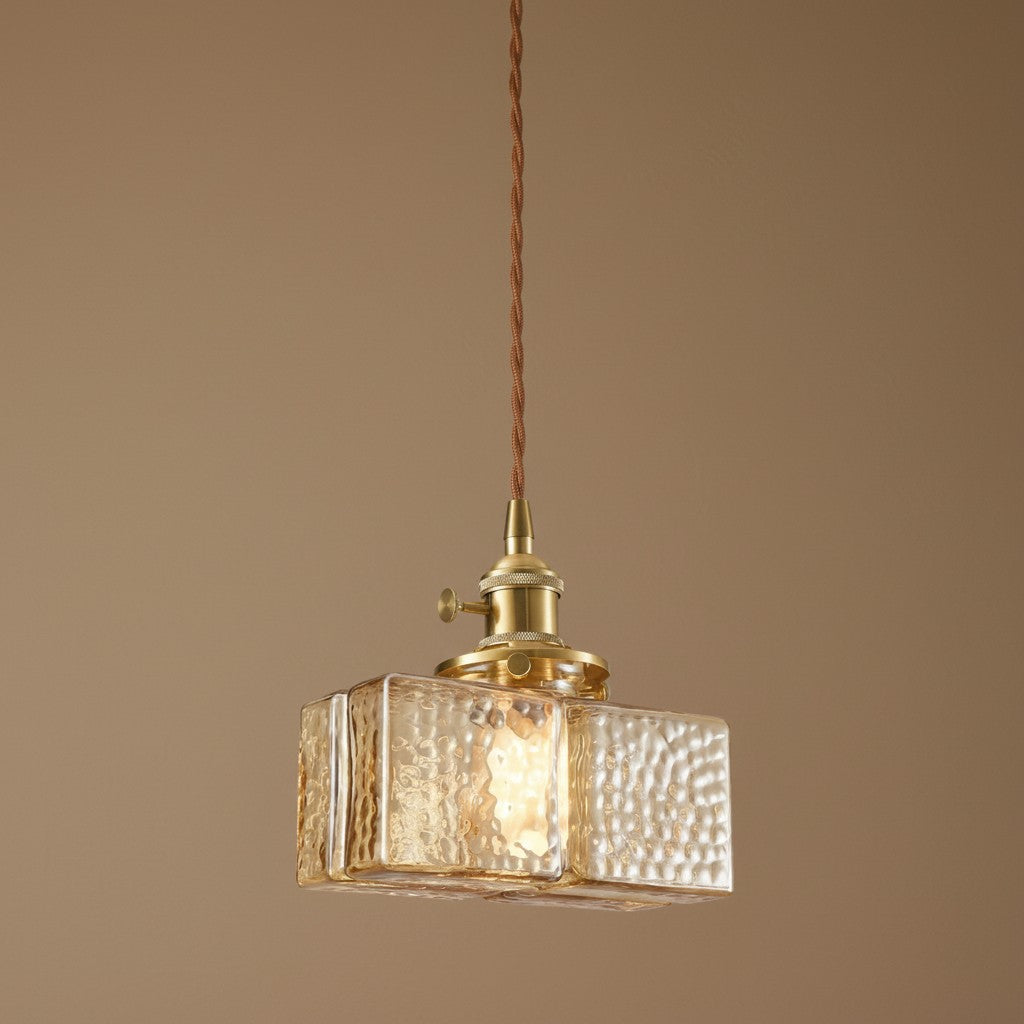
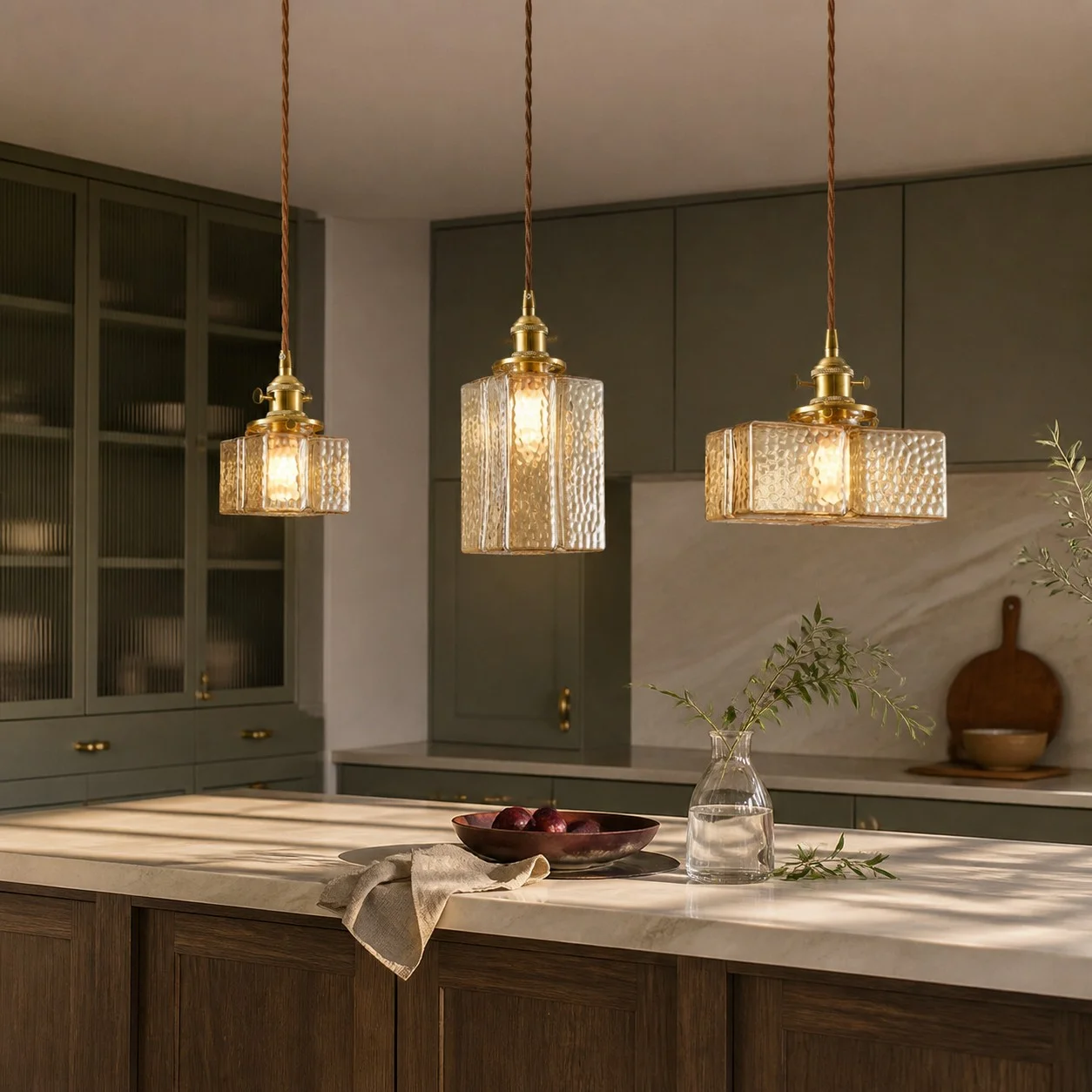
Jewel is offered in three distinct proportions: a compact A size at about 13 by 10 by 17 cm, a wider B size at about 18 by 8 by 18 cm, and a taller C size at about 16 by 12 by 28 cm. Think of the measurements as visual directions rather than just numbers. A is easy to keep quiet over a small surface, B spreads more horizontally, and C creates a longer vertical note where the ceiling and furniture can support it.
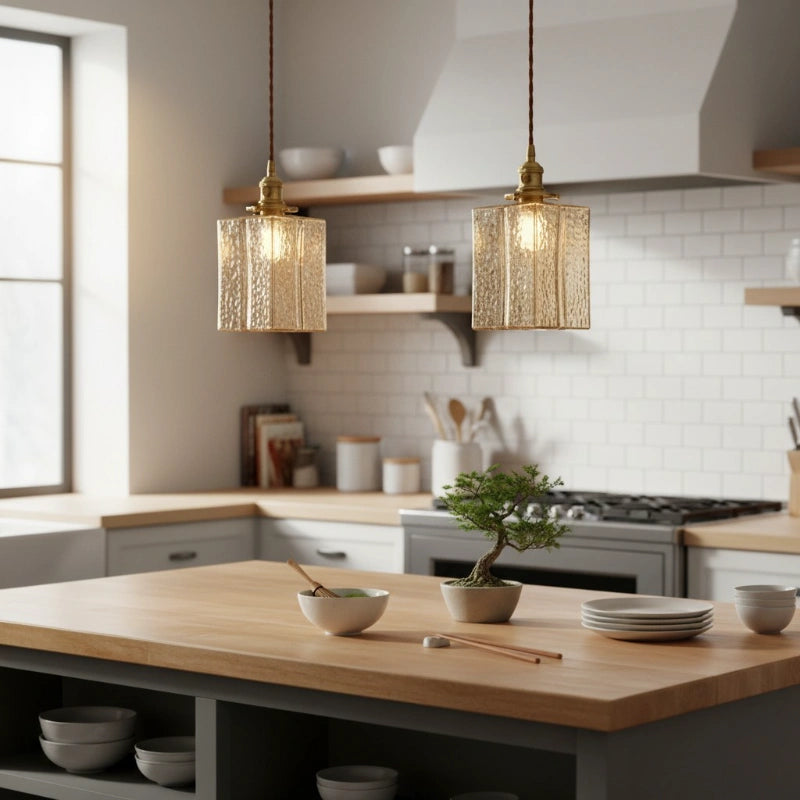
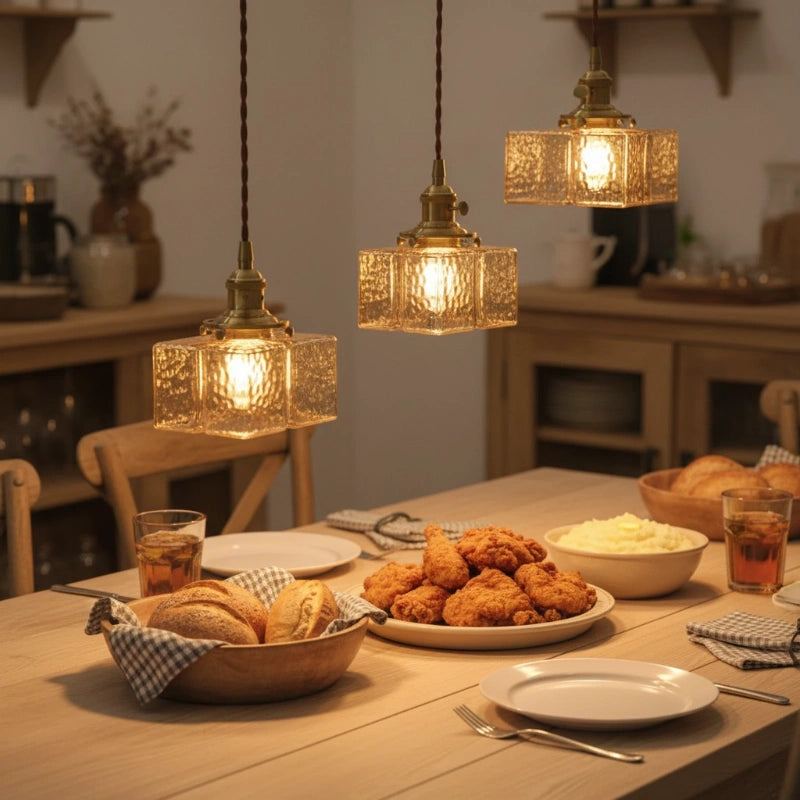
For a single pendant over a small round table, the compact option can keep the center of the room open. Over a rectangular table, the wider option can echo the table's horizontal line. The taller option can work when you want the pendant to read as a slender architectural object, provided the hanging height keeps it comfortably above eye level. The Jewel pendant makes that comparison easier because the same design language is available in all three proportions.
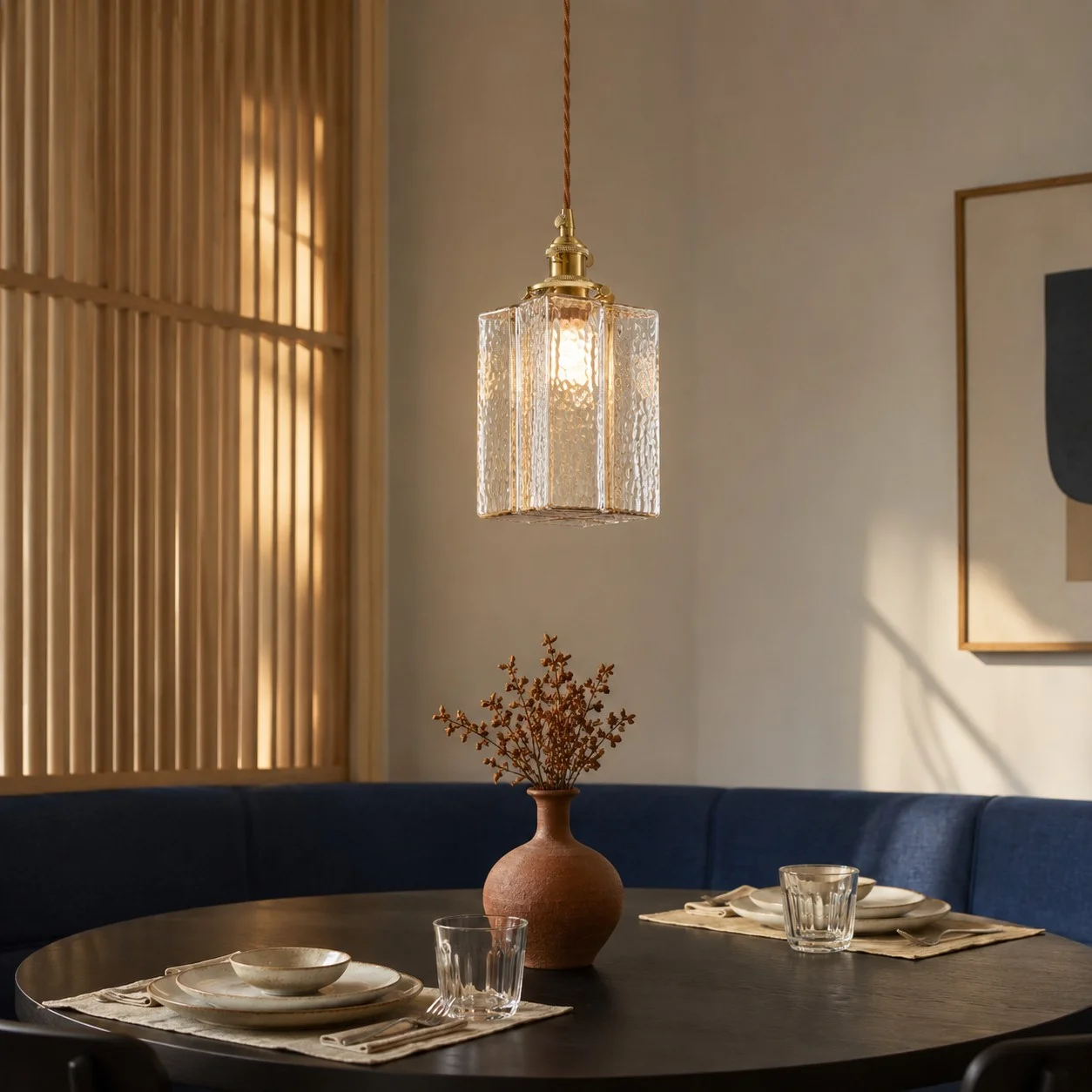
When to Use One Pendant or a Group
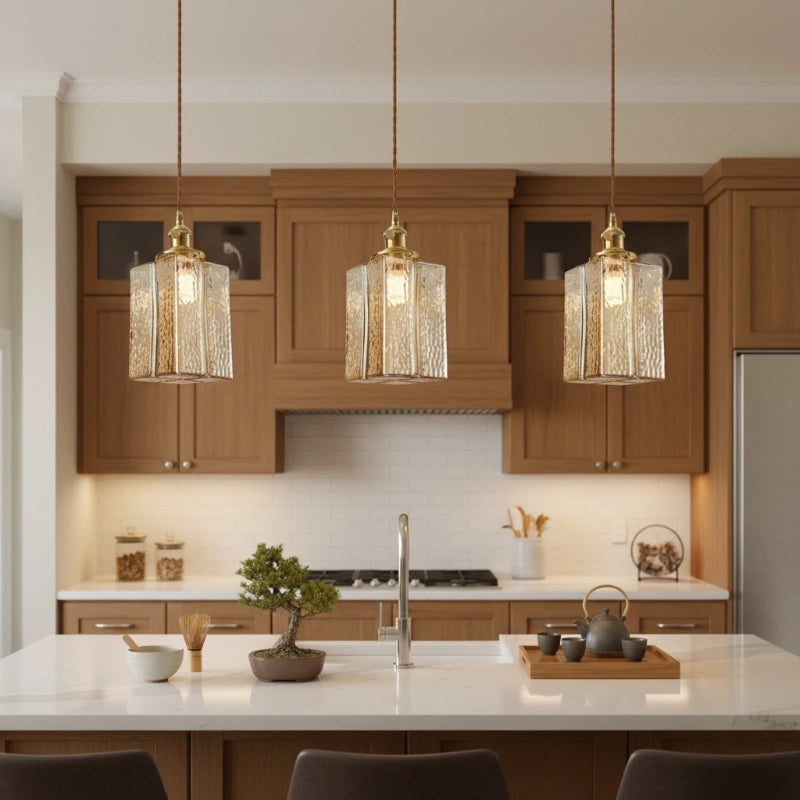
One pendant is often enough when the surface below is small or the fixture marks a transition between zones. A group makes more sense when the furniture needs repeated visual weight. If you use multiple pendants, keep the sizes consistent unless the room is deliberately asymmetrical; changing size and spacing at once can make the composition feel accidental.
Use the room's centerline as a starting point, then check the view from the kitchen, doorway and seated position. The glass texture will catch attention, so repetition should clarify the layout rather than compete with cabinet hardware, artwork or a busy backsplash.
Pair the Glass With Your Room's Style
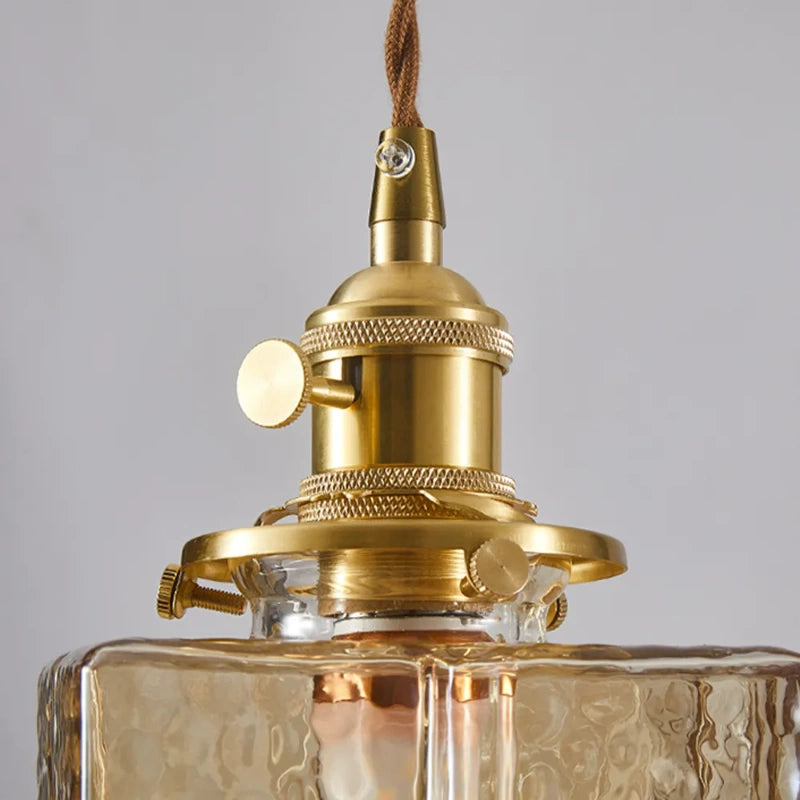
Clear hammered glass brings texture without adding a strong opaque color. That makes it useful with dark cabinetry, pale stone, warm wood and restrained Japanese-inspired interiors. The brass-toned hardware can echo small metal details in the room, while the cube shape keeps the overall silhouette orderly.
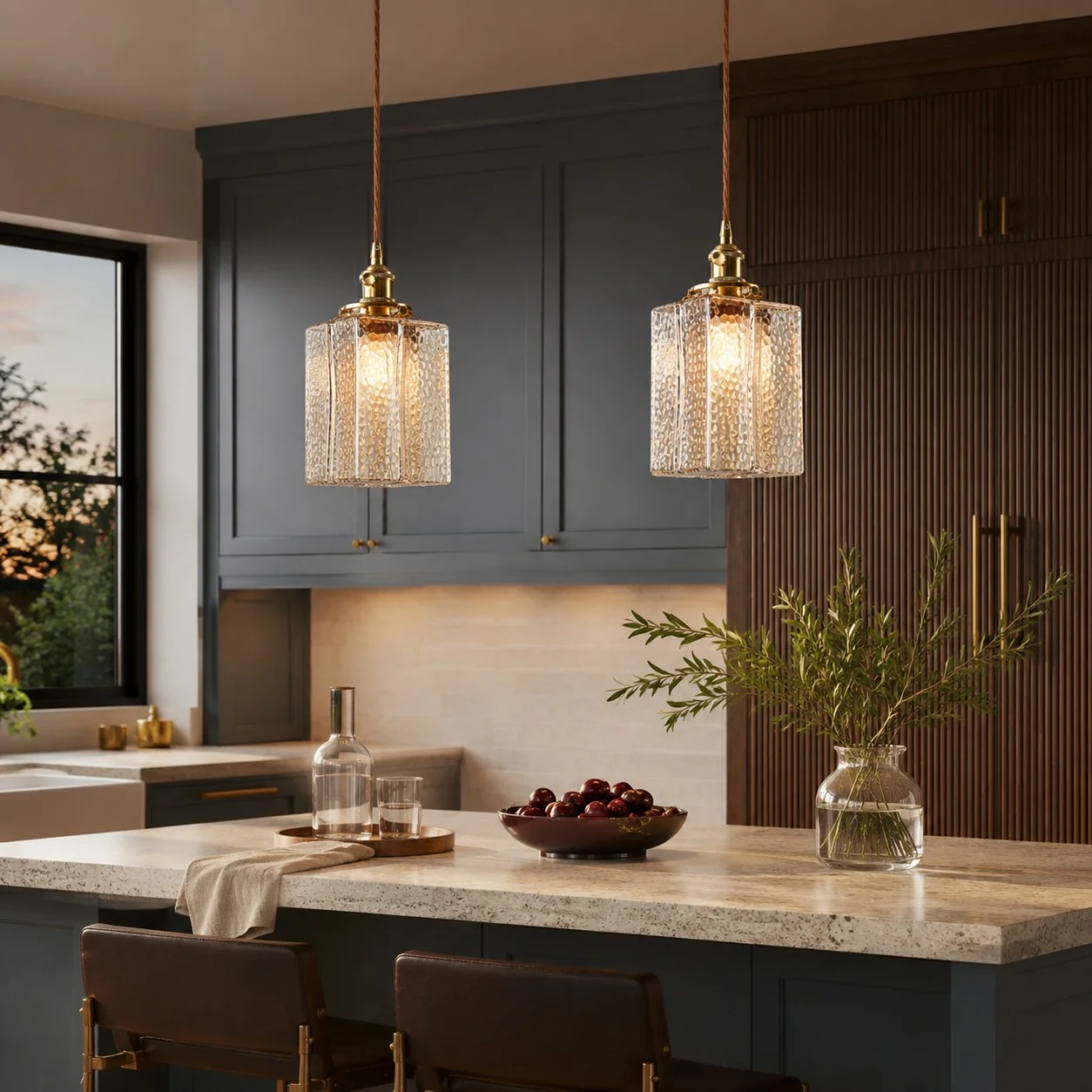
Choose the bulb for the mood and the task. A warmer appearance can emphasize the hammered surface, while a clearer neutral tone may suit a workspace that needs a more focused feel. Compare the bulb base, brightness, dimming compatibility and the fixture's installation requirements before deciding.
What to Check Before Buying
- Match the selected A, B or C proportion to the furniture below and the room's ceiling height.
- Confirm the exact dimensions, hanging length and canopy details for the chosen option.
- Check the E27 bulb requirement and remember that the bulb is not included with the fixture.
- Review the installation conditions and have wiring checked by a qualified professional.
- View the glass in both daylight and evening light so the texture feels intentional in the room.
If you want a pendant that combines a clear outline with a tactile surface, explore the Jewel cube hammered glass pendant light. Compare the three proportions with your room before choosing the option that gives the furniture enough breathing room.